Avicenna: The Prince of Physicians
By seventeen he had cured a sultan; by his death he had written on nearly everything worth knowing. How did a boy from a village near Bukhara become the doctor Europe would trust for six hundred years?
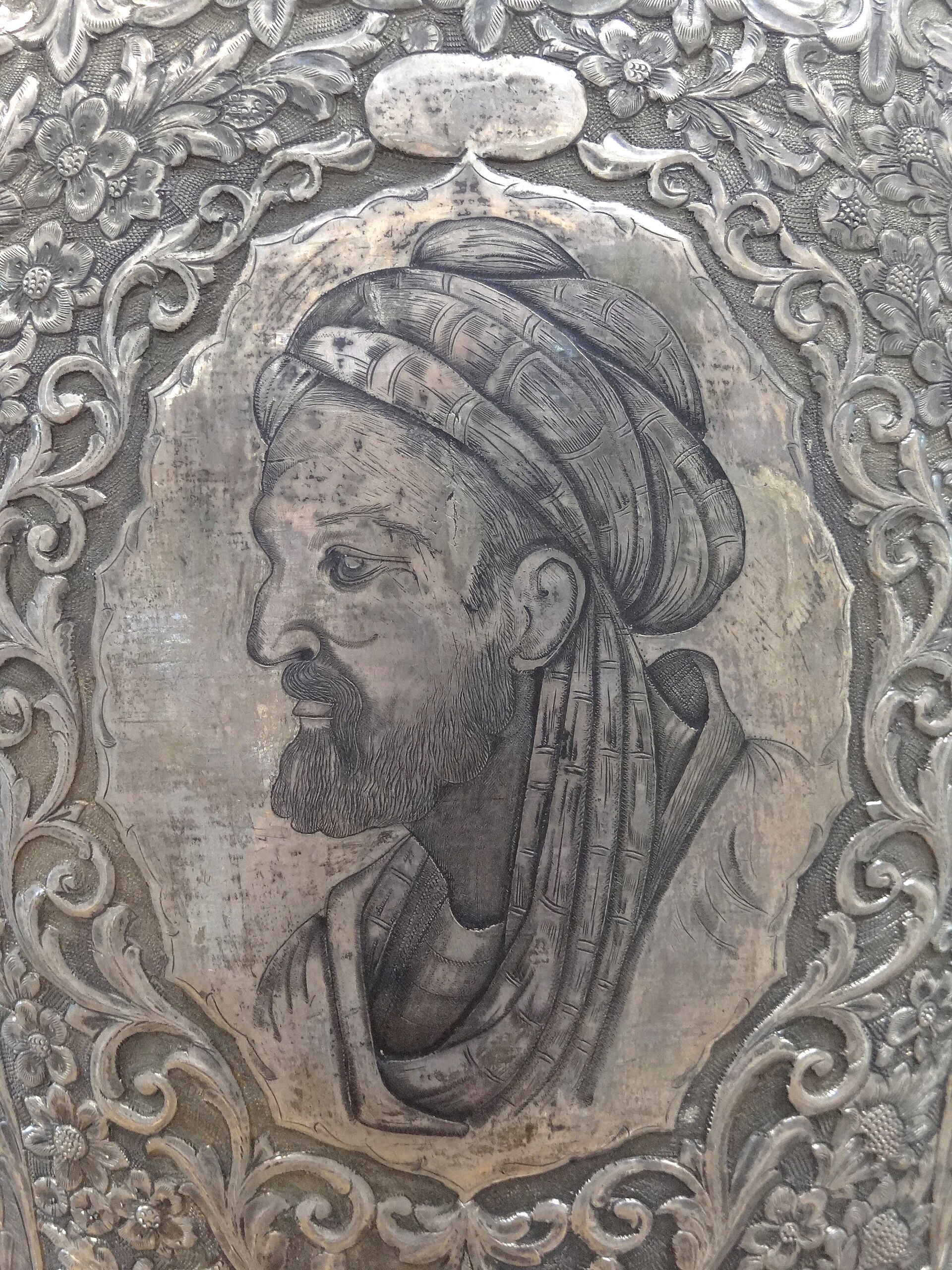
In the village of Afshana, near Bukhara, around the year 980, a Persian bureaucrat's household produced a child who would soon outgrow every teacher put in front of him. His father, Abd Allah, worked as a Samanid official; his mother came from Bukhara itself, a city that under the Samanids rivaled Baghdad as a center of learning. By age ten the boy, ibn Sina, had memorized the entire Quran. An Indian greengrocer taught him arithmetic. A Hanafi jurist named Ismail al-Zahid schooled him in fiqh.
When his father brought the physician and philosopher al-Natili into the house, ibn Sina studied Porphyry's Isagoge, likely Aristotle's Categories, then moved on to Ptolemy's Almagest and Euclid's Elements. His teacher eventually told him to continue alone — there was nothing left to teach him. By eighteen, ibn Sina was fluent in the Greek sciences that had been translated and expanded across the Islamic world during what became known as its Golden Age, an era of Byzantine, Greco-Roman, Persian and Indian texts flowing together in cities like Bukhara, Balkh, Khwarazm, Rey and Isfahan.
At seventeen, ibn Sina became physician to the Samanid ruler Nuh II, having treated him successfully. In return, he was granted access to the royal library — a vast trove that, according to his own account, fed a mind already restless for more. He would later meet other towering scholars of his time, including the astronomer al-Biruni, the mathematician Abu Nasr Mansur, and the physician ibn al-Khammar, debating philosophy with the sharpest minds of the age.
When ibn Sina was about twenty-one, his father died, and he was given an administrative post, possibly succeeding his father as governor of Harmaytan. Political upheaval soon followed: the Samanid dynasty collapsed, and ibn Sina moved on, first to Gurganj, the capital of Khwarazm, where he found a scholarly, welcoming atmosphere under a science-friendly vizier.
From there his life became one of wandering and service, moving through Merv, Nishapur, and the borderlands of Khorasan, offering his skills to various rulers as courts rose and fell around him. Through instability, he kept writing — an extraordinary output eventually reaching some 450 works, of which about 240 survive today, roughly 150 on philosophy and 40 on medicine.
More from People

Frida Kahlo: Painting Through the Pain
An iron handrail pierced a teenage girl's body on a Mexico City street — and out of that wreckage came one of the most searingly honest artists of the twentieth century.

The Ox-Cart and the Snow: Şerife Bacı's Last Road
Somewhere on a frozen road outside Kastamonu, a young mother pressed her body against a quilt to keep her infant warm through the night. By morning, she had become a legend.

Pompey the Great: The Friendship That Broke Rome
He was called 'the teenage butcher' by his enemies and 'the Great' by his mentor — and the empire he helped build would ultimately be the death of him.

The Third Pole: How Hunt, Hillary and Tenzing Conquered Everest
For decades the world's highest mountain had turned back every climber who dared it — sometimes swallowing them whole. In the spring of 1953, one expedition finally reached the point where the sky simply stopped going up.

Two Rivals Under One Roof: Picasso and Matisse
Long before they were named together as the twin poles of modern art, they were simply two names on the walls of the same small Paris gallery — one already known for wild colour, the other not yet known at all.

Fire and Ice: The Borg–McEnroe Rivalry
One man never raised his voice. The other rarely lowered his. Between them they produced two of the greatest matches tennis has ever seen.