Pompey the Great: The Friendship That Broke Rome
He was called 'the teenage butcher' by his enemies and 'the Great' by his mentor — and the empire he helped build would ultimately be the death of him.

On a spring day in 83 BC, a young man barely into his twenties marched south through Italy at the head of a legion he had raised himself from his dead father's veterans and clients in Picenum. His name was Gnaeus Pompeius, and he was riding to join Sulla, the general returning from the East to reclaim Rome by force. When government armies tried to intercept him, Pompey attacked and routed one outright; the others, uncertain, withdrew. Sulla welcomed him into camp with a title usually reserved for proven commanders: imperator, victorious general. It was an extraordinary honor for someone who had not yet held a single public office.
Pompey's rise had been anything but smooth. His father, Gnaeus Pompeius Strabo, was a provincial noble from Picenum who had clawed his way to the consulship in 89 BC, earning a reputation for greed and ruthlessness along the way. When Strabo died in 87 BC — killed by disease or by his own mutinous soldiers, accounts differ — Pompey inherited not just his father's veterans but an embezzlement charge as his legal heir. He was acquitted, reportedly only after agreeing to marry the judge's daughter, Antistia.
During Sulla's civil war, Pompey proved himself again and again. Serving under Sulla's lieutenant Metellus as a cavalry commander, he fought a grueling six-hour battle at the river Aesis against the forces of the consul Carbo, plundered the town of Sena Gallica after routing Censorinus's fleeing troops, and later joined Marcus Licinius Crassus to defeat the general Carrinas at Spoletium. Time and again, Pompey's cavalry harried retreating enemies and closed off escape routes, helping strangle the resistance against Sulla in Umbria and Etruria. For his brutal efficiency, hostile voices in Rome nicknamed him adulescentulus carnifex — the teenage butcher. Sulla, more approvingly, gave him the name Magnus, the Great, supposedly because of Pompey's own admiration for Alexander the Great.
What followed was a career that bent Rome's rules at every turn. Normally a Roman statesman climbed a fixed ladder of offices, the cursus honorum, before reaching real command. Pompey skipped rungs entirely, riding his military triumphs straight to three consulships, in 70, 55, and 52 BC, and celebrating three separate triumphs along the way. He crushed the forces of Sertorius in Spain, helped stamp out the Third Servile War, and led Rome's armies against King Mithridates VI of Pontus in the Third Mithridatic War — a campaign that took him as far as Anatolia, where he founded the city of Nicopolis, 'city of victory,' near what is now Şebinkarahisar-Bayramköy, along with the city later known as Athena, today's Pazar.
By 60 BC Pompey stood among the three most powerful men in Rome, joining Marcus Licinius Crassus and Julius Caesar in an unofficial pact historians call the First Triumvirate. The alliance was sealed not just by ambition but by family: Pompey married Caesar's daughter, Julia, binding the two men together as more than political allies. For a time, it worked. But history's alliances rarely survive their bindings intact.
More from People

Frida Kahlo: Painting Through the Pain
An iron handrail pierced a teenage girl's body on a Mexico City street — and out of that wreckage came one of the most searingly honest artists of the twentieth century.

The Ox-Cart and the Snow: Şerife Bacı's Last Road
Somewhere on a frozen road outside Kastamonu, a young mother pressed her body against a quilt to keep her infant warm through the night. By morning, she had become a legend.

The Third Pole: How Hunt, Hillary and Tenzing Conquered Everest
For decades the world's highest mountain had turned back every climber who dared it — sometimes swallowing them whole. In the spring of 1953, one expedition finally reached the point where the sky simply stopped going up.

Two Rivals Under One Roof: Picasso and Matisse
Long before they were named together as the twin poles of modern art, they were simply two names on the walls of the same small Paris gallery — one already known for wild colour, the other not yet known at all.

Fire and Ice: The Borg–McEnroe Rivalry
One man never raised his voice. The other rarely lowered his. Between them they produced two of the greatest matches tennis has ever seen.
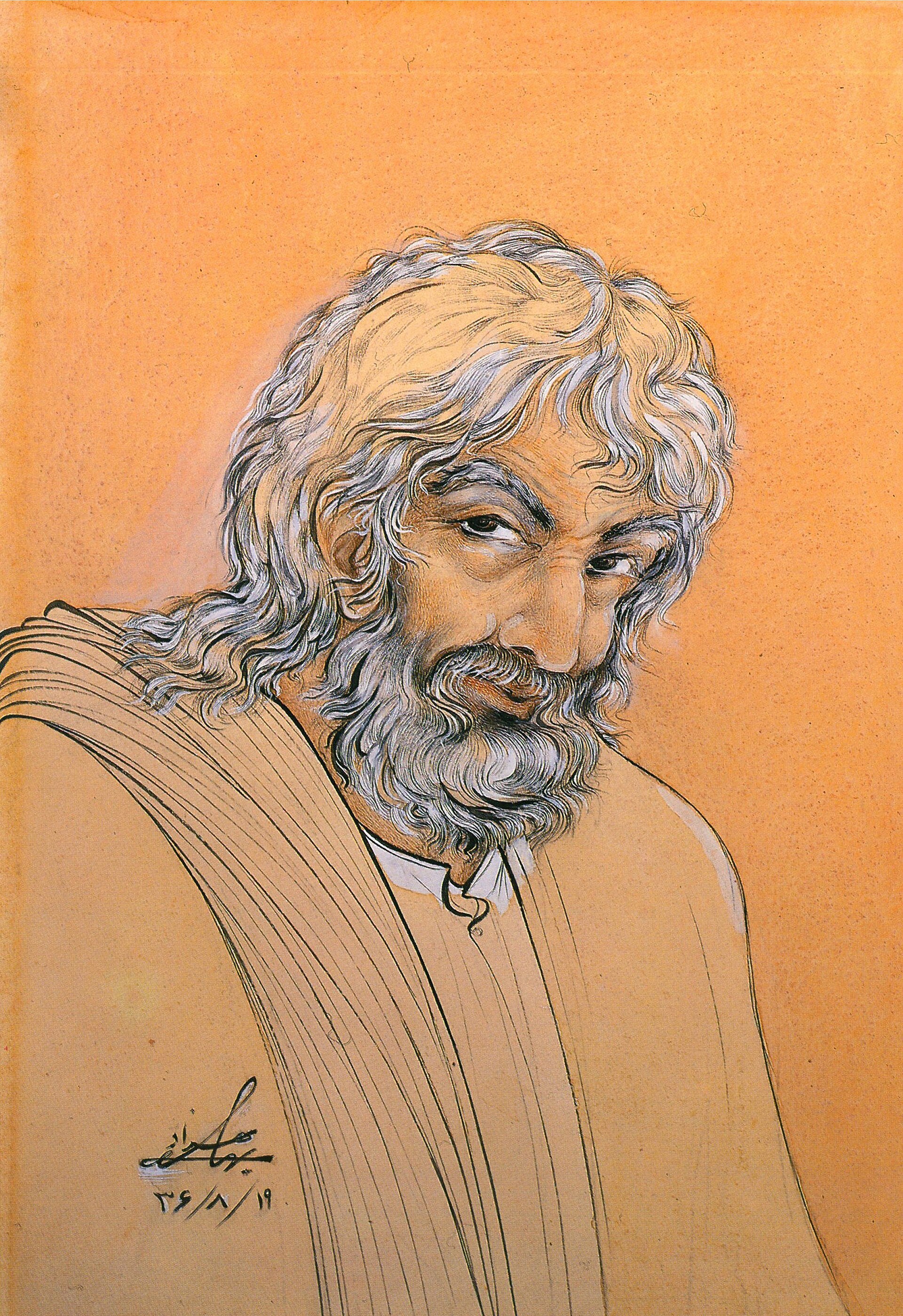
The Stranger Who Set the Books on Fire
A man in black arrived at an inn in Konya looking for something he couldn't name — and found it in a scholar riding a black horse.