The Stranger Who Set the Books on Fire
A man in black arrived at an inn in Konya looking for something he couldn't name — and found it in a scholar riding a black horse.
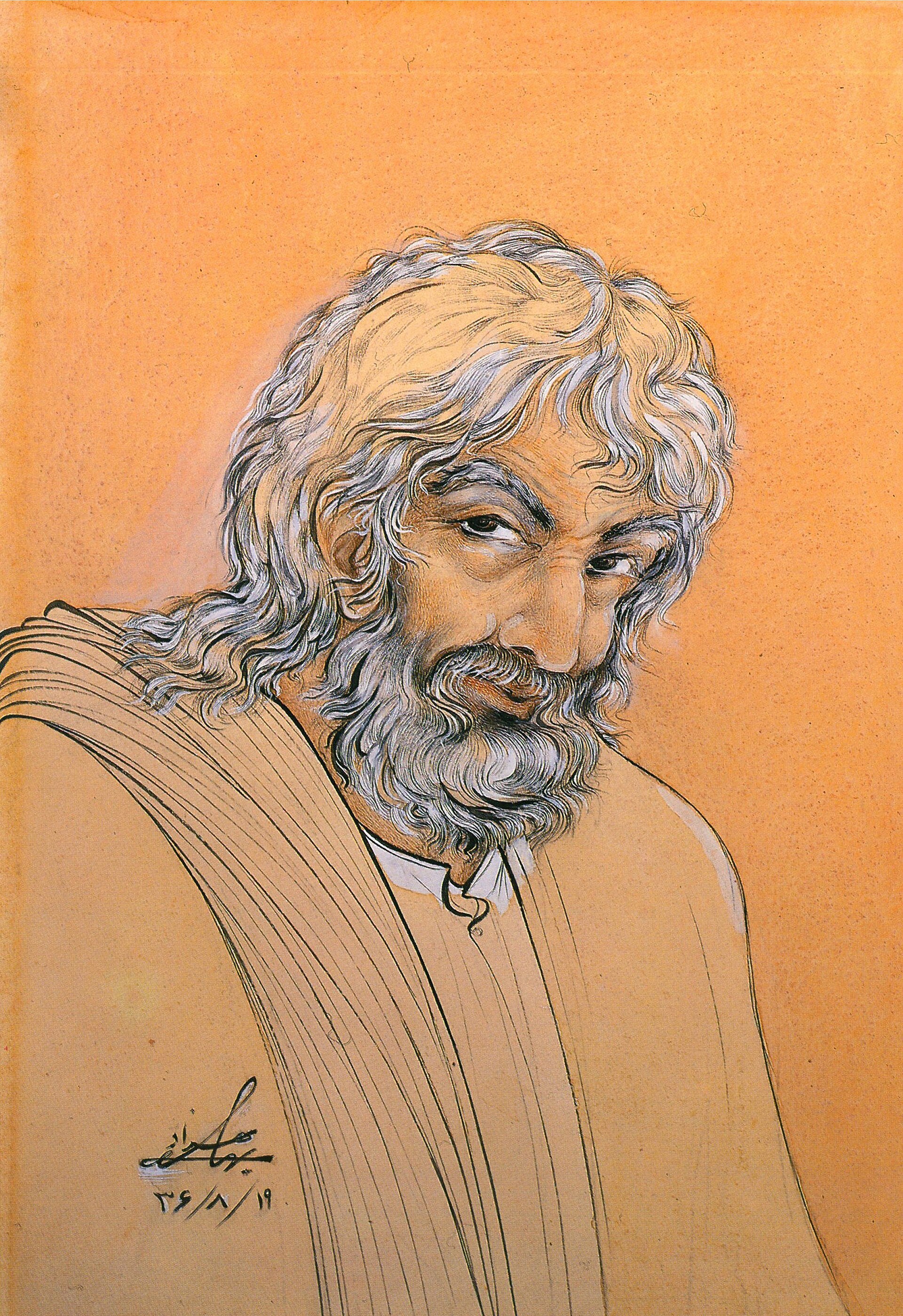
On 15 November 1244, a man dressed head to toe in black walked into the famous Inn of the Sugar Merchants in Konya. He called himself a travelling merchant, though he carried little that suggested trade. According to Haji Bektash Veli's Maqālāt, this stranger, Shams Tabrizi, was searching for something he was destined to find in that city. He found it in Rumi, a respected scholar seen riding a black horse through the streets.
Their first encounter has been told in more than one version, but the shape of the story is always the same. Rumi sat beside a great stack of books when Shams passed and asked what he was doing. Rumi answered dismissively that it was something Shams could never understand. In one telling, Shams then threw the books into a nearby pool; when Rumi rescued them in alarm, they were completely dry. In another version, the books simply catch fire. Either way, when Rumi demanded an explanation, Shams gave the same answer Rumi had given him — words about knowledge beyond ordinary understanding.
Little is certain about Shams before that day. Sipah Salar, a devoted companion of Rumi who spent forty days with him, said Shams was the son of the Imam Ala al-Din. Aflaki, in his Manāqib al-'arifīn, names the father differently, as a man called 'Ali, with a grandfather named Malikdad. Aflaki also suggests Shams was sixty when he reached Konya, though scholars have questioned how reliable his account really is. What is generally agreed is that Shams was educated in Tabriz and became a disciple of Baba Kamal al-Din Jumdi, wandering from place to place before Konya, weaving baskets and selling girdles to survive.
Despite this humble trade, later biographers, including the Persian historian Dawlatshah Samarqandi, gave Shams the epithet 'the embroiderer' — zarduz. Curiously, this title actually belonged to an Isma'ili Imam named Shams al-Din Muhammad, who had lived anonymously in Tabriz working as an embroiderer. How the epithet migrated from one Shams to another remains unexplained, but it hints at how tangled and mythologized the historical record around this man became almost immediately.
Whatever happened in that inn, Shams and Rumi went on to spend several years together in Konya as companions before Shams eventually left the city and settled in Khoy. Rumi's son, Sultan Walad, wrote only that Shams mysteriously vanished from Konya, offering no further detail. Other traditions claim Shams was killed by disciples jealous of his closeness to Rumi, unable to bear how completely their master had given himself to this stranger; other accounts hold that he simply lived out his remaining years in Khoy, where he was buried. Sources give his life as spanning roughly 1185 to 1248, though the exact date and circumstances of his death remain uncertain.
More from People

Frida Kahlo: Painting Through the Pain
An iron handrail pierced a teenage girl's body on a Mexico City street — and out of that wreckage came one of the most searingly honest artists of the twentieth century.

The Ox-Cart and the Snow: Şerife Bacı's Last Road
Somewhere on a frozen road outside Kastamonu, a young mother pressed her body against a quilt to keep her infant warm through the night. By morning, she had become a legend.

Pompey the Great: The Friendship That Broke Rome
He was called 'the teenage butcher' by his enemies and 'the Great' by his mentor — and the empire he helped build would ultimately be the death of him.

The Third Pole: How Hunt, Hillary and Tenzing Conquered Everest
For decades the world's highest mountain had turned back every climber who dared it — sometimes swallowing them whole. In the spring of 1953, one expedition finally reached the point where the sky simply stopped going up.

Two Rivals Under One Roof: Picasso and Matisse
Long before they were named together as the twin poles of modern art, they were simply two names on the walls of the same small Paris gallery — one already known for wild colour, the other not yet known at all.

Fire and Ice: The Borg–McEnroe Rivalry
One man never raised his voice. The other rarely lowered his. Between them they produced two of the greatest matches tennis has ever seen.