The Third Pole: How Hunt, Hillary and Tenzing Conquered Everest
For decades the world's highest mountain had turned back every climber who dared it — sometimes swallowing them whole. In the spring of 1953, one expedition finally reached the point where the sky simply stopped going up.

Mount Everest had been recognised as the highest point on Earth since the 1850s, and from that moment it became an obsession. Climbers of the Golden Age of Alpinism wondered whether its extreme height made an ascent physically impossible. George Mallory, who vanished on the mountain during the 1924 British expedition, famously said he wanted to climb it 'because it's there' — a phrase that would echo through mountaineering history for the next seventy-five years, as his body's location remained unknown.
Most early attempts had come from the north, through Tibet, but the Chinese annexation of Tibet closed that route entirely. Climbers turned instead to Nepal on the south side. In 1952 a Swiss expedition, climbing from Nepal, reached roughly 8,595 metres on the southeast ridge — a new altitude record, and proof that a route to the top might exist.
Britain felt the clock ticking. The French had permission for their own attempt in 1954, the Swiss another in 1955, meaning that if the British missed 1953, they might not get another shot until 1956 or later. The Joint Himalayan Committee of the Alpine Club and the Royal Geographical Society made a controversial choice of leader: not Eric Shipton, the expected favourite who had led the 1951 reconnaissance and 1952 Cho Oyu expeditions, but Colonel John Hunt, a British Army officer whose military leadership experience the committee believed gave the best chance of success.
The decision unsettled many team members loyal to Shipton. Charles Evans later remarked that Shipton was said to lack the killer instinct — 'not a bad thing to lack in my view.' Edmund Hillary was among the most opposed, but he came around once he met Hunt and heard Hunt's own admission that the change had been badly handled. Committee member Larry Kirwan reportedly said they had made the right decision but in the worst possible way.
Raising money proved its own battle. Hunt later wrote of the anxiety of securing substantial funds for an expedition whose public image was coloured by a string of past failures, with no financial backing beyond the committee members' own pockets. Training took place that winter in Snowdonia, Wales, using the Pen-y-Gwryd hotel as a base while the team practiced on Snowdon and the Glyderau, and tested oxygen equipment at a climbers' hut near Capel Curig.
More from People

Frida Kahlo: Painting Through the Pain
An iron handrail pierced a teenage girl's body on a Mexico City street — and out of that wreckage came one of the most searingly honest artists of the twentieth century.

The Ox-Cart and the Snow: Şerife Bacı's Last Road
Somewhere on a frozen road outside Kastamonu, a young mother pressed her body against a quilt to keep her infant warm through the night. By morning, she had become a legend.

Pompey the Great: The Friendship That Broke Rome
He was called 'the teenage butcher' by his enemies and 'the Great' by his mentor — and the empire he helped build would ultimately be the death of him.

Two Rivals Under One Roof: Picasso and Matisse
Long before they were named together as the twin poles of modern art, they were simply two names on the walls of the same small Paris gallery — one already known for wild colour, the other not yet known at all.

Fire and Ice: The Borg–McEnroe Rivalry
One man never raised his voice. The other rarely lowered his. Between them they produced two of the greatest matches tennis has ever seen.
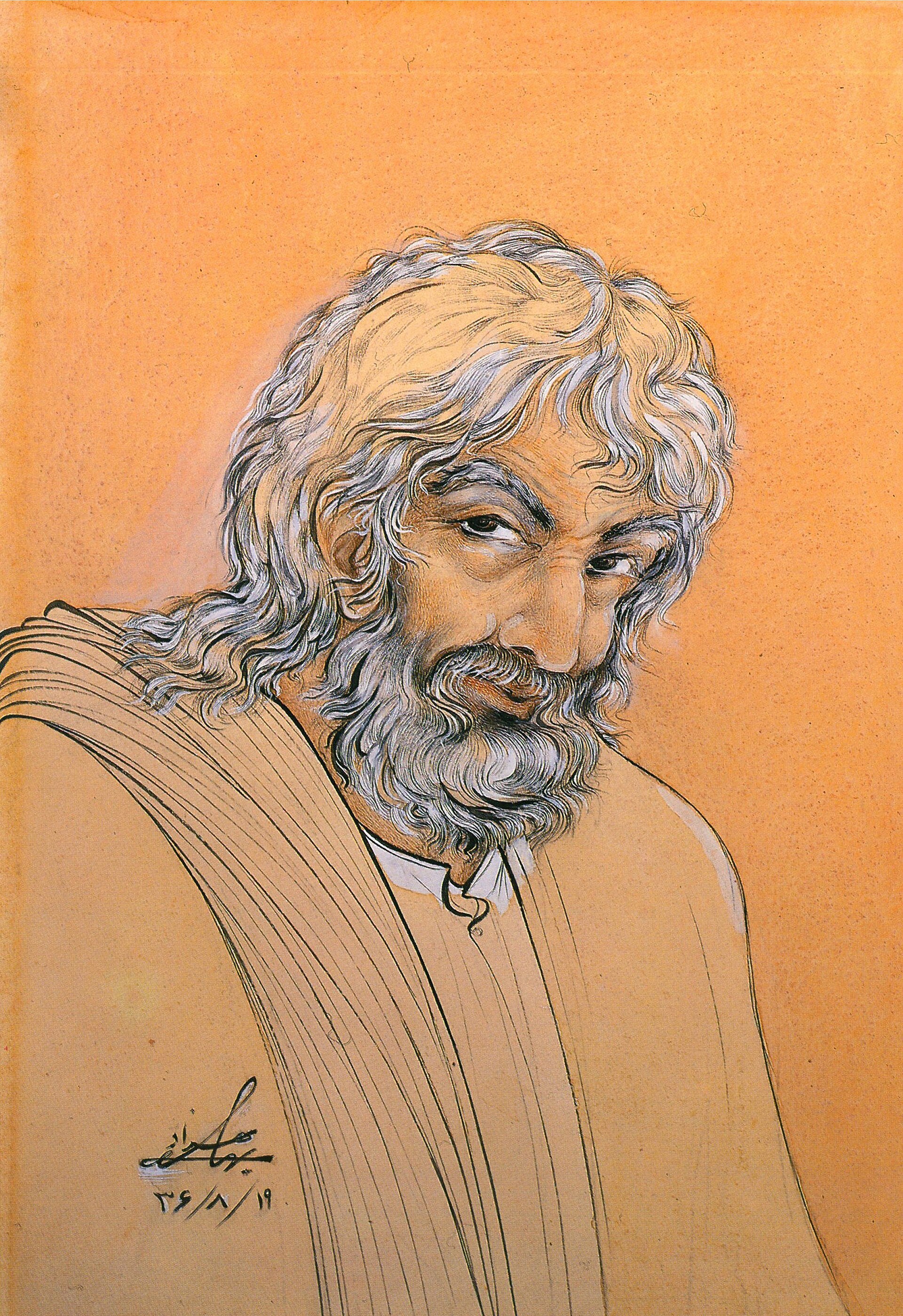
The Stranger Who Set the Books on Fire
A man in black arrived at an inn in Konya looking for something he couldn't name — and found it in a scholar riding a black horse.