Catherine the Great: The German Princess Who Remade Russia
A minor German princess with no fortune arrived in Russia to marry a man she detested — and ended up ruling an empire for thirty-four years.
She was born Sophie Auguste Friederike on 2 May 1729 in Stettin, in the Prussian province of Pomerania, the daughter of Christian August, Prince of Anhalt-Zerbst, a Prussian general with little money and less power. Her mother, Joanna Elisabeth of Holstein-Gottorp, came from a family with wealthier, better-connected relatives, and it was through those connections that young Sophie's fate was shaped. Because her second cousin Peter converted to Orthodoxy, two of Sophie's own first cousins, Gustav III and Charles XIII, would later become kings of Sweden — a reminder of how tightly the ruling houses of Europe were interwoven. In the fractured patchwork of the Holy Roman Empire, with its hundreds of competing princely houses, a well-arranged marriage was often the only currency a family like hers possessed. Sophie was raised for exactly that purpose: trained in etiquette, fluent in French, versed in Lutheran theology, and by her own account something of a tomboy who even taught herself to handle a sword.
In 1739, at the age of ten, she met her second cousin Peter, later Peter III of Russia — and disliked him instantly, put off by his pale complexion and fondness for drink. Their marriage in 1744 was arranged not from affection but from politics, engineered under pressure from the reigning Russian Empress Elizabeth, who had chosen Peter, grandson of Peter the Great, as her heir. Sophie converted to Orthodoxy and took the name Catherine Alexeievna. The marriage brought her no happiness; both she and Peter reportedly pursued other romantic attachments throughout it.
When Empress Elizabeth died, Peter ascended the throne on 5 January 1762 as Peter III. His reign lasted barely six months. On 28 June 1762, a regiment of the imperial guard rose against him, and Catherine was proclaimed Empress of Russia in his place — a coup in which Peter was overthrown and, by many accounts, killed shortly after. Catherine, the outsider princess with no drop of Russian blood, now held one of the largest empires on earth.
Her thirty-four-year reign became known as a golden age. She surrounded herself with capable men — the favourite Count Grigory Orlov who helped bring her to power, and later Grigory Potemkin, alongside generals like Alexander Suvorov and Pyotr Rumyantsev and admirals like Samuel Greig and Fyodor Ushakov. Under her patronage new cities, universities and theatres rose across Russia, and she founded the Smolny Institute, Europe's first state-financed institution of higher education for women. European immigrants arrived in growing numbers, and Russia's standing among the great powers of the continent solidified.
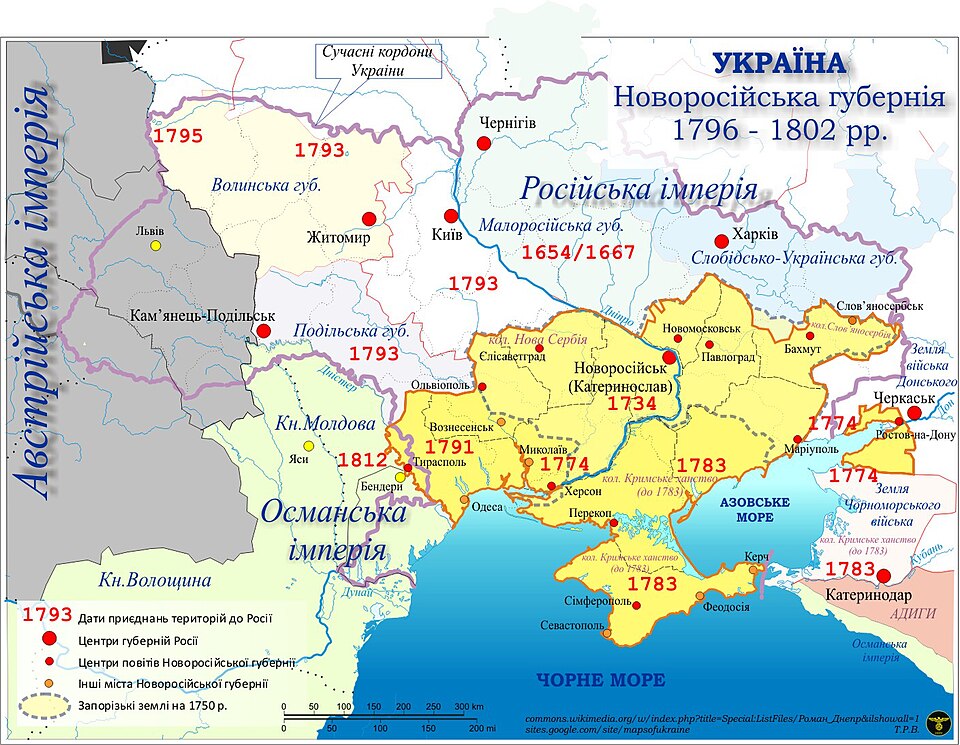
Catherine's ambitions abroad were vast and calculated. When Augustus III of Poland died in 1763, she used the resulting succession struggle to install her former lover Stanislaw Poniatowski on the Polish throne, extending Russian domination over the country — domination that ended, decades later, in Poland's partition among Russia, Prussia and Austria. By the time of her death in 1796, Poland had ceased to exist as an independent state, not to be restored until after the First World War, 123 years later.
More from People

Frida Kahlo: Painting Through the Pain
An iron handrail pierced a teenage girl's body on a Mexico City street — and out of that wreckage came one of the most searingly honest artists of the twentieth century.

The Ox-Cart and the Snow: Şerife Bacı's Last Road
Somewhere on a frozen road outside Kastamonu, a young mother pressed her body against a quilt to keep her infant warm through the night. By morning, she had become a legend.

Pompey the Great: The Friendship That Broke Rome
He was called 'the teenage butcher' by his enemies and 'the Great' by his mentor — and the empire he helped build would ultimately be the death of him.

The Third Pole: How Hunt, Hillary and Tenzing Conquered Everest
For decades the world's highest mountain had turned back every climber who dared it — sometimes swallowing them whole. In the spring of 1953, one expedition finally reached the point where the sky simply stopped going up.

Two Rivals Under One Roof: Picasso and Matisse
Long before they were named together as the twin poles of modern art, they were simply two names on the walls of the same small Paris gallery — one already known for wild colour, the other not yet known at all.

Fire and Ice: The Borg–McEnroe Rivalry
One man never raised his voice. The other rarely lowered his. Between them they produced two of the greatest matches tennis has ever seen.