Freud and Jung: The Break That Reshaped the Mind
He was meant to be the heir, the man who would carry psychoanalysis into the future. Instead, the friendship collapsed — and out of the wreckage came an entirely new science of the psyche.
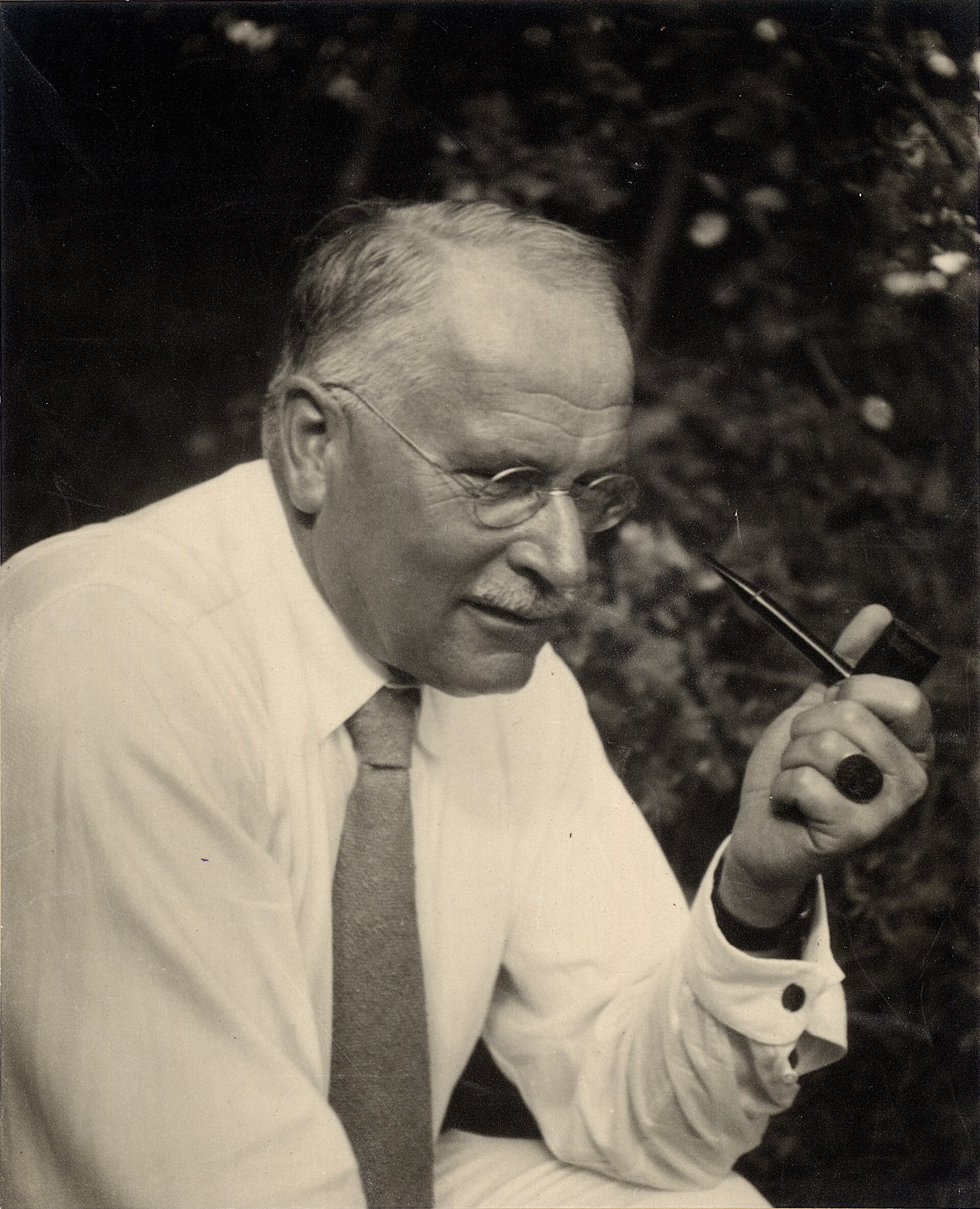
Carl Gustav Jung was born on 26 July 1875 in Kesswil, in the Swiss canton of Thurgau, the son of a Swiss Reformed pastor, Paul Achilles Jung, and Emilie Jung, née Preiswerk. He grew up in a household thick with clergy — eight of his uncles were also pastors — and with an unusual intellectual inheritance from his maternal grandfather, Samuel Preiswerk, a Hebraist and early advocate of Zionism who was also drawn to the occult. Jung's childhood was marked by tension between a father he saw as reliable but weak, and a mother he experienced as eccentric and unpredictable, prone to strange nighttime episodes she attributed to visiting spirits.
Jung studied medicine in Basel starting in 1895, and in 1900 became an assistant to Eugen Bleuler at the Burghölzli psychiatric hospital in Zurich, completing his doctorate in 1902 on occult phenomena and their connections to psychology and pathology. He deepened his training in Paris for six months under Pierre Janet. In 1903 he married Emma Rauschenbach. It was through his research and his rising reputation as a psychiatrist that Jung came into contact with Sigmund Freud, the founder of psychoanalysis, and the two men began a lengthy correspondence built on what seemed a shared vision of human psychology.
Freud saw the younger Jung as more than a gifted colleague. He viewed him as the heir he had been seeking to carry psychoanalysis forward, and, just as importantly, as a way to legitimize the field. Freud and most of the early psychoanalysts were Jews facing rising antisemitism in Europe, while Jung had been raised Christian, even though he did not adhere strictly to Christian doctrine, seeing religion instead as a powerful expression of the human psyche's search for meaning. Freud secured Jung's appointment as the first president of his newly founded International Psychoanalytical Association — Jung took up that post at 36.
For a time, the collaboration flourished. Jung's clinical work and his own independent research, however, pulled him steadily away from Freud's doctrine. Jung was developing ideas that did not fit comfortably within Freud's framework — concepts like the collective unconscious, archetypes, and psychological complexes — and following his older colleague's line became increasingly difficult for him. The two men parted ways, a division that Jung experienced as personally painful.
Out of that rupture, Jung built something new: analytical psychology, a comprehensive system distinct from psychoanalysis. At its center was the idea of individuation — the lifelong process by which a person's conscious and unconscious elements differentiate and integrate to form a complete self. Jung considered this the central task of human development, and around it he built an entire vocabulary that would seep into popular culture: synchronicity, the shadow, the persona, anima and animus, and the distinction between introversion and extraversion, which he likened to the archetypes of Apollo and Dionysus.
More from People

Frida Kahlo: Painting Through the Pain
An iron handrail pierced a teenage girl's body on a Mexico City street — and out of that wreckage came one of the most searingly honest artists of the twentieth century.

The Ox-Cart and the Snow: Şerife Bacı's Last Road
Somewhere on a frozen road outside Kastamonu, a young mother pressed her body against a quilt to keep her infant warm through the night. By morning, she had become a legend.

Pompey the Great: The Friendship That Broke Rome
He was called 'the teenage butcher' by his enemies and 'the Great' by his mentor — and the empire he helped build would ultimately be the death of him.

The Third Pole: How Hunt, Hillary and Tenzing Conquered Everest
For decades the world's highest mountain had turned back every climber who dared it — sometimes swallowing them whole. In the spring of 1953, one expedition finally reached the point where the sky simply stopped going up.

Two Rivals Under One Roof: Picasso and Matisse
Long before they were named together as the twin poles of modern art, they were simply two names on the walls of the same small Paris gallery — one already known for wild colour, the other not yet known at all.

Fire and Ice: The Borg–McEnroe Rivalry
One man never raised his voice. The other rarely lowered his. Between them they produced two of the greatest matches tennis has ever seen.