From Battlefield Enemies to Architects of Peace: Atatürk and Venizelos
Two men who once sent armies against each other would end their lives exchanging gestures of peace — and one would even nominate the other for a Nobel Prize.
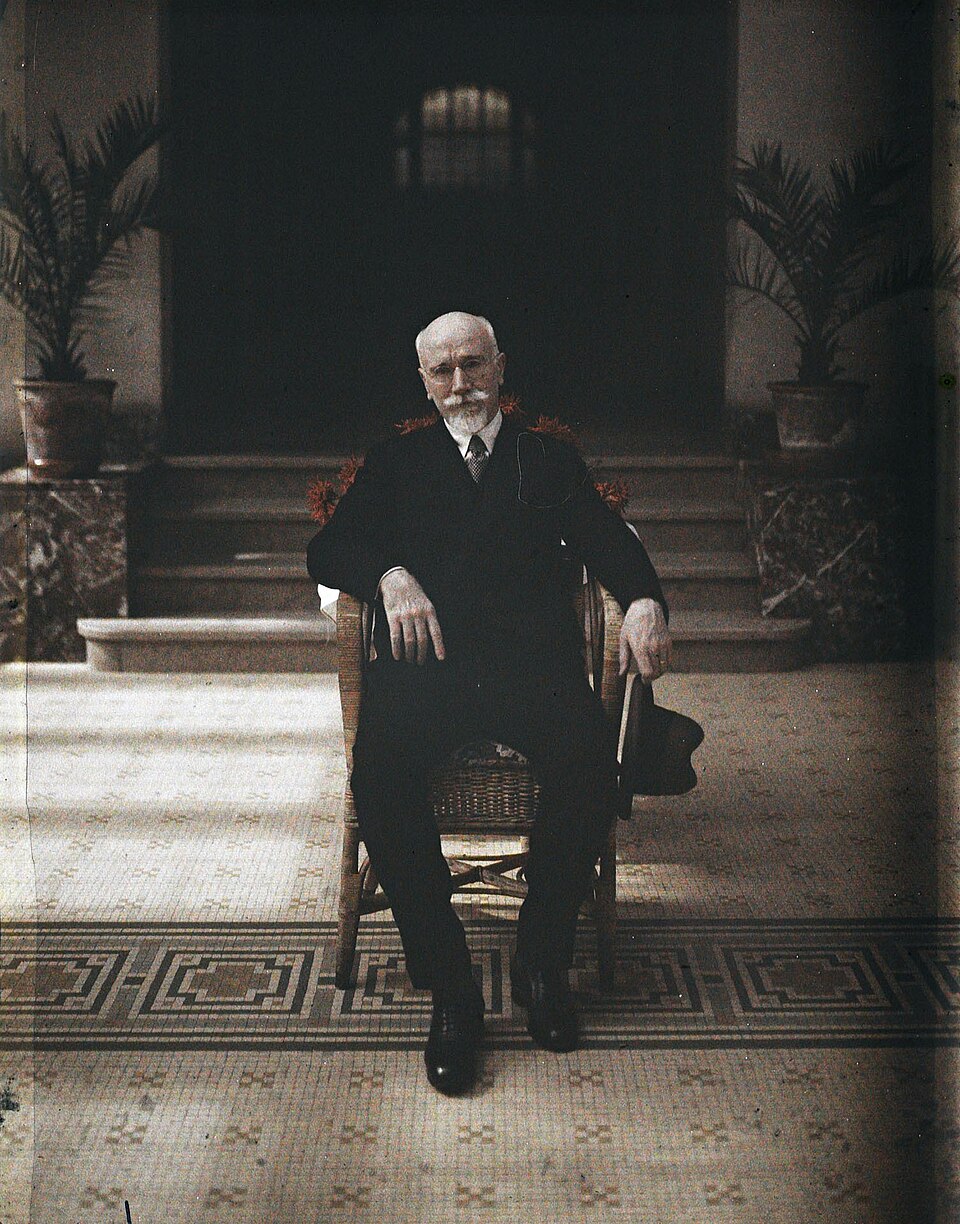
In the early 1920s, Eleftherios Venizelos and Mustafa Kemal Atatürk stood on opposite sides of a brutal war. Venizelos, as Greece's prime minister, had pushed for territorial concessions in Western Anatolia and Thrace after World War I, hoping to fulfill the Megali Idea — a vision of uniting Greek-speaking peoples around the Aegean under the Greek flag. That ambition led directly to the Greco-Turkish War of 1919–1922, a conflict that devastated both nations and ended in Greek defeat.
Venizelos lost the 1920 general election before that war reached its bitter conclusion, and he went into self-imposed exile. Yet even from outside government, he remained central to his country's fate. He represented Greece in the negotiations that produced the Treaty of Lausanne, the settlement that redrew borders and arranged a mutual population exchange between Greece and Turkey — a process that uprooted hundreds of thousands of people on both sides.
What followed was a remarkable turn. Rather than nursing the old animosities, Venizelos returned to active politics in 1928 with a landslide election victory, and his final years in office were marked by a deliberate effort to improve relations with Turkey. This was no small pivot: the two countries had just fought a devastating war, and the wounds of the population exchange were still raw. Venizelos also focused on resettlement policies for the refugees who had arrived from Asia Minor, seeking to stabilize a society reshaped by displacement.
The clearest symbol of this reconciliation came on 29 October 1930, when Venizelos traveled to Turkey to take part in the Republic Day celebrations — the anniversary of the state Atatürk had founded. For a Greek statesman who had once championed Greek expansion into Anatolia to stand among Turkish crowds celebrating their republic was a striking image, one that signaled how far both leaders were willing to travel from the battlefield toward diplomacy.
This gesture did not erase history, but it reframed it. Venizelos, who had spent decades as a nationalist leader — from his early role in the Cretan revolts of 1897 and 1905 to his leadership through the Balkan Wars and World War I — was capable of the same clear-eyed pragmatism in peace that he had shown in pursuing territorial ambition in war. Atatürk, for his part, was building a new republic that needed stability on its borders, not perpetual conflict with its Aegean neighbor.
More from People

Frida Kahlo: Painting Through the Pain
An iron handrail pierced a teenage girl's body on a Mexico City street — and out of that wreckage came one of the most searingly honest artists of the twentieth century.

The Ox-Cart and the Snow: Şerife Bacı's Last Road
Somewhere on a frozen road outside Kastamonu, a young mother pressed her body against a quilt to keep her infant warm through the night. By morning, she had become a legend.

Pompey the Great: The Friendship That Broke Rome
He was called 'the teenage butcher' by his enemies and 'the Great' by his mentor — and the empire he helped build would ultimately be the death of him.

The Third Pole: How Hunt, Hillary and Tenzing Conquered Everest
For decades the world's highest mountain had turned back every climber who dared it — sometimes swallowing them whole. In the spring of 1953, one expedition finally reached the point where the sky simply stopped going up.

Two Rivals Under One Roof: Picasso and Matisse
Long before they were named together as the twin poles of modern art, they were simply two names on the walls of the same small Paris gallery — one already known for wild colour, the other not yet known at all.

Fire and Ice: The Borg–McEnroe Rivalry
One man never raised his voice. The other rarely lowered his. Between them they produced two of the greatest matches tennis has ever seen.