Julius Caesar: The Most Dangerous Man in Rome
He crossed a shallow river with a single legion and unmade a republic that had stood for centuries. What kind of man dares that?
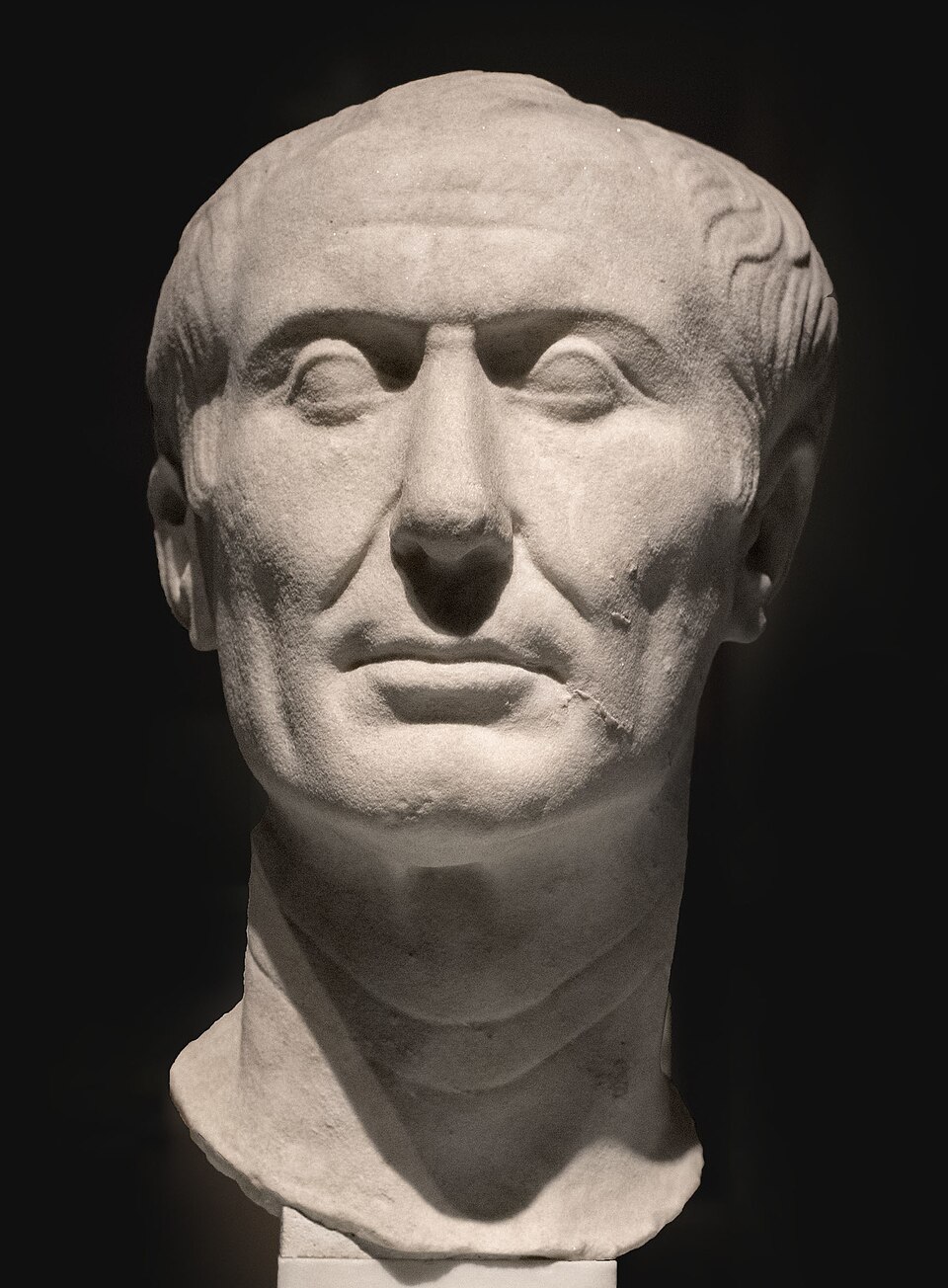
On a January day in 49 BC, Gaius Julius Caesar stood at the edge of the Rubicon, a modest stream marking the boundary between his province and Italy proper. Roman law forbade a general from bringing his army across that line uninvited. Caesar crossed anyway, and in doing so ignited a civil war that would end the Roman Republic in all but name. It was a fittingly bold act for a man whose entire life had been a series of calculated risks.
Born on 12 or 13 July 100 BC into the patrician gens Julia, Caesar's family claimed descent from the goddess Venus herself, through Aeneas and his son Julus. Yet for all this mythic pedigree, the Julii Caesares had not been especially powerful in recent generations. Caesar's own father reached only the praetorship, and it was through marriage — his sister to the great general Gaius Marius, and later Caesar's own political maneuvering — that the family's fortunes began to rise.
Caesar came of age amid brutal factional violence. Rome was split between the optimates, who favored aristocratic Senate rule, and the populares, who leaned on popular assemblies for power. His uncle Marius stood with the populares, while Marius's rival Sulla led the optimates. After Sulla's victory in the ensuing civil war, Caesar — tied to Marius's faction through his priestly appointment as flamen Dialis and his marriage to Cinna's daughter Cornelia — was ordered to divorce her and abdicate his position. He refused, a defiance that nearly cost him his life and hinted at the stubborn will that would define his career.
Caesar's rise came through the battlefield. In 60 BC he joined Pompey and Crassus in the First Triumvirate, an informal alliance that dominated Roman politics despite fierce opposition from senators like Cato the Younger, who had the private support of Cicero. From this position, Caesar was dispatched to conquer Gaul, and by 51 BC he had done so, vastly expanding Roman territory. Along the way he invaded Britain and built a bridge across the Rhine — feats that built him an army fiercely loyal to him personally, and a reputation that began to outshine even Pompey's.
As Caesar's glory grew, so did the alliance's cracks. By 50 BC Pompey had aligned himself with the Senate, and as Caesar's command neared its end, the Senate ordered him to give up his legions and return to Rome as a private citizen. Caesar understood the danger: disarmed, he would be vulnerable to prosecution and ruin. So in January 49 BC he crossed the Rubicon with his army, launching Caesar's civil war. He won decisively, and by 45 BC held power in Rome with virtually no rival left to challenge him.
More from People

Frida Kahlo: Painting Through the Pain
An iron handrail pierced a teenage girl's body on a Mexico City street — and out of that wreckage came one of the most searingly honest artists of the twentieth century.

The Ox-Cart and the Snow: Şerife Bacı's Last Road
Somewhere on a frozen road outside Kastamonu, a young mother pressed her body against a quilt to keep her infant warm through the night. By morning, she had become a legend.

Pompey the Great: The Friendship That Broke Rome
He was called 'the teenage butcher' by his enemies and 'the Great' by his mentor — and the empire he helped build would ultimately be the death of him.

The Third Pole: How Hunt, Hillary and Tenzing Conquered Everest
For decades the world's highest mountain had turned back every climber who dared it — sometimes swallowing them whole. In the spring of 1953, one expedition finally reached the point where the sky simply stopped going up.

Two Rivals Under One Roof: Picasso and Matisse
Long before they were named together as the twin poles of modern art, they were simply two names on the walls of the same small Paris gallery — one already known for wild colour, the other not yet known at all.

Fire and Ice: The Borg–McEnroe Rivalry
One man never raised his voice. The other rarely lowered his. Between them they produced two of the greatest matches tennis has ever seen.