Michelangelo and Leonardo: Two Titans of Florence
A marble giant hewn in solitude, a rival genius who painted with the mind of a scientist — Florence had room for only so much greatness, and it produced two men who could barely stand each other.
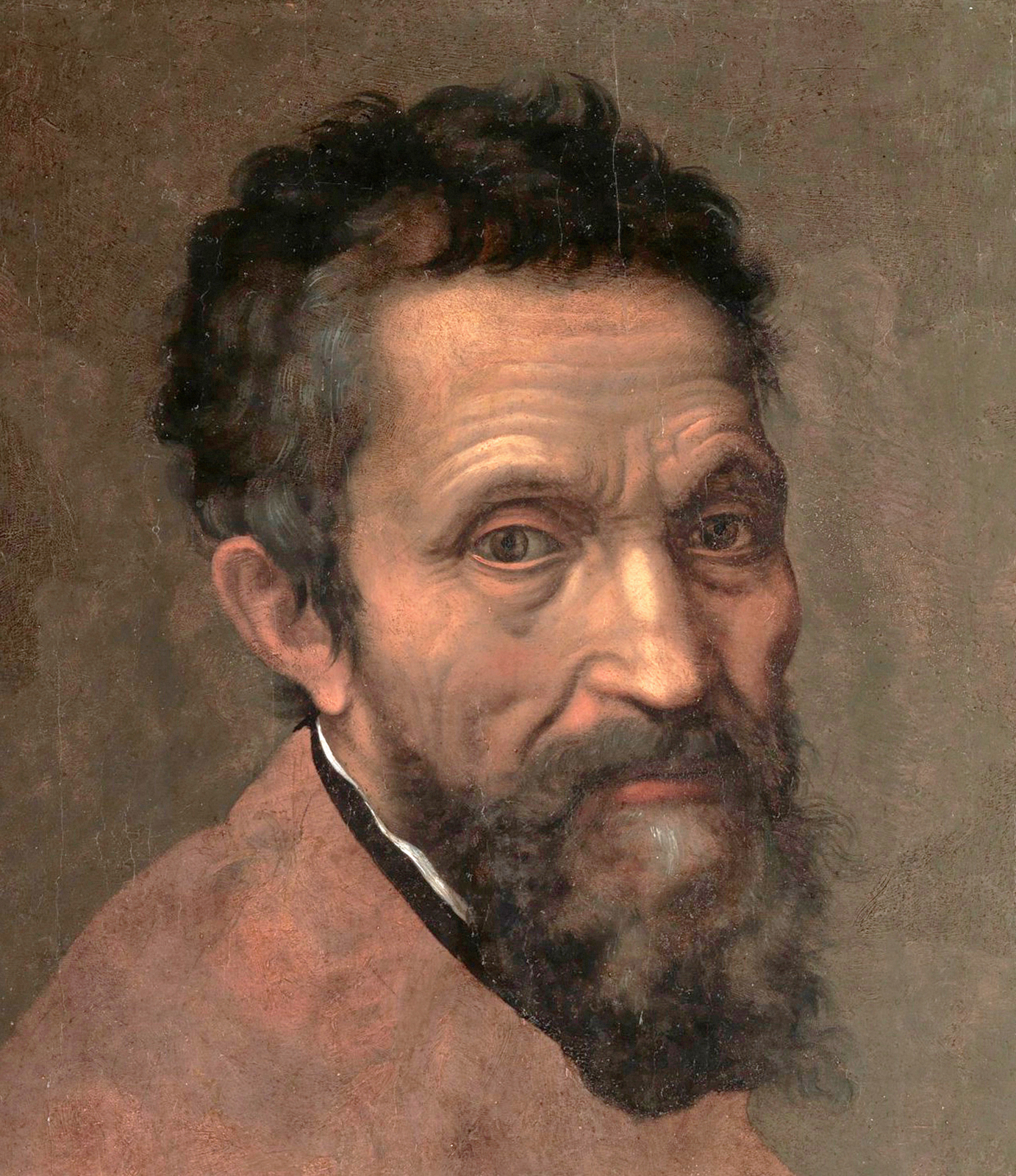
On 6 March 1475, in the small Tuscan town of Caprese near Arezzo, a child was born who would one day be called Il Divino. Michelangelo di Lodovico Buonarroti Simoni came from a family of failed Florentine bankers; his father, Ludovico, held a minor administrative post as podestà of Chiusi della Verna at the time. Months after the birth, the family returned to Florence, the city that would shape the boy's entire imagination.
His mother died when he was six, and Michelangelo was sent to live with a nanny in Settignano, where his father owned a marble quarry. It was there, among stonecutters, that he first fell in love with the chisel and hammer — tools he later said he had absorbed with his very nurse's milk, according to his biographer Giorgio Vasari. Sent to study grammar in Florence, he ignored his lessons, preferring to sketch the frescoes of Giotto and Masaccio and to loiter among painters.
Florence in that era was Italy's great furnace of art, sponsored by the Medici and the merchant guilds, home to Brunelleschi's churches, Ghiberti's bronze doors, and the sculptural gallery of Orsanmichele. In 1488, at thirteen, Michelangelo was apprenticed to Domenico Ghirlandaio, master of fresco and portraiture. Unusually, his father negotiated a wage for him — a rare mark of talent recognized so young. A year later, Lorenzo de' Medici asked Ghirlandaio for his two finest pupils; Michelangelo was one of them, and he went on to study at the Medici's Platonic Academy among humanists like Marsilio Ficino and Pico della Mirandola.
Fame came astonishingly early. Before he turned thirty, Michelangelo had carved both the Pietà and the David, works that announced a new standard for Western sculpture. The David, finished when he was twenty-six, was cut from a single block of marble five and a half meters tall; he built a shed beside the stone and worked largely alone, often through the night, to liberate the young king from the rock.
It was in this same Florence, among the same patrons and the same competitive air, that Michelangelo's path crossed that of an older, already celebrated master: Leonardo da Vinci. The two were, in the eyes of contemporaries, the twin archetypes of the Renaissance man — one sculptor and architect of terribilità, the awe-inspiring intensity that overwhelmed viewers, the other a painter-scientist of quiet, searching curiosity. Their rivalry was sharp but, by most accounts, not without a strange mutual respect; Florence's artistic circle knew both men as its reigning geniuses, alongside the younger Raphael.
More from People

Frida Kahlo: Painting Through the Pain
An iron handrail pierced a teenage girl's body on a Mexico City street — and out of that wreckage came one of the most searingly honest artists of the twentieth century.

The Ox-Cart and the Snow: Şerife Bacı's Last Road
Somewhere on a frozen road outside Kastamonu, a young mother pressed her body against a quilt to keep her infant warm through the night. By morning, she had become a legend.

Pompey the Great: The Friendship That Broke Rome
He was called 'the teenage butcher' by his enemies and 'the Great' by his mentor — and the empire he helped build would ultimately be the death of him.

The Third Pole: How Hunt, Hillary and Tenzing Conquered Everest
For decades the world's highest mountain had turned back every climber who dared it — sometimes swallowing them whole. In the spring of 1953, one expedition finally reached the point where the sky simply stopped going up.

Two Rivals Under One Roof: Picasso and Matisse
Long before they were named together as the twin poles of modern art, they were simply two names on the walls of the same small Paris gallery — one already known for wild colour, the other not yet known at all.

Fire and Ice: The Borg–McEnroe Rivalry
One man never raised his voice. The other rarely lowered his. Between them they produced two of the greatest matches tennis has ever seen.