Nikola Tesla: The Man Who Saw Tomorrow
A cholera-stricken teenager bargained his way into engineering school with a promise wrung from a dying wish — and grew up to bend electricity itself to his will.
In 1856, in the small village of Smiljan within the Austrian Empire's Military Frontier, a boy was born into the household of an Eastern Orthodox priest. Nikola Tesla's father, Milutin, hoped his son would follow him into the clergy. But his mother, Đuka, though never formally educated, possessed a gift for crafting home tools and mechanical devices, and an uncanny memory for Serbian epic poems — traits Tesla would later credit for his own eidetic memory and creative mind.
School came easily to him. In Karlovac, at the Higher Real Gymnasium, a physics professor's demonstrations of electricity captivated the teenager; he described the 'mysterious phenomena' as something he needed 'to know more of.' He could perform integral calculus in his head, so effortlessly that teachers suspected cheating. He finished in three years instead of four, graduating in 1873 at the age of 17.
Then illness nearly ended everything. Returning home, Tesla contracted cholera and spent nine months bedridden, hovering near death. In a moment of despair, his father — who had wanted him for the priesthood — promised that if Nikola recovered, he would send him to the finest engineering school available. Tesla pulled through, reading Mark Twain during his recovery, and the promise held.
To dodge conscription into the Austro-Hungarian Army, young Tesla fled to Tomingaj near Gračac, wandering the mountains in hunter's garb. He later said this time in nature made him stronger in body and mind. In 1875, he enrolled at the Imperial-Royal Technical College in Graz on a Military Frontier scholarship, passing nearly twice the required number of exams and earning a dean's letter praising him as 'a star of first rank.' But by his third year, gambling and struggles pulled him under; he left Graz in December 1878 without a degree, and for a time even his family lost track of him.
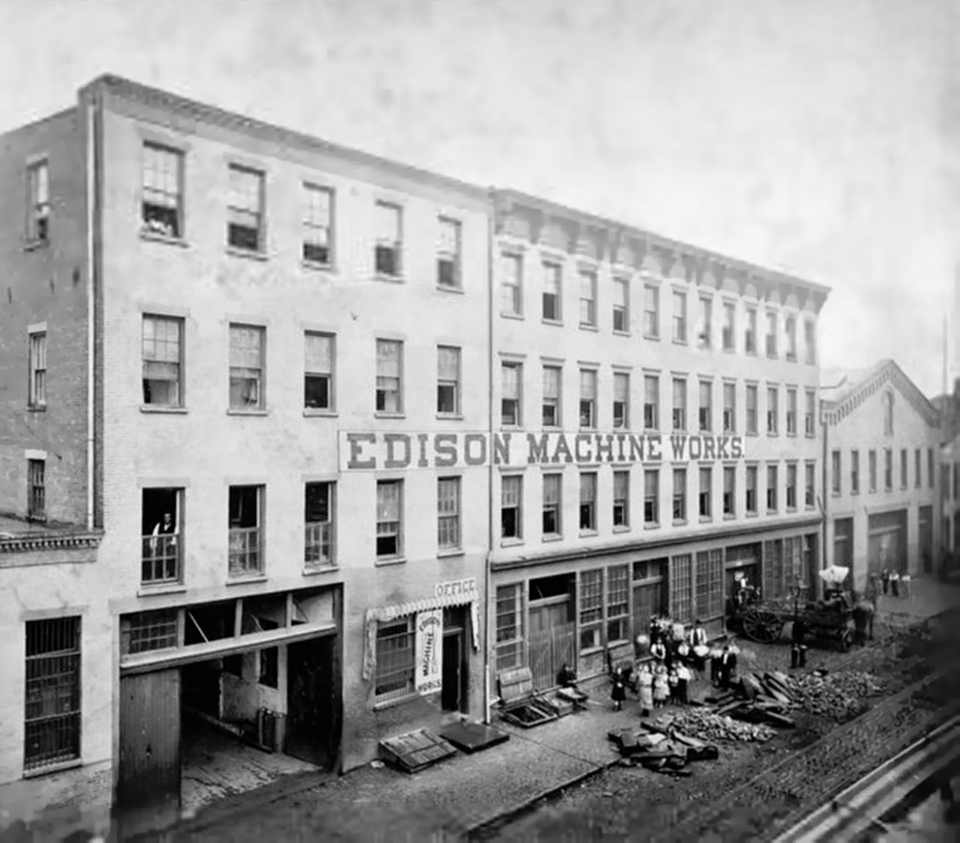
Practical experience followed — in telephony, then at Continental Edison — before Tesla emigrated to the United States in 1884, eventually becoming a naturalized citizen. A brief stint at Edison Machine Works in New York gave way to independence, as Tesla, backed by partners, built laboratories and companies to develop his own devices. His AC induction motor and related polyphase patents, licensed by Westinghouse Electric in 1888, brought him real wealth and became the foundation of the polyphase system Westinghouse sold to the world.
More from People

Frida Kahlo: Painting Through the Pain
An iron handrail pierced a teenage girl's body on a Mexico City street — and out of that wreckage came one of the most searingly honest artists of the twentieth century.

The Ox-Cart and the Snow: Şerife Bacı's Last Road
Somewhere on a frozen road outside Kastamonu, a young mother pressed her body against a quilt to keep her infant warm through the night. By morning, she had become a legend.

Pompey the Great: The Friendship That Broke Rome
He was called 'the teenage butcher' by his enemies and 'the Great' by his mentor — and the empire he helped build would ultimately be the death of him.

The Third Pole: How Hunt, Hillary and Tenzing Conquered Everest
For decades the world's highest mountain had turned back every climber who dared it — sometimes swallowing them whole. In the spring of 1953, one expedition finally reached the point where the sky simply stopped going up.

Two Rivals Under One Roof: Picasso and Matisse
Long before they were named together as the twin poles of modern art, they were simply two names on the walls of the same small Paris gallery — one already known for wild colour, the other not yet known at all.

Fire and Ice: The Borg–McEnroe Rivalry
One man never raised his voice. The other rarely lowered his. Between them they produced two of the greatest matches tennis has ever seen.