The Bard's Missing Years: Shakespeare Before Fame
For seven years, the greatest writer in the English language simply vanishes from the record. What he did between his wedding and his sudden appearance in London remains one of history's most tantalizing blanks.
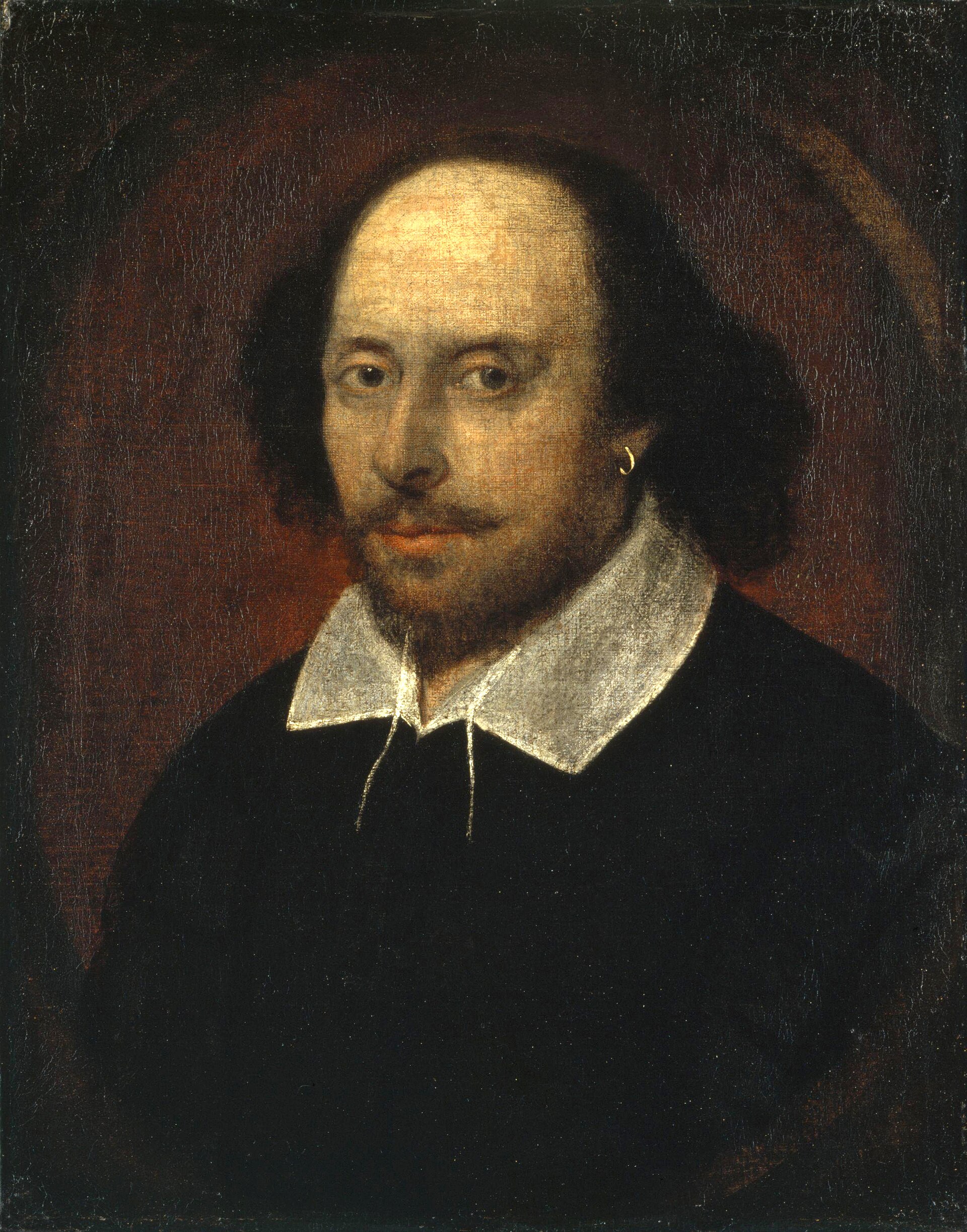
He was baptised in Stratford-upon-Avon on 26 April 1564, third of eight children and the eldest to survive infancy, the son of a glover — a glove-maker — turned town alderman and a woman from a landed Catholic family. Tradition places his birth on 23 April, Saint George's Day — a date biographers have always found convenient, since he died on the same date in 1616. No school records survive, but most scholars agree he was likely educated a quarter-mile from home at the King's New School, a free grammar school chartered in 1553, where Latin classics formed the backbone of instruction.
At eighteen, Shakespeare married Anne Hathaway, eight years his senior. A marriage licence was issued on 27 November 1582, and the very next day two of Anne's neighbours posted bonds guaranteeing no legal impediment to the union. The banns were read only once instead of the customary three — a hint of haste that becomes clearer with the birth of their daughter Susanna, baptised just six months later, on 26 May 1583. Twins followed: Hamnet and Judith, baptised 2 February 1585. Hamnet would die of unknown causes at eleven, buried 11 August 1596.
Then the trail goes cold. Between 1585 and 1592 — the years scholars call Shakespeare's 'lost years' — almost nothing certain survives, apart from his name appearing in the complaints bill of a law case before the Queen's Bench court at Westminster, dated Michaelmas Term 1588 and 9 October 1589. Into this void poured legend: his first biographer, Nicholas Rowe, recorded a Stratford tale that young Shakespeare fled to London after poaching deer on the estate of squire Thomas Lucy, allegedly avenging himself with a scurrilous ballad. Other stories have him minding horses outside London theatres, or working as a country schoolmaster — one theory even links him to a Lancashire Catholic landowner's will naming a 'William Shakeshafte.' None of it is confirmed; it is hearsay gathered long after his death.
By 1592, he resurfaces unmistakably as part of London's theatrical world. He built his career as actor, playwright, and part-owner — a 'sharer' — of the Lord Chamberlain's Men, later renamed the King's Men when James VI of Scotland took the English throne. Most of his known work was produced between 1589 and 1613: some 39 plays, 154 sonnets, three long narrative poems.
More from People

Frida Kahlo: Painting Through the Pain
An iron handrail pierced a teenage girl's body on a Mexico City street — and out of that wreckage came one of the most searingly honest artists of the twentieth century.

The Ox-Cart and the Snow: Şerife Bacı's Last Road
Somewhere on a frozen road outside Kastamonu, a young mother pressed her body against a quilt to keep her infant warm through the night. By morning, she had become a legend.

Pompey the Great: The Friendship That Broke Rome
He was called 'the teenage butcher' by his enemies and 'the Great' by his mentor — and the empire he helped build would ultimately be the death of him.

The Third Pole: How Hunt, Hillary and Tenzing Conquered Everest
For decades the world's highest mountain had turned back every climber who dared it — sometimes swallowing them whole. In the spring of 1953, one expedition finally reached the point where the sky simply stopped going up.

Two Rivals Under One Roof: Picasso and Matisse
Long before they were named together as the twin poles of modern art, they were simply two names on the walls of the same small Paris gallery — one already known for wild colour, the other not yet known at all.

Fire and Ice: The Borg–McEnroe Rivalry
One man never raised his voice. The other rarely lowered his. Between them they produced two of the greatest matches tennis has ever seen.