The Composer Who Was Blamed for Killing Mozart
For two centuries, one man carried the whispered guilt of a murder he never committed. His name was Antonio Salieri.
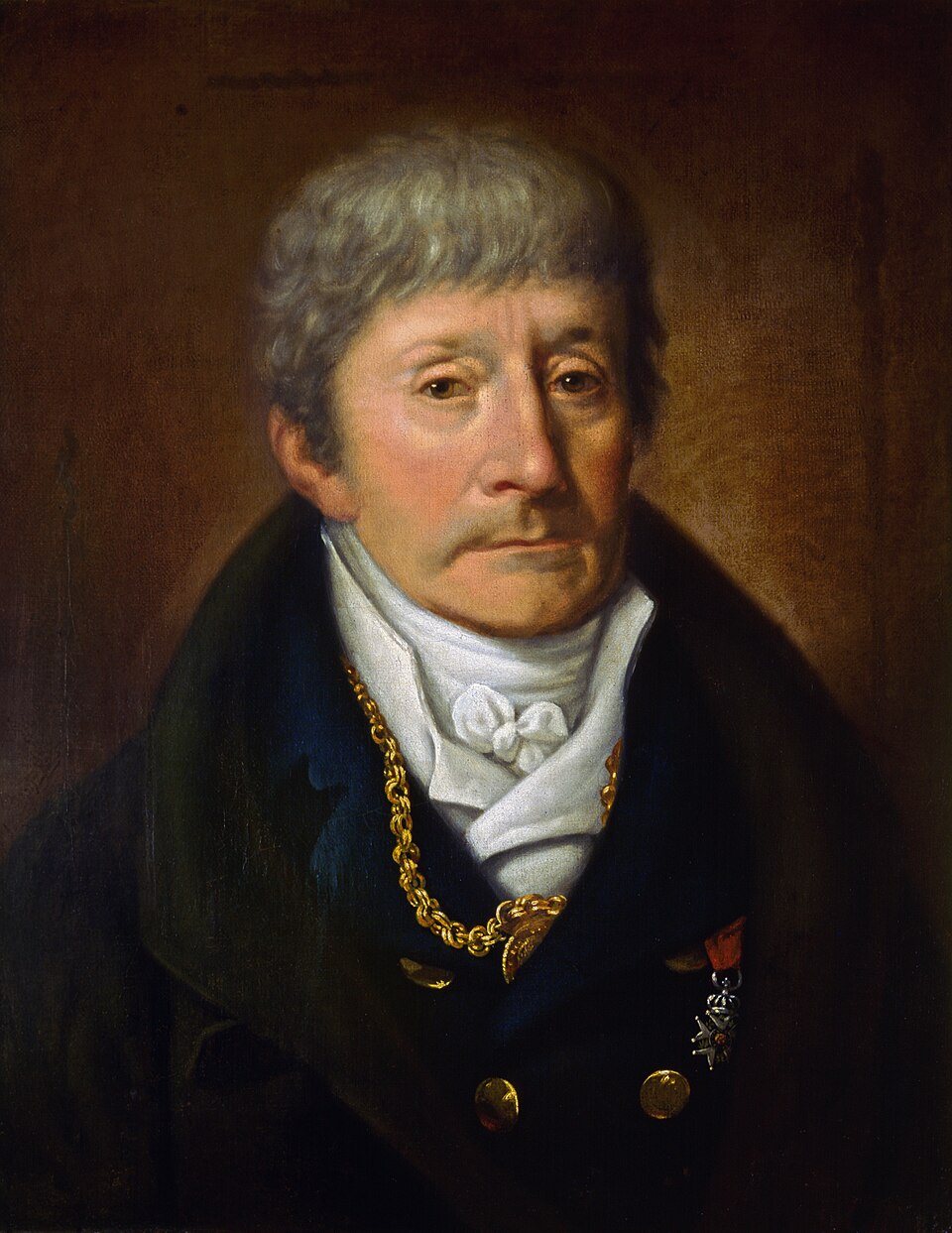
Antonio Salieri was born on 18 August 1750 in Legnago, a small town near Verona in the Republic of Venice, to Antonio Salieri and his wife Anna Maria. He first learned music at home from his older brother Francesco, a former pupil of the violinist Giuseppe Tartini, and later from the organist of Legnago Cathedral. As a boy he twice ran away without permission simply to hear his brother play violin concertos in nearby churches, a hint of the obsession that would define his life.
By 1763 or 1764, both of Salieri's parents had died, leaving him an orphan. He was briefly cared for by a brother who was a monk in Padua, then became the ward of a Venetian nobleman, Giovanni Mocenigo. In Venice he studied under the organist and opera composer Giovanni Battista Pescetti, and after Pescetti's sudden death, under the singer Ferdinando Pacini. It was Pacini who introduced him to composer Florian Leopold Gassmann, who was so impressed by the orphan's talent that he brought him to Vienna and personally funded his education.
Salieri and Gassmann arrived in Vienna on 15 June 1766. Gassmann immediately took him to the Italian Church to consecrate his musical calling, an event Salieri remembered for the rest of his life. His education combined Latin and Italian poetry, German language study, European literature, and rigorous musical training rooted in Johann Fux's treatise Gradus ad Parnassum, which young Salieri translated during his lessons. He lived with Gassmann's family until 1774, the year both Gassmann died and Salieri married.
Through Gassmann, Salieri was introduced to the nightly chamber music performances at Emperor Joseph II's court, quickly impressing the monarch. This connection launched a lasting relationship between musician and monarchy that shaped Salieri's entire career. In 1774 he was appointed director of Italian opera by the Habsburg court, a post he held until 1792, making him the dominant figure in Vienna's Italian-language opera scene.
Salieri became a cosmopolitan and prolific composer, writing operas in three languages and also producing works for opera houses in Paris, Rome, and Venice. From 1788 to 1824 he served as Austrian imperial Kapellmeister, overseeing music at the court chapel and its school. Even after he stopped writing new operas in 1804, he remained one of the most sought-after teachers in Vienna, shaping the next generation of European music.
More from People

Frida Kahlo: Painting Through the Pain
An iron handrail pierced a teenage girl's body on a Mexico City street — and out of that wreckage came one of the most searingly honest artists of the twentieth century.

The Ox-Cart and the Snow: Şerife Bacı's Last Road
Somewhere on a frozen road outside Kastamonu, a young mother pressed her body against a quilt to keep her infant warm through the night. By morning, she had become a legend.

Pompey the Great: The Friendship That Broke Rome
He was called 'the teenage butcher' by his enemies and 'the Great' by his mentor — and the empire he helped build would ultimately be the death of him.

The Third Pole: How Hunt, Hillary and Tenzing Conquered Everest
For decades the world's highest mountain had turned back every climber who dared it — sometimes swallowing them whole. In the spring of 1953, one expedition finally reached the point where the sky simply stopped going up.

Two Rivals Under One Roof: Picasso and Matisse
Long before they were named together as the twin poles of modern art, they were simply two names on the walls of the same small Paris gallery — one already known for wild colour, the other not yet known at all.

Fire and Ice: The Borg–McEnroe Rivalry
One man never raised his voice. The other rarely lowered his. Between them they produced two of the greatest matches tennis has ever seen.