The Cornish Boy Who Saved 2,700 Lives on 9/11
Long before the towers fell, a boy from a Cornish fishing village dreamed of becoming a soldier like the Americans who once camped in his town. Decades later, he would sing to calm the frightened as the World Trade Center burned around them.
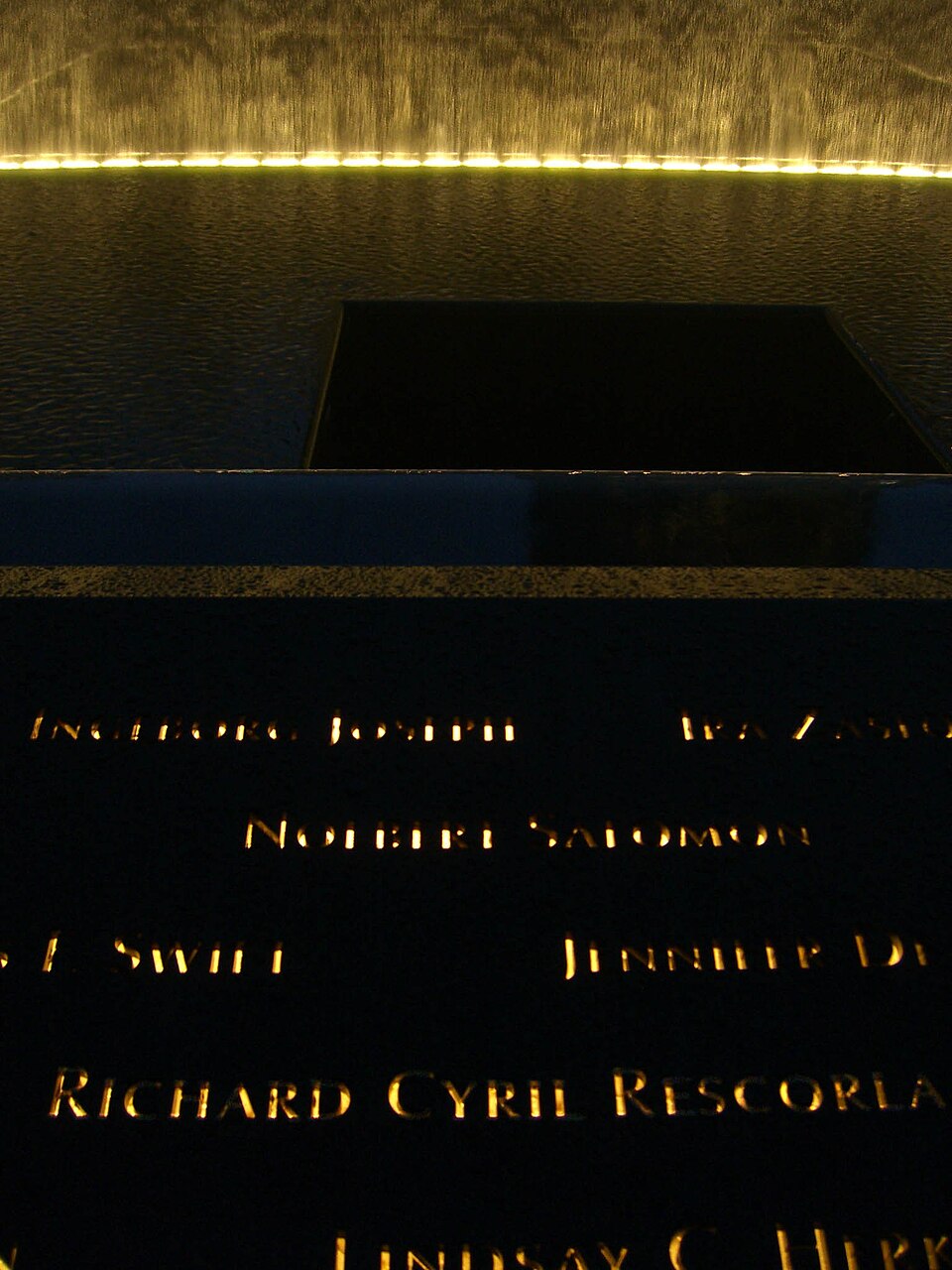
Rick Rescorla was born in Hayle, Cornwall, on May 27, 1939, raised by his grandparents and his mother, a housekeeper and companion to the elderly. In 1943, American soldiers of the 175th Infantry Regiment, part of the U.S. 29th Infantry Division, arrived in Hayle to prepare for D-Day. A young Rescorla idolized them, and it was there, watching those soldiers, that he first decided he wanted to be one himself.
He was a natural athlete, setting a school shot put record and boxing avidly. During a professional match between a British boxer and American heavyweight Tami Mauriello, Rescorla declared his loyalty to the American fighter, saying 'I'm for Tammy.' When Mauriello won, the nickname 'Tammy' stuck to Rescorla around Hayle for years.
At sixteen, in 1956, Rescorla left home to join the army, volunteering for the longer three-year term rather than the standard two-year national service, since volunteers received better conditions. He trained as a paratrooper with the Parachute Regiment and served in an intelligence unit in Cyprus during the EOKA insurgency from 1957 to 1960, earning the General Service Medal with clasp Cyprus.
After his British commission, Rescorla joined the Northern Rhodesia Police from 1960 to 1963, an experience that hardened his anti-Communist convictions. There he formed a pivotal friendship with American soldier Daniel J. Hill, who urged him toward the U.S. Army after Rescorla chose discharge rather than turn his weapon on white colonists resisting independence. Returning to London, he joined the Metropolitan Police, but restless and drawn to combat, he emigrated to the United States, living first at a Brooklyn YMCA.
Enlisting in the U.S. Army in 1963, Rescorla trained at Fort Dix and Fort Benning before becoming a platoon leader in the 2nd Battalion, 7th Cavalry Regiment, 1st Cavalry Division. In Vietnam, under Lieutenant Colonel Hal Moore, he fought in the 1965 Battle of Ia Drang, later immortalized in Moore's book We Were Soldiers Once… And Young and its 2002 film adaptation — Rescorla is the soldier on the book's cover. Moore called him 'the best platoon leader I ever saw,' and his men nicknamed him 'Hard Core' for his courage and warmth. Author Larry Gwin devoted a chapter of his book Baptism, titled 'Rescorla's Game,' to him, calling him the 'Cornish Hawk.' According to his second wife Susan Rescorla, music mattered deeply to him — during Ia Drang he sang the Australian version of 'Wild Colonial Boy' to steady his troops, a habit he would repeat decades later under far different fire.
More from People

Frida Kahlo: Painting Through the Pain
An iron handrail pierced a teenage girl's body on a Mexico City street — and out of that wreckage came one of the most searingly honest artists of the twentieth century.

The Ox-Cart and the Snow: Şerife Bacı's Last Road
Somewhere on a frozen road outside Kastamonu, a young mother pressed her body against a quilt to keep her infant warm through the night. By morning, she had become a legend.

Pompey the Great: The Friendship That Broke Rome
He was called 'the teenage butcher' by his enemies and 'the Great' by his mentor — and the empire he helped build would ultimately be the death of him.

The Third Pole: How Hunt, Hillary and Tenzing Conquered Everest
For decades the world's highest mountain had turned back every climber who dared it — sometimes swallowing them whole. In the spring of 1953, one expedition finally reached the point where the sky simply stopped going up.

Two Rivals Under One Roof: Picasso and Matisse
Long before they were named together as the twin poles of modern art, they were simply two names on the walls of the same small Paris gallery — one already known for wild colour, the other not yet known at all.

Fire and Ice: The Borg–McEnroe Rivalry
One man never raised his voice. The other rarely lowered his. Between them they produced two of the greatest matches tennis has ever seen.