The Golden Boy and the Debate That Never Ends
Two boys from poverty, two names etched into football's memory — and one argument that refuses to die: who was truly the greatest?
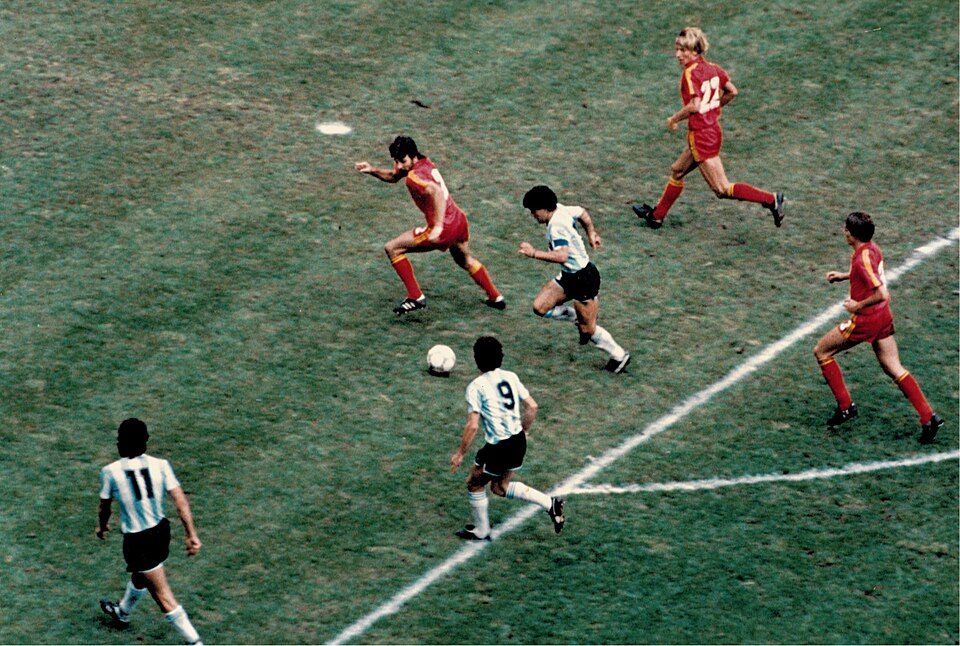
In 2000, FIFA handed out an award that tried, and failed, to settle an old argument. The Player of the Century honor went not to one man but two: Pelé and Diego Armando Maradona, joined together by a title neither could claim alone. It was as close as football's governing body could come to admitting that some questions have no single answer.
Maradona's story began far from any stage of glory. Born on 30 October 1960 at the Policlínico Evita Hospital in Lanús, Buenos Aires Province, he was raised in Villa Fiorito, a shantytown on the city's southern edge, the first son after four daughters in a poor family that had moved from Corrientes Province. His father worked at a chemicals factory; his mother came from Italian and Croatian stock. At age three, Maradona received his first football as a gift, and it never left his feet.
By eight, a talent scout had already noticed him playing for his local club, Estrella Roja. He joined Los Cebollitas, the junior side of Argentinos Juniors, and as a twelve-year-old ball boy he dazzled halftime crowds with tricks that hinted at what was coming. Under coach Francis Gregorio Cornejo, Cebollitas went 141 games unbeaten and won two Evita Tournaments — a youth team still remembered as one of the finest Argentina has produced.
On 20 October 1976, ten days before his sixteenth birthday, Maradona made his professional debut for Argentinos Juniors wearing number 16, becoming the youngest player in the history of the Argentine Primera División. Minutes into that debut, he nutmegged defender Juan Domingo Cabrera — a small, cheeky moment that would become symbolic of everything Maradona represented on a football pitch. 'That day I felt I had held the sky in my hands,' he said afterward.
His career carried him through Boca Juniors, then to Barcelona in 1982 for a then-world-record £5 million, and in 1984 to Napoli for £6.9 million — making him the first player ever to set the world transfer record twice. At Napoli he reached the peak of his club career, leading the team to its first Serie A title and, three years later, its second, along with a Coppa Italia and a UEFA Cup. His time there ended in disgrace when he was banned after a failed cocaine test.
More from People

Frida Kahlo: Painting Through the Pain
An iron handrail pierced a teenage girl's body on a Mexico City street — and out of that wreckage came one of the most searingly honest artists of the twentieth century.

The Ox-Cart and the Snow: Şerife Bacı's Last Road
Somewhere on a frozen road outside Kastamonu, a young mother pressed her body against a quilt to keep her infant warm through the night. By morning, she had become a legend.

Pompey the Great: The Friendship That Broke Rome
He was called 'the teenage butcher' by his enemies and 'the Great' by his mentor — and the empire he helped build would ultimately be the death of him.

The Third Pole: How Hunt, Hillary and Tenzing Conquered Everest
For decades the world's highest mountain had turned back every climber who dared it — sometimes swallowing them whole. In the spring of 1953, one expedition finally reached the point where the sky simply stopped going up.

Two Rivals Under One Roof: Picasso and Matisse
Long before they were named together as the twin poles of modern art, they were simply two names on the walls of the same small Paris gallery — one already known for wild colour, the other not yet known at all.

Fire and Ice: The Borg–McEnroe Rivalry
One man never raised his voice. The other rarely lowered his. Between them they produced two of the greatest matches tennis has ever seen.