The Painter Who Sold Only One Canvas
He created roughly 2,100 artworks in a decade — and died believing he was a failure who had sold just one painting.
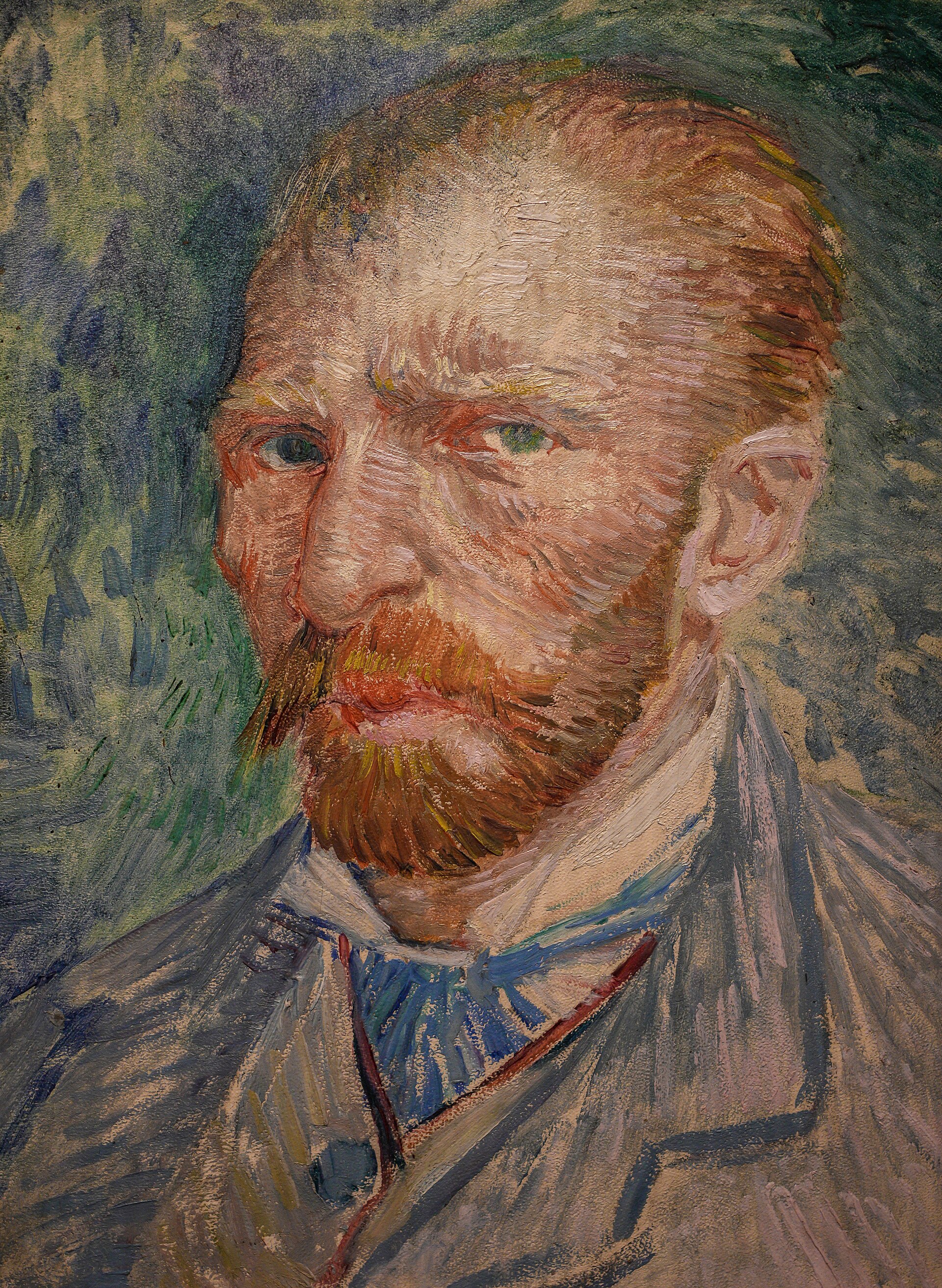
On 30 March 1853, in the mostly Catholic town of Groot-Zundert in the southern Netherlands, Vincent Willem van Gogh was born into a Protestant family. His father, Theodorus van Gogh, was a minister in the Dutch Reformed Church; his mother, Anna Cornelia Carbentus, came from a wealthy family in The Hague. Vincent was named after a stillborn brother born exactly a year earlier, and after his grandfather, a name common in the family — three of his grandfather's six sons had become art dealers. His younger brother Theo, born in 1857, would become the single most important relationship of his life.
As a child, Van Gogh was serious, quiet and thoughtful, and he drew even then. As a young man he became an art dealer himself, but a transfer to London left him depressed. He turned toward religion instead, working for a time as a Protestant missionary in southern Belgium. Ill health and solitude followed, and he eventually returned to his parents' home. It was there, in 1881, that he finally took up painting in earnest — a decision that would define the rest of his short life.
From that point on, Theo supported him financially, and the two brothers maintained a lifelong correspondence: more than 600 letters from Vincent survive, alongside around 40 from Theo, plus letters to his sister Wil, the painter Anthon van Rappard, Émile Bernard, and others. These letters, later published by Theo's widow Johanna van Gogh-Bonger in 1906, 1913 and largely 1914, remain the richest record of Van Gogh's thinking — described as having a diary-like intimacy, reading in places like autobiography.
His early work — still lifes, portraits of peasant labourers — showed little of the vivid colour that would later define him. That changed after he moved to Paris in 1886 and met avant-garde figures like Émile Bernard and Paul Gauguin, artists reacting against Impressionism. His palette brightened, his brushwork grew bolder, and by 1888, during his stay in Arles in southern France, his mature style fully emerged — olive trees, wheat fields, sunflowers, painted in dramatic, impulsive strokes.
But alongside this creative explosion came psychotic episodes and delusions. He neglected his physical health, ate poorly, and drank heavily. His friendship with Gauguin ended violently: after a confrontation involving a razor, Van Gogh, in a rage, severed part of his own left ear. Periods in psychiatric hospitals followed, including a stay at Saint-Rémy.
More from People

Frida Kahlo: Painting Through the Pain
An iron handrail pierced a teenage girl's body on a Mexico City street — and out of that wreckage came one of the most searingly honest artists of the twentieth century.

The Ox-Cart and the Snow: Şerife Bacı's Last Road
Somewhere on a frozen road outside Kastamonu, a young mother pressed her body against a quilt to keep her infant warm through the night. By morning, she had become a legend.

Pompey the Great: The Friendship That Broke Rome
He was called 'the teenage butcher' by his enemies and 'the Great' by his mentor — and the empire he helped build would ultimately be the death of him.

The Third Pole: How Hunt, Hillary and Tenzing Conquered Everest
For decades the world's highest mountain had turned back every climber who dared it — sometimes swallowing them whole. In the spring of 1953, one expedition finally reached the point where the sky simply stopped going up.

Two Rivals Under One Roof: Picasso and Matisse
Long before they were named together as the twin poles of modern art, they were simply two names on the walls of the same small Paris gallery — one already known for wild colour, the other not yet known at all.

Fire and Ice: The Borg–McEnroe Rivalry
One man never raised his voice. The other rarely lowered his. Between them they produced two of the greatest matches tennis has ever seen.