The Peasant Girl Who Crowned a King
A seventeen-year-old farm girl who could not read walked into a royal court claiming voices from heaven had sent her to save France. Nine days after she arrived at Orléans, the English army was gone.
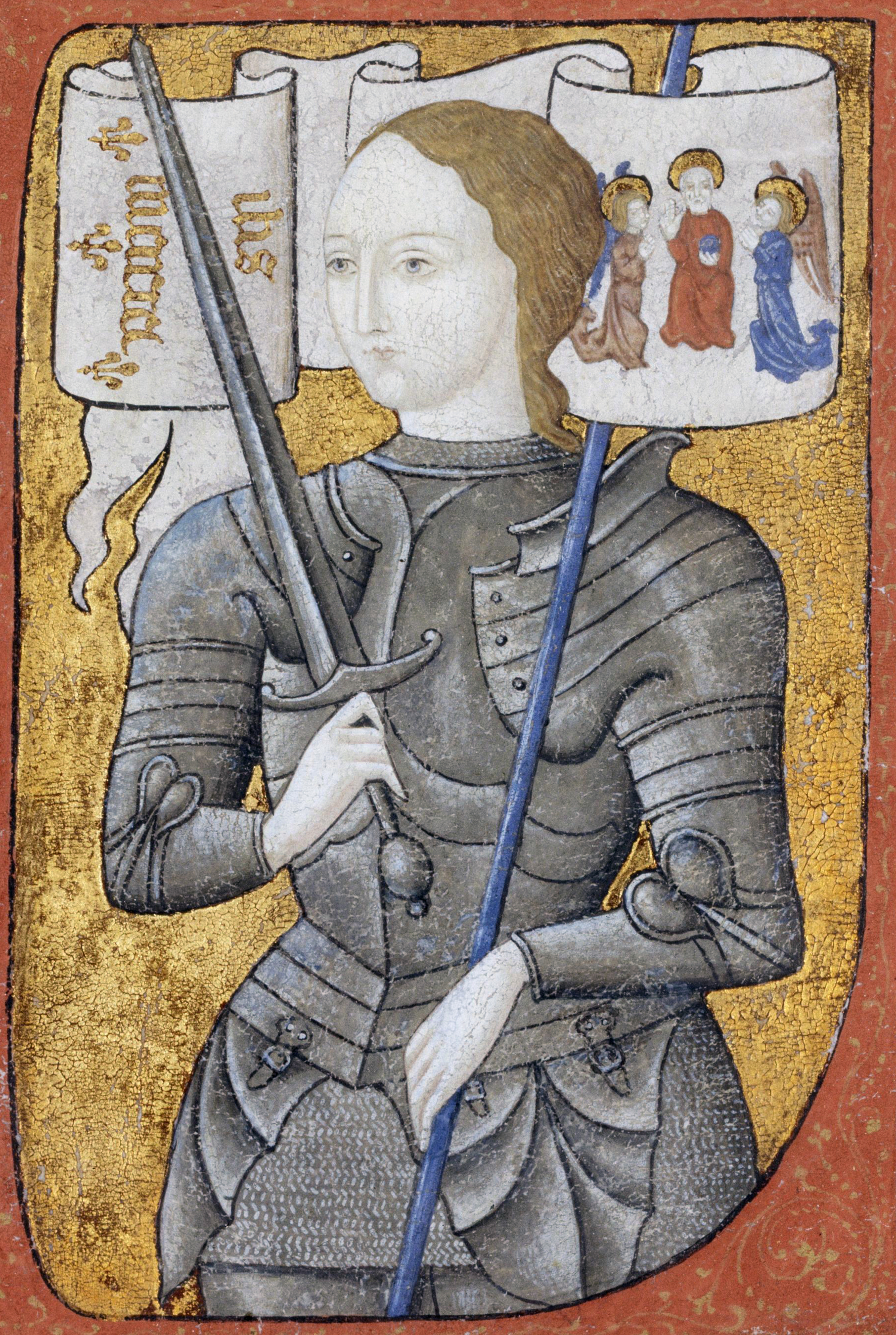
Joan of Arc was born around 1412 in Domrémy, a small village in the Meuse valley of northeastern France, to Jacques d'Arc and Isabelle Romée. Her father was a propertied peasant farmer who worked about twenty hectares of land and supplemented his income as a village official, collecting taxes and heading the local watch. Joan had three brothers and a sister. She was not taught to read or write, and she dictated her letters throughout her life, though she may later have learned to sign her name.
She grew up amid the Hundred Years' War, a conflict between England and France that had begun in 1337 and devastated the French countryside. France itself was fractured: King Charles VI suffered recurring bouts of mental illness, and rival factions, the Armagnacs and the Burgundians, fought for control of the regency. When the Duke of Burgundy allied with the English, Charles VI's son, the Dauphin (later Charles VII), was declared unfit to inherit the throne. It was into this fractured, desperate France that Joan stepped when she asked to be taken to Charles VII in 1428.
Joan testified that she was guided by visions of the archangel Michael, Saint Margaret, and Saint Catherine, who told her to help the Dauphin reclaim France from English domination. Convinced of her sincerity and purity, Charles sent the roughly seventeen-year-old Joan to Orléans as part of a relief force. She arrived in April 1429 carrying her banner, and her presence lifted the spirits of a demoralized French army. Nine days later, the English abandoned the siege.
Joan pushed the French to pursue the retreating English aggressively during the Loire Campaign, which reached its high point in a decisive victory at Patay. That victory cleared the road to Reims, where Charles VII was crowned King of France with Joan standing at his side. The coronation and the victories leading to it boosted French morale and helped set the stage for France's eventual triumph in the Hundred Years' War decades later.
But Joan's momentum did not last. She took part in an unsuccessful siege of Paris in September 1429 and a failed siege of La Charité in November of that year. These defeats eroded the court's confidence in her. In early 1430, she organized a company of volunteers to relieve Compiègne, which Burgundian forces — allies of the English — had besieged. On 23 May 1430, Burgundian troops captured her. After a failed escape attempt, she was handed over to the English in November.
More from People

Frida Kahlo: Painting Through the Pain
An iron handrail pierced a teenage girl's body on a Mexico City street — and out of that wreckage came one of the most searingly honest artists of the twentieth century.

The Ox-Cart and the Snow: Şerife Bacı's Last Road
Somewhere on a frozen road outside Kastamonu, a young mother pressed her body against a quilt to keep her infant warm through the night. By morning, she had become a legend.

Pompey the Great: The Friendship That Broke Rome
He was called 'the teenage butcher' by his enemies and 'the Great' by his mentor — and the empire he helped build would ultimately be the death of him.

The Third Pole: How Hunt, Hillary and Tenzing Conquered Everest
For decades the world's highest mountain had turned back every climber who dared it — sometimes swallowing them whole. In the spring of 1953, one expedition finally reached the point where the sky simply stopped going up.

Two Rivals Under One Roof: Picasso and Matisse
Long before they were named together as the twin poles of modern art, they were simply two names on the walls of the same small Paris gallery — one already known for wild colour, the other not yet known at all.

Fire and Ice: The Borg–McEnroe Rivalry
One man never raised his voice. The other rarely lowered his. Between them they produced two of the greatest matches tennis has ever seen.