The Preacher Who Dreamed Out Loud
A five-year-old named Michael became Martin Luther King Jr. after his father returned from Berlin haunted by Hitler's Germany. From that renaming, a movement's voice was born.
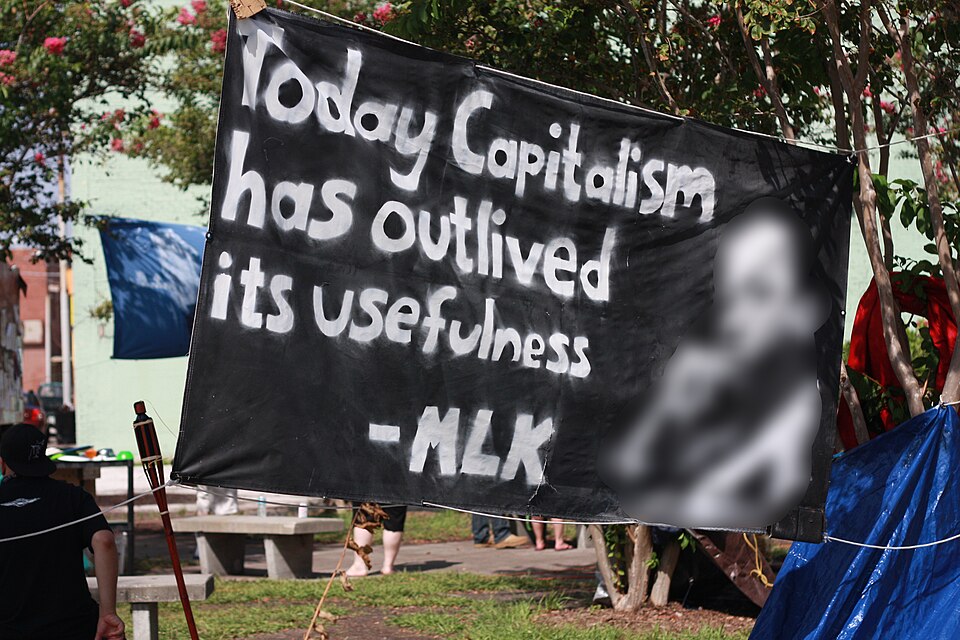
In 1934, Michael King Sr. traveled to Berlin for the Fifth Congress of the Baptist World Alliance, walking sites tied to the Reformation leader Martin Luther even as Nazism rose around him. He came home changed, changing his own name and that of his five-year-old son from Michael to Martin Luther King. That boy, born January 15, 1929, in Atlanta to Michael King and Alberta Williams King, grew up in a household of scripture readings, stern discipline, and his grandmother Jennie's Bible stories — a childhood marked equally by tenderness and hardship, including the sting of a friendship severed by segregation when he and a white playmate were sent to separate schools.
King's path wound through Morehouse College, where sociologist and civil rights leader Benjamin Mays left a deep impression, then to Crozer Theological Seminary in Pennsylvania, where he graduated first in his class in 1951, and finally to Boston University, where in 1955 he earned a master's degree in systematic theology. In 1953, he married Coretta Scott; the ceremony was held at her family's home in Alabama. They would have four children — Yolanda, Martin III, Dexter, and Bernice — each of whom later carried civil rights work into their own lives.
At just twenty-four, King became pastor of Dexter Avenue Baptist Church in Montgomery, Alabama. On December 1, 1955, Rosa Parks refused to surrender her bus seat under Jim Crow law and was arrested. King organized the Montgomery Bus Boycott that followed — 382 days of sustained, disciplined protest so threatening to the segregationist order that his own home was bombed and he himself was jailed. The boycott ended only when the U.S. Supreme Court struck down racial segregation on interstate buses.
Out of that victory came the Southern Christian Leadership Conference in 1957, uniting Black churches behind coordinated, nonviolent protest — a philosophy King drew directly from Mahatma Gandhi's example. He would lead the unsuccessful Albany Movement in Georgia, help organize the pivotal 1963 protests in Birmingham, Alabama, and stand among the leaders of the March on Washington that same year, where from the steps of the Lincoln Memorial he delivered his 'I Have a Dream' speech. In 1965, he helped organize marches from Selma to Montgomery for voting rights, confronting segregationist authorities who often answered peaceful demonstrators with violence.
These campaigns forced pivotal legislative victories: the Civil Rights Act of 1964, the Voting Rights Act of 1965, and the Fair Housing Act of 1968. Yet success brought surveillance. FBI director J. Edgar Hoover branded King a radical and made him a target of COINTELPRO from 1963 onward, investigating him for supposed communist ties, wiretapping his personal life, and in 1964 mailing him an anonymous letter so threatening that King read it as an incitement to suicide. That same year, on October 14, 1964, he was awarded the Nobel Peace Prize for combating racial inequality through nonviolent resistance.
More from People

Frida Kahlo: Painting Through the Pain
An iron handrail pierced a teenage girl's body on a Mexico City street — and out of that wreckage came one of the most searingly honest artists of the twentieth century.

The Ox-Cart and the Snow: Şerife Bacı's Last Road
Somewhere on a frozen road outside Kastamonu, a young mother pressed her body against a quilt to keep her infant warm through the night. By morning, she had become a legend.

Pompey the Great: The Friendship That Broke Rome
He was called 'the teenage butcher' by his enemies and 'the Great' by his mentor — and the empire he helped build would ultimately be the death of him.

The Third Pole: How Hunt, Hillary and Tenzing Conquered Everest
For decades the world's highest mountain had turned back every climber who dared it — sometimes swallowing them whole. In the spring of 1953, one expedition finally reached the point where the sky simply stopped going up.

Two Rivals Under One Roof: Picasso and Matisse
Long before they were named together as the twin poles of modern art, they were simply two names on the walls of the same small Paris gallery — one already known for wild colour, the other not yet known at all.

Fire and Ice: The Borg–McEnroe Rivalry
One man never raised his voice. The other rarely lowered his. Between them they produced two of the greatest matches tennis has ever seen.