The Voyage That Rewrote Life
A seasick young man boards a small survey ship expecting to study rocks. He returns five years later carrying the seeds of an idea that would upend humanity's understanding of itself.
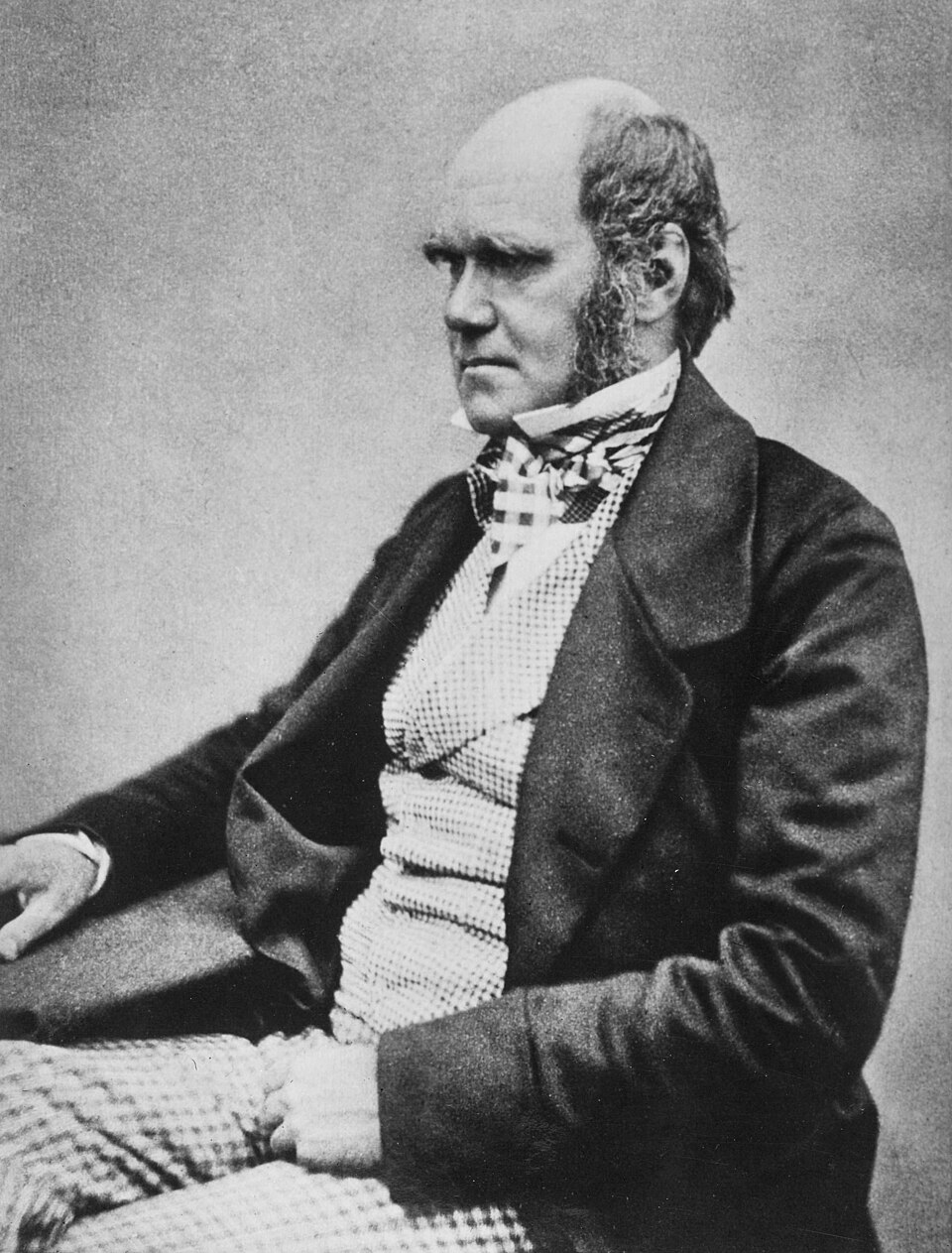
Charles Robert Darwin was born on 12 February 1809 at The Mount, his family's home in Shrewsbury, Shropshire, the fifth of six children of Robert Darwin, a wealthy society doctor, and Susannah Darwin, née Wedgwood. His grandfathers, Erasmus Darwin and Josiah Wedgwood, were prominent abolitionists, and Erasmus had already toyed with evolutionary ideas in his 1794 work Zoonomia, a poetic vision of gradual creation that quietly anticipated concepts his grandson would later develop in full.
Charles grew up amid a mixed religious household: baptised in the Anglican St Chad's Church in November 1809, he nonetheless attended the local Unitarian church with his mother. By age eight he already loved natural history and collecting. His mother died in July 1817, and from September 1818 he boarded at Shrewsbury School alongside his older brother Erasmus.
In 1825, after a summer spent assisting his father treat the poor of Shropshire, Darwin enrolled at the University of Edinburgh Medical School. He found lectures dull and surgery distressing, and neglected his studies. Instead he learned taxidermy from John Edmonstone, a Black Briton from Demerara who had once been enslaved and had trained under Charles Waterton. Darwin also joined the Plinian Society, a lively student group debating radical scientific ideas, and assisted Robert Edmond Grant's research into marine invertebrates in the Firth of Forth — in March 1827 presenting his own discovery about skate-leech eggs found in oyster shells.
Darwin's neglect of medicine frustrated his father, who redirected him toward Christ's College, Cambridge, where he studied from 1828 to 1831 and where his passion for natural science truly took hold. That passion found its great outlet when, from 1831 to 1836, Darwin sailed aboard HMS Beagle on a five-year survey voyage. It was this expedition — not medical school, not Cambridge alone — that established him as a serious geologist, since his observations supported Charles Lyell's theory of gradual geological change.
More from People

Frida Kahlo: Painting Through the Pain
An iron handrail pierced a teenage girl's body on a Mexico City street — and out of that wreckage came one of the most searingly honest artists of the twentieth century.

The Ox-Cart and the Snow: Şerife Bacı's Last Road
Somewhere on a frozen road outside Kastamonu, a young mother pressed her body against a quilt to keep her infant warm through the night. By morning, she had become a legend.

Pompey the Great: The Friendship That Broke Rome
He was called 'the teenage butcher' by his enemies and 'the Great' by his mentor — and the empire he helped build would ultimately be the death of him.

The Third Pole: How Hunt, Hillary and Tenzing Conquered Everest
For decades the world's highest mountain had turned back every climber who dared it — sometimes swallowing them whole. In the spring of 1953, one expedition finally reached the point where the sky simply stopped going up.

Two Rivals Under One Roof: Picasso and Matisse
Long before they were named together as the twin poles of modern art, they were simply two names on the walls of the same small Paris gallery — one already known for wild colour, the other not yet known at all.

Fire and Ice: The Borg–McEnroe Rivalry
One man never raised his voice. The other rarely lowered his. Between them they produced two of the greatest matches tennis has ever seen.