Abraham Lincoln: From a Log Cabin to the White House
A boy who learned to write in a cabin with less than a year of schooling would one day pen the words that redefined a nation. How did a self-taught rail-splitter from Kentucky become the man who held the Union together?
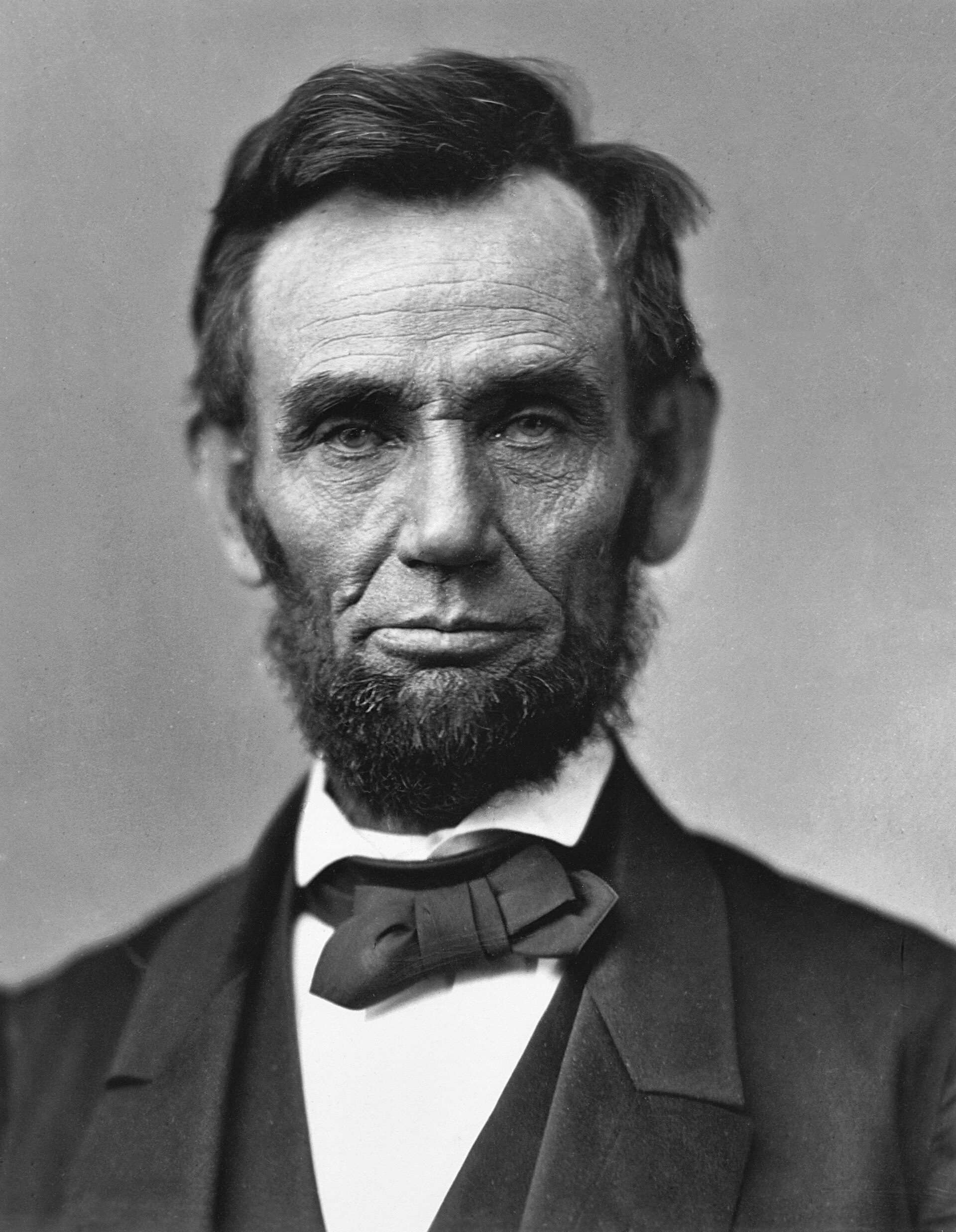
On February 12, 1809, in a one-room log cabin near Hodgenville, Kentucky, Nancy Hanks Lincoln gave birth to a son she named Abraham. The family scraped by on Sinking Spring Farm and later Knob Creek Farm, and Thomas Lincoln, a farmer and carpenter, struggled for years to secure clear title to his land. When Nancy died of milk sickness in 1818, eleven-year-old Sarah took charge of the household, which included her father and nine-year-old Abraham, until Thomas remarried Sarah Bush Johnston, a widow whom young Abraham grew close to, calling her 'Mama'.
Formal schooling came to Lincoln only in scraps — a few months here and there from itinerant teachers, totaling less than twelve months by the time he was fifteen. Yet he read voraciously, teaching himself law and history, and as a young man he worked flatboats down to New Orleans, where he witnessed slave markets firsthand — an experience that left a lasting impression on him. In 1830, fearing another outbreak of milk sickness, the family moved to Macon County, Illinois.
Lincoln's early ventures were modest: a store clerk, a militia captain during the Black Hawk War, and eventually a lawyer who studied Blackstone's Commentaries to teach himself the trade. He entered Illinois politics in 1832 with a failed campaign, but won a seat in the state legislature in 1834. By 1841 he had joined the Whig Party, and in 1847 he was elected to the U.S. House of Representatives, where he criticized President Polk's conduct of the Mexican-American War.
In 1842 he married Mary Todd, and the couple had four sons, though only Robert survived to adulthood; Edward and William both died young, and Thomas died in 1871. Between political posts, Lincoln built one of the most successful legal practices in Illinois, handling more than 5,000 cases over 23 years, including his celebrated 1858 defense of William 'Duff' Armstrong, in which he discredited a witness using a farmer's almanac.
The Kansas–Nebraska Act of 1854, which opened new territories to slavery, pushed Lincoln toward the new Republican Party. His 1858 Senate debates against Stephen A. Douglas brought him national attention, and in 1860 he won the presidency as the first Republican to hold the office. His election prompted Southern states to secede, and a month into his presidency, Confederate forces attacked Fort Sumter, igniting the Civil War.
More from People

Frida Kahlo: Painting Through the Pain
An iron handrail pierced a teenage girl's body on a Mexico City street — and out of that wreckage came one of the most searingly honest artists of the twentieth century.

The Ox-Cart and the Snow: Şerife Bacı's Last Road
Somewhere on a frozen road outside Kastamonu, a young mother pressed her body against a quilt to keep her infant warm through the night. By morning, she had become a legend.

Pompey the Great: The Friendship That Broke Rome
He was called 'the teenage butcher' by his enemies and 'the Great' by his mentor — and the empire he helped build would ultimately be the death of him.

The Third Pole: How Hunt, Hillary and Tenzing Conquered Everest
For decades the world's highest mountain had turned back every climber who dared it — sometimes swallowing them whole. In the spring of 1953, one expedition finally reached the point where the sky simply stopped going up.

Two Rivals Under One Roof: Picasso and Matisse
Long before they were named together as the twin poles of modern art, they were simply two names on the walls of the same small Paris gallery — one already known for wild colour, the other not yet known at all.

Fire and Ice: The Borg–McEnroe Rivalry
One man never raised his voice. The other rarely lowered his. Between them they produced two of the greatest matches tennis has ever seen.