Ada Lovelace: The Poetical Analyst
The daughter of a scandalous poet was pushed toward pure mathematics to keep her from her father's 'madness' — and ended up imagining machines that could compose music.
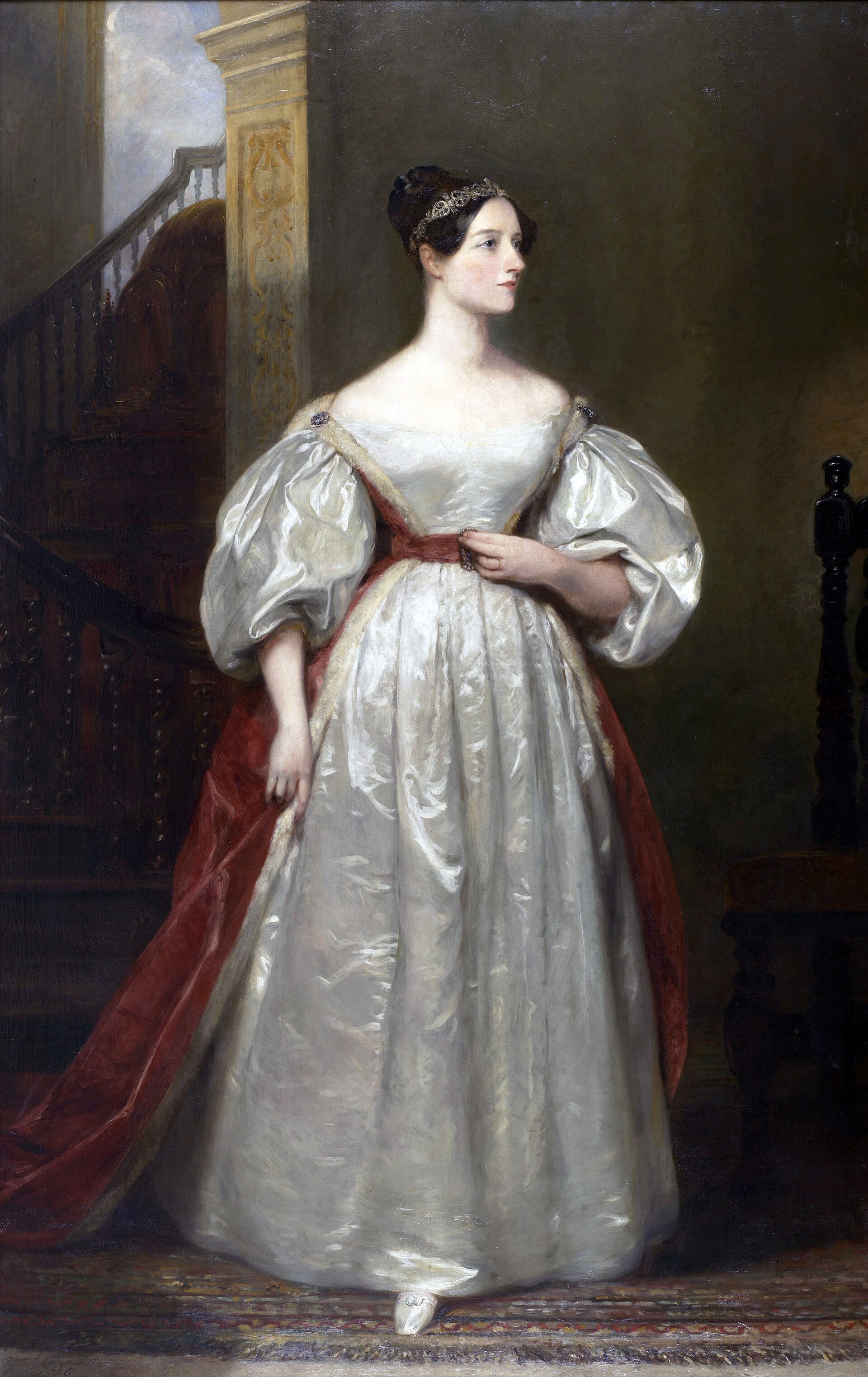
On 10 December 1815, in London, Augusta Ada Byron was born to Lord Byron and Anne Isabella Milbanke. Her father had wanted a 'glorious boy'; he got a daughter instead, and named her, in his own way, after his half-sister Augusta Leigh, calling her simply 'Ada'. Within a month the marriage was over. Lady Byron took the infant to her parents' home at Kirkby Mallory, and though English law gave full custody to the father, Lord Byron never claimed it — he only asked to be kept informed of Ada's welfare. He signed the deed of separation on 21 April and left England for good soon after, dying in 1824 when Ada was eight. She never had a relationship with him.
Ada's mother was, by her own account, a distant figure, and much of Ada's early care fell to her doting grandmother, Lady Milbanke. Fearful that society would blame her for the separation, Lady Byron performed maternal concern in letters while privately referring to her daughter as 'it'. As a teenager, Ada was watched by family friends for signs of moral trouble — observers she nicknamed the 'Furies', accusing them later of inventing stories about her.
Illness shadowed her childhood. At eight she suffered headaches that blurred her sight; in June 1829 measles left her partially paralysed, and she endured nearly a year of bed rest. By 1831 she could walk again with crutches. None of this stopped her mind from working. At twelve, she resolved to learn to fly, and approached the problem with the same rigor she'd later bring to mathematics — researching materials for wings, studying bird anatomy to find the right proportion of body to wingspan, and planning to write a book on the science of flight, complete with a compass for navigating over mountains and rivers.
Her mother, wary of anything resembling Byron's temperament, steered Ada firmly toward mathematics and logic. It worked, in its way: at eighteen, Ada's talents brought her into a lasting friendship and working relationship with Charles Babbage, whom she first met on 5 June 1833 at one of his Saturday soirées, alongside her mother and her private tutor, Mary Somerville. Babbage affectionately called her his 'Lady Fairy'.
Ada's fascination settled on Babbage's analytical engine, a mechanical general-purpose computer that was never built in his lifetime but is now recognised as Turing-complete — a machine that anticipated the essential features of modern computers. Between 1842 and 1843, Ada translated an article on the engine by the Italian military engineer Luigi Menabrea, adding seven long explanatory notes of her own. Among them was a method for using the machine to calculate Bernoulli numbers — often cited as the first published computer program.
More from People

Frida Kahlo: Painting Through the Pain
An iron handrail pierced a teenage girl's body on a Mexico City street — and out of that wreckage came one of the most searingly honest artists of the twentieth century.

The Ox-Cart and the Snow: Şerife Bacı's Last Road
Somewhere on a frozen road outside Kastamonu, a young mother pressed her body against a quilt to keep her infant warm through the night. By morning, she had become a legend.

Pompey the Great: The Friendship That Broke Rome
He was called 'the teenage butcher' by his enemies and 'the Great' by his mentor — and the empire he helped build would ultimately be the death of him.

The Third Pole: How Hunt, Hillary and Tenzing Conquered Everest
For decades the world's highest mountain had turned back every climber who dared it — sometimes swallowing them whole. In the spring of 1953, one expedition finally reached the point where the sky simply stopped going up.

Two Rivals Under One Roof: Picasso and Matisse
Long before they were named together as the twin poles of modern art, they were simply two names on the walls of the same small Paris gallery — one already known for wild colour, the other not yet known at all.

Fire and Ice: The Borg–McEnroe Rivalry
One man never raised his voice. The other rarely lowered his. Between them they produced two of the greatest matches tennis has ever seen.