Alexander the Great: Conquering the World in 32 Years
He was born the same day a temple burned and an army fell — omens, some said, for a boy destined to remake the map of the known world.
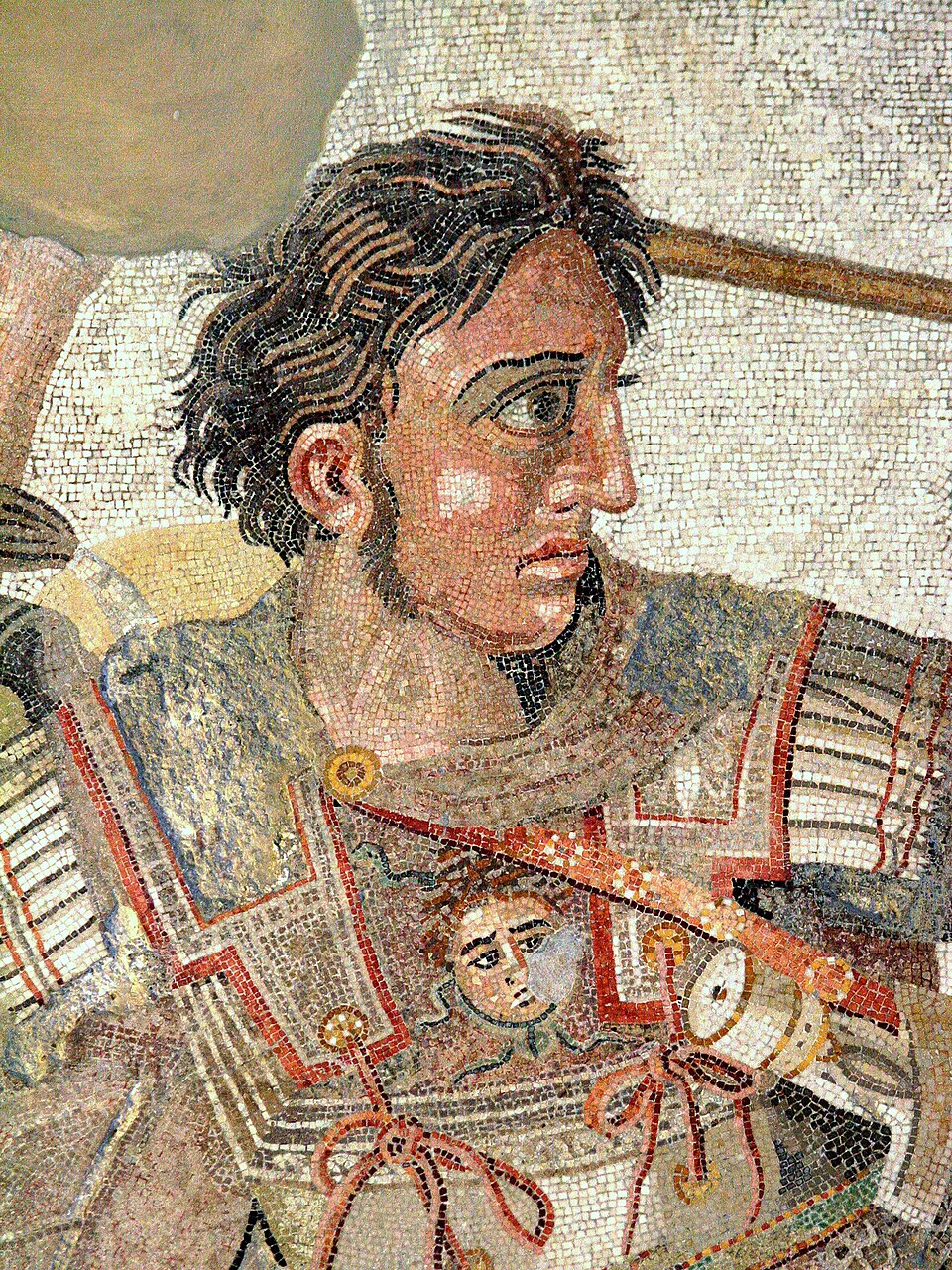
Alexander III of Macedon came into the world in Pella around 20 July 356 BC, son of King Philip II and his fourth wife Olympias, daughter of Neoptolemus I, the Aeacid king of Epirus. Legends clustered thick around his birth: Olympias reportedly dreamed her womb was struck by a thunderbolt that spread flame far and wide, while Philip dreamed of sealing her womb with a lion-image seal. Ancient writers debated whether these tales meant Alexander was fathered by Zeus himself, or simply that Olympias was already pregnant before the wedding.
On the day of his birth, Philip was preparing to besiege the city of Potidea when news arrived that his general Parmenion had crushed the combined Illyrian and Paeonian armies, and that his horses had triumphed at the Olympic Games. It was also said that on that day the great Temple of Artemis at Ephesus burned down — a coincidence that led the writer Hegesias of Magnesia to claim the goddess had been away, attending Alexander's birth.
Raised first by a nurse named Lanike, sister of his future general Cleitus the Black, Alexander was tutored by the philosopher Aristotle starting at age thirteen and continuing until he was sixteen, shaping a mind that would carry Greek ideas across three continents. When Philip II was assassinated in 336 BC, Alexander inherited the throne at just twenty years old, along with his father's ambitions and his father's creation, the League of Corinth.
He wasted no time proving himself. Marching into the Balkans, he reasserted Macedonian control over Thrace and parts of Illyria, then turned south to crush a revolt at Thebes, destroying the city as an example to the rest of Greece. With the Greek city-states cowed and the League of Corinth behind him, Alexander turned his gaze east, toward the vast Achaemenid Persian Empire ruled by Darius III.
In 334 BC he launched a pan-Hellenic invasion of Persia that would consume the next decade of his life. After conquering Asia Minor, he won a string of decisive victories, most famously at Issus and later at Gaugamela, battles that shattered the power of the Achaemenid throne. Darius III was overthrown, and Alexander claimed the entirety of the Persian Empire, stretching now from the Adriatic Sea to the Indus River.
More from People

Frida Kahlo: Painting Through the Pain
An iron handrail pierced a teenage girl's body on a Mexico City street — and out of that wreckage came one of the most searingly honest artists of the twentieth century.

The Ox-Cart and the Snow: Şerife Bacı's Last Road
Somewhere on a frozen road outside Kastamonu, a young mother pressed her body against a quilt to keep her infant warm through the night. By morning, she had become a legend.

Pompey the Great: The Friendship That Broke Rome
He was called 'the teenage butcher' by his enemies and 'the Great' by his mentor — and the empire he helped build would ultimately be the death of him.

The Third Pole: How Hunt, Hillary and Tenzing Conquered Everest
For decades the world's highest mountain had turned back every climber who dared it — sometimes swallowing them whole. In the spring of 1953, one expedition finally reached the point where the sky simply stopped going up.

Two Rivals Under One Roof: Picasso and Matisse
Long before they were named together as the twin poles of modern art, they were simply two names on the walls of the same small Paris gallery — one already known for wild colour, the other not yet known at all.

Fire and Ice: The Borg–McEnroe Rivalry
One man never raised his voice. The other rarely lowered his. Between them they produced two of the greatest matches tennis has ever seen.