Bass Reeves: The Deputy Who Outrode the Wild West
Born enslaved, he fled into Indian Territory with nothing — and returned decades later as the most feared, most respected lawman on 75,000 square miles of frontier.
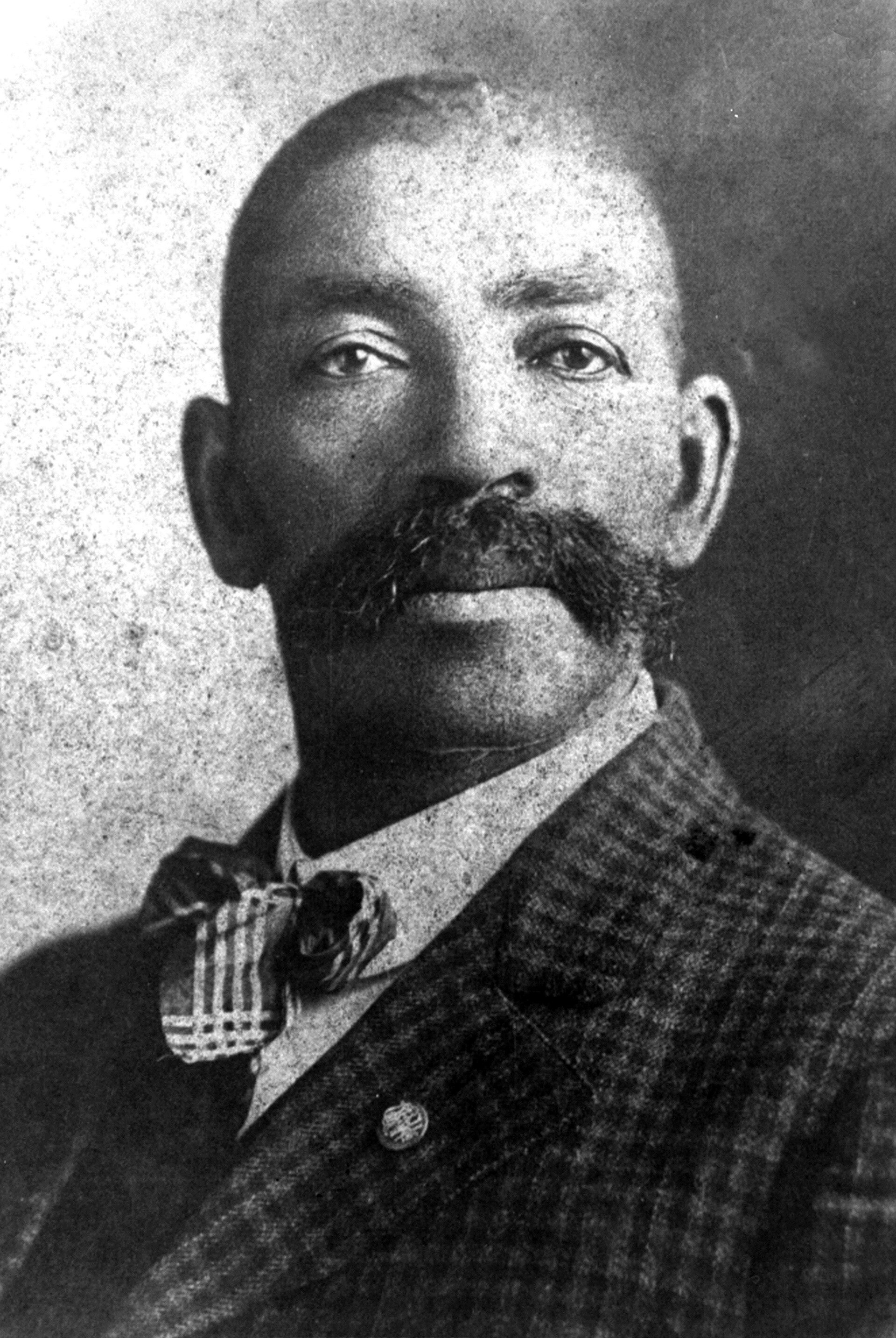
Bass Reeves was born into slavery in Crawford County, Arkansas, in July 1838. He had been named for his grandfather, Bass Washington, and he belonged, in the brutal legal language of the time, to state legislator William Steele Reeves. When Bass was eight, in about 1846, the family moved to Grayson County, Texas. When the Civil War broke out, Bass was taken along by Colonel George R. Reeves, who joined the Confederate Army — an enslaved man forced to serve the very cause of his own bondage.
Somewhere between 1861 and 1862, according to the Reeves family, Bass struck George Reeves after an argument during a card game. It was an act that could have gotten him killed on the spot. Instead, he ran — into Indian Territory, the wild, federally unpoliced expanse that is now Kansas and Oklahoma. There he lived among the Cherokee, Cree, and Seminole, learning their languages, their customs, and the tracking skills that would define the rest of his life. When the Emancipation Proclamation reached him, Bass Reeves was, for the first time, legally free.
He returned to Arkansas and settled into an ordinary life, farming near Van Buren. But in 1875, Judge Isaac C. Parker was appointed to preside over the lawless Indian Territory, and U.S. Marshal James F. Fagan was ordered to hire 200 deputies. Fagan had heard of a farmer who knew the territory intimately and spoke several Native languages fluently. At 37, Bass Reeves was sworn in — one of the first Black deputy U.S. marshals ever to serve west of the Mississippi.
What followed was 32 years patrolling more than 75,000 square miles of some of the most dangerous ground in America. Reeves became one of Judge Parker's most trusted deputies, credited with more than 3,000 arrests. His weapons of choice were Winchester rifles — the Model 1873 and later the 1892 — chosen partly because their .44-40 cartridges also fit his revolvers, letting him carry a single type of ammunition into the field. He briefly carried a Colt Peacemaker and always kept a shotgun close.
His reputation was built case by case. He tracked down Jim Webb, an outlaw who had murdered more than eleven people. He rounded up horse thief and murderer Wiley Bear along with his gang, John Simmons and Sam Lasly. He shot and killed the Creek desperado Frank Buck in a gunfight. According to his obituary, he killed fourteen outlaws in the line of duty to defend his life over the course of his career; his hat and belt were shot off in separate incidents, yet he was never wounded.
More from People

Frida Kahlo: Painting Through the Pain
An iron handrail pierced a teenage girl's body on a Mexico City street — and out of that wreckage came one of the most searingly honest artists of the twentieth century.

The Ox-Cart and the Snow: Şerife Bacı's Last Road
Somewhere on a frozen road outside Kastamonu, a young mother pressed her body against a quilt to keep her infant warm through the night. By morning, she had become a legend.

Pompey the Great: The Friendship That Broke Rome
He was called 'the teenage butcher' by his enemies and 'the Great' by his mentor — and the empire he helped build would ultimately be the death of him.

The Third Pole: How Hunt, Hillary and Tenzing Conquered Everest
For decades the world's highest mountain had turned back every climber who dared it — sometimes swallowing them whole. In the spring of 1953, one expedition finally reached the point where the sky simply stopped going up.

Two Rivals Under One Roof: Picasso and Matisse
Long before they were named together as the twin poles of modern art, they were simply two names on the walls of the same small Paris gallery — one already known for wild colour, the other not yet known at all.

Fire and Ice: The Borg–McEnroe Rivalry
One man never raised his voice. The other rarely lowered his. Between them they produced two of the greatest matches tennis has ever seen.