Bletchley Park's Women: The Silent Codebreakers
Seventy-five percent of the workforce inside the wooden huts of a Buckinghamshire country house was female — and for thirty years afterward, none of them were allowed to say what they had done there.
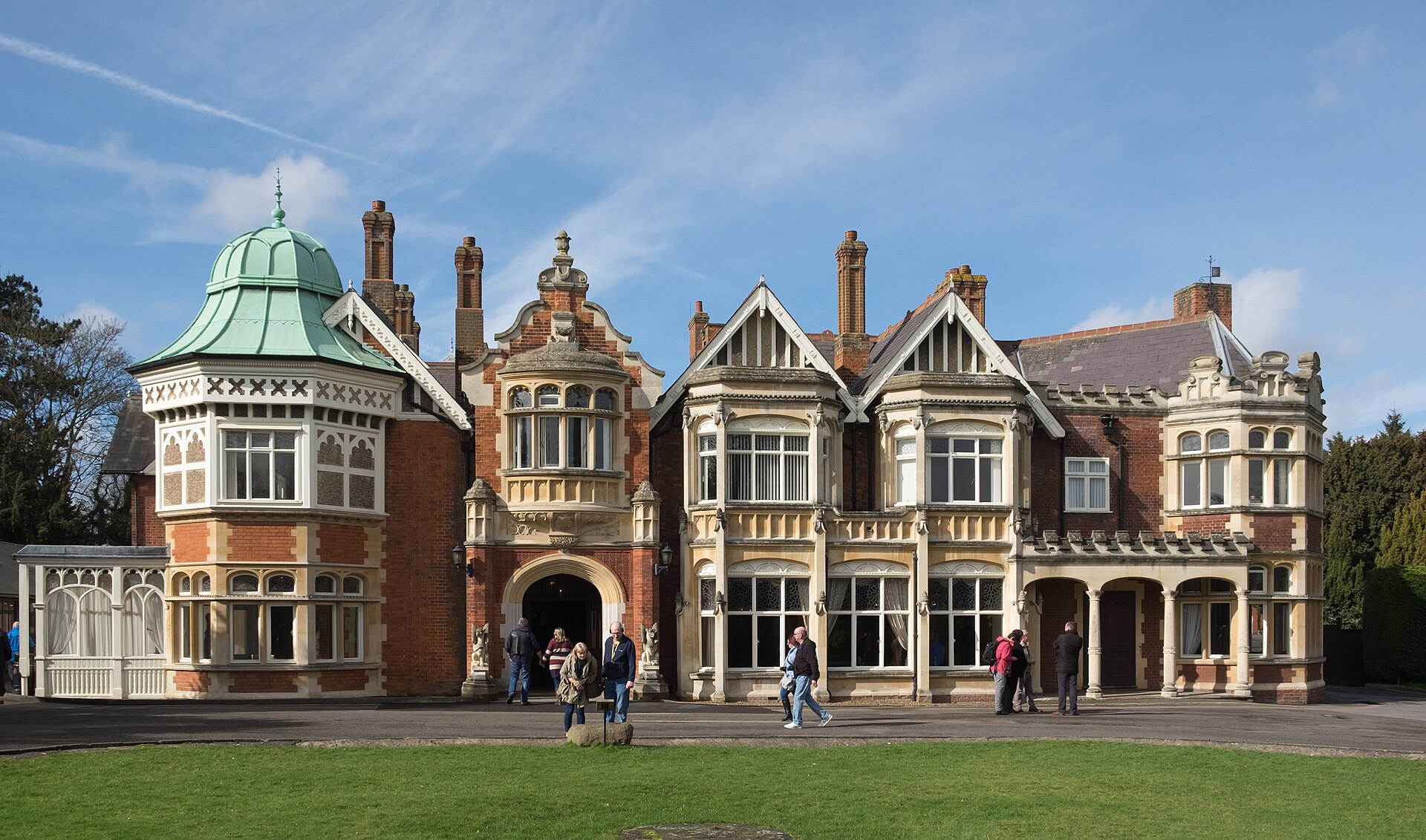
In May 1938, Admiral Sir Hugh Sinclair, head of Britain's Secret Intelligence Service, quietly bought a sprawling Victorian estate in Bletchley, spending £6,000 of his own money because the government would not fund it. The mansion, an architectural jumble of Victorian Gothic, Tudor, and Dutch Baroque styles, sat almost on top of Bletchley railway station, where the line linking Oxford and Cambridge crossed the main route connecting London to the industrial north. That geography mattered: the universities were expected to supply the codebreakers, and the site had access to high-volume telegraph and telephone links through the nearby repeater station at Fenny Stratford.
Before codebreakers ever set foot there, the estate briefly served another secret purpose. Laurence Grand's Section D, a sabotage and irregular-warfare unit, had turned the grounds into an explosives school beginning 15 June 1939, training recruits under men like chemical engineer Colin Meek. When the Government Code and Cypher School (GC&CS) moved in on 15 August 1939, the codebreakers found the constant blasts unbearable; by November, Section D's demolition tests had been relocated to Aston House so the cryptanalysts could concentrate.
That concentration mattered enormously, because the stakes were staggering. Five weeks before war broke out, Polish Cipher Bureau officers had stunned French and British counterparts by revealing how far they had already progressed against the German Enigma cipher. Combined with an Enigma clone the Poles handed over in August 1939, this breakthrough gave the British team at Bletchley a foundation to build on. The GC&CS roster that assembled in the mansion's ground-floor rooms — alongside a telephone exchange, teleprinter room, kitchen, and dining room — included John Tiltman, Dilwyn Knox, Alan Turing, Margaret Rock, Mavis Lever, Harry Golombek, Gordon Welchman, Hugh Alexander, Donald Michie, Bill Tutte, and Stuart Milner-Barry.
But the roster of famous names conceals the true shape of the workforce. Three-quarters of the people at Bletchley Park were women, working across the wooden huts that sprang up from late 1939 onward and at Elmers School, a nearby boys' boarding institution acquired for the Commercial and Diplomatic Sections. Their labor — intercepting, transcribing, feeding punched data, operating the machinery — was the invisible infrastructure beneath the celebrated breakthroughs credited to a handful of men.
The work was grueling and chronically understaffed. During a visit on 9 September 1941, Winston Churchill reportedly joked to Denniston or Menzies about having taken his order to 'leave no stone unturned' for staff too literally. Six weeks later, frustrated that they still lacked enough typists and unskilled workers to run at full capacity, Turing, Welchman, Alexander, and Milner-Barry wrote directly to the Prime Minister. Churchill's reply came back within the day: 'Action this day, make sure they have all they want on extreme priority.'
More from People

Frida Kahlo: Painting Through the Pain
An iron handrail pierced a teenage girl's body on a Mexico City street — and out of that wreckage came one of the most searingly honest artists of the twentieth century.

The Ox-Cart and the Snow: Şerife Bacı's Last Road
Somewhere on a frozen road outside Kastamonu, a young mother pressed her body against a quilt to keep her infant warm through the night. By morning, she had become a legend.

Pompey the Great: The Friendship That Broke Rome
He was called 'the teenage butcher' by his enemies and 'the Great' by his mentor — and the empire he helped build would ultimately be the death of him.

The Third Pole: How Hunt, Hillary and Tenzing Conquered Everest
For decades the world's highest mountain had turned back every climber who dared it — sometimes swallowing them whole. In the spring of 1953, one expedition finally reached the point where the sky simply stopped going up.

Two Rivals Under One Roof: Picasso and Matisse
Long before they were named together as the twin poles of modern art, they were simply two names on the walls of the same small Paris gallery — one already known for wild colour, the other not yet known at all.

Fire and Ice: The Borg–McEnroe Rivalry
One man never raised his voice. The other rarely lowered his. Between them they produced two of the greatest matches tennis has ever seen.