Elizabeth: The Queen Who Chose the Crown Over Marriage
A girl declared illegitimate at two, imprisoned in her twenties, she would go on to rule for 44 years and give her name to an age.
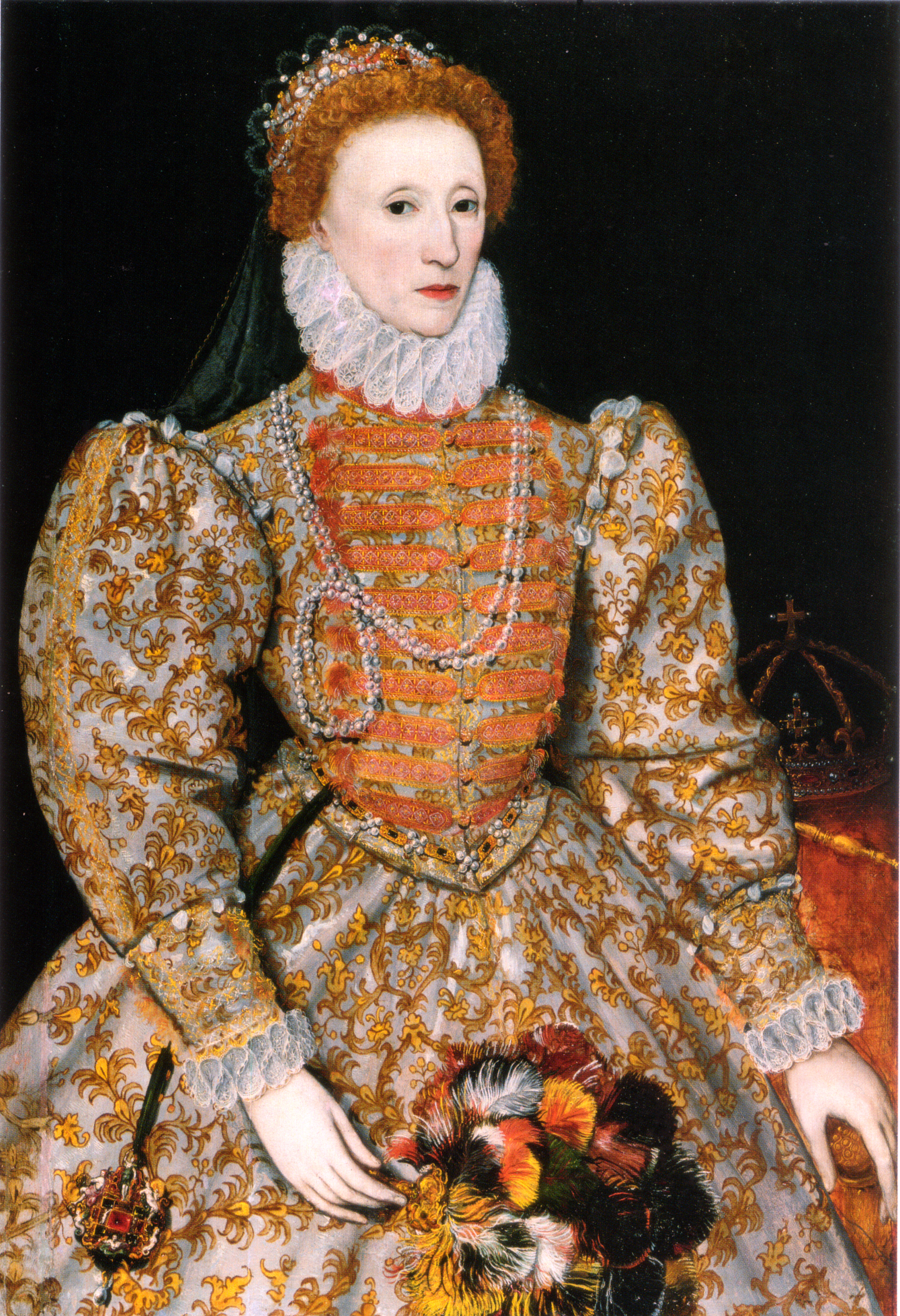
On 7 September 1533, at Greenwich Palace, a daughter was born to Henry VIII and his second wife, Anne Boleyn. She was named Elizabeth, after both her grandmothers, and christened five days later with Thomas Cranmer, Archbishop of Canterbury, among her godparents. At birth she was heir presumptive to the English throne, displacing her elder half-sister Mary, whose mother Catherine of Aragon had been cast aside so Henry could marry Anne in pursuit of a son.
That security did not last. When Elizabeth was two years and eight months old, her mother was beheaded on 19 May 1536, and the infant princess was declared illegitimate, stripped of her place in the succession. Eleven days later Henry married Jane Seymour, whose son Edward became the undisputed heir. Elizabeth was raised in her half-brother's household, carrying the baptismal cloth at his christening.
Her early governess Margaret Bryan described her as gentle and precocious. In 1537 Catherine 'Kat' Ashley became her governess and lifelong friend, teaching her French, Dutch, Italian, and Spanish. Under tutor William Grindal from 1544, Elizabeth mastered English, Latin, Italian, French, and Greek, and by twelve she could translate her stepmother Catherine Parr's religious writings.
After Henry's death in 1547, Edward VI reigned until 1553, willing the crown to his Protestant cousin Lady Jane Grey and bypassing both his half-sisters. That will collapsed almost immediately, and the Catholic Mary became queen. During Mary's reign, Elizabeth spent nearly a year imprisoned on suspicion of aiding Protestant rebels.
Mary's death in 1558 brought Elizabeth to the throne, and she resolved to rule through careful counsel, leaning on William Cecil, later Baron Burghley. One of her earliest acts was establishing an English church that she governed as supreme head, an arrangement that became the Elizabethan Religious Settlement and evolved into the Church of England. Though courted repeatedly, she never married, earning the name 'Virgin Queen.'
More from People

Frida Kahlo: Painting Through the Pain
An iron handrail pierced a teenage girl's body on a Mexico City street — and out of that wreckage came one of the most searingly honest artists of the twentieth century.

The Ox-Cart and the Snow: Şerife Bacı's Last Road
Somewhere on a frozen road outside Kastamonu, a young mother pressed her body against a quilt to keep her infant warm through the night. By morning, she had become a legend.

Pompey the Great: The Friendship That Broke Rome
He was called 'the teenage butcher' by his enemies and 'the Great' by his mentor — and the empire he helped build would ultimately be the death of him.

The Third Pole: How Hunt, Hillary and Tenzing Conquered Everest
For decades the world's highest mountain had turned back every climber who dared it — sometimes swallowing them whole. In the spring of 1953, one expedition finally reached the point where the sky simply stopped going up.

Two Rivals Under One Roof: Picasso and Matisse
Long before they were named together as the twin poles of modern art, they were simply two names on the walls of the same small Paris gallery — one already known for wild colour, the other not yet known at all.

Fire and Ice: The Borg–McEnroe Rivalry
One man never raised his voice. The other rarely lowered his. Between them they produced two of the greatest matches tennis has ever seen.