Hannibal and Scipio: Rome and Carthage's Rival Champions
A boy of nine swore an oath to his father that would shape the fate of two civilizations — never to be a friend of Rome. Decades later, on a North African plain, that oath came to its end.
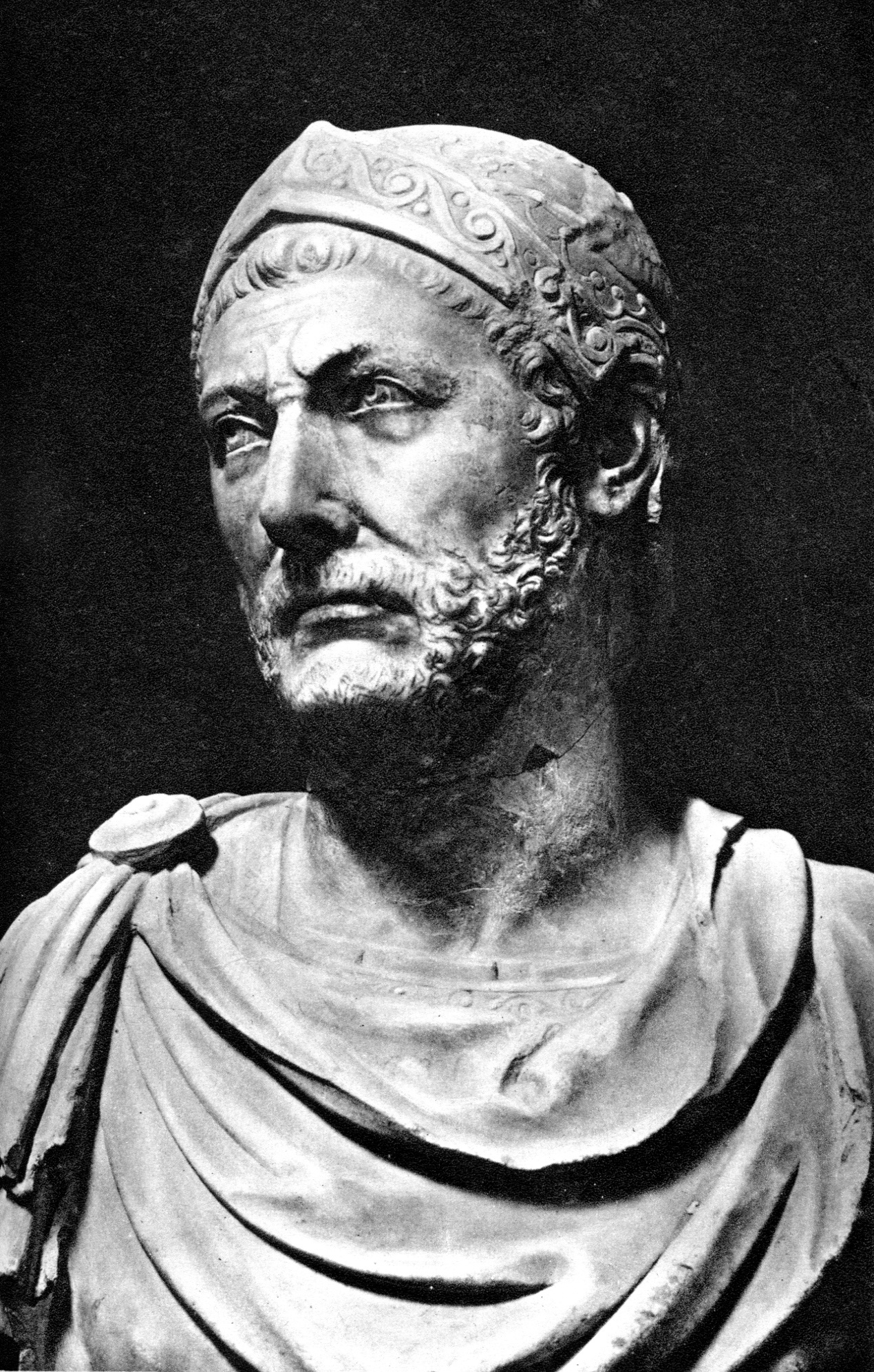
Hannibal was born in Carthage around 247 BC, one of several children of the general Hamilcar Barca. His name, in Punic ḥnbʿl, meant something like 'the grace of Baal', a tribute to the Carthaginian deity Baal Hammon. His father bore the epithet Barca, meaning 'lightning' or 'thunderbolt', earned for the speed and ferocity of his campaigns — and it was under that shadow, both literal and symbolic, that Hannibal grew up. According to Polybius, when the young Hannibal begged to accompany his father on campaign in Iberia, Hamilcar agreed on one condition: that his son swear never to be a friend of Rome as long as he lived.
That oath was born from humiliation. Carthage had just lost the First Punic War to the rising Roman Republic, and revanchist sentiment ran deep through the city. Hamilcar spent his final years subjugating the tribes of the Iberian Peninsula to rebuild Carthaginian power, marching his forces overland through Numidia to the Pillars of Hercules because Carthage lacked the ships to transport them. Hannibal grew up in this world of reconquest and grievance, surrounded by brothers Hasdrubal and Mago, and brothers-in-law Hasdrubal the Fair and the Numidian king Naravas, who were his father's close allies.
In 218 BC, Hannibal ignited the Second Punic War by attacking Saguntum, a Roman ally in Hispania. He then did something no Roman expected: he led an army, complete with North African war elephants, across the Alps and into Italy itself. In rapid succession he crushed Roman forces at the Ticinus, at the Trebia, at Lake Trasimene, and finally at Cannae in 216 BC, where his double-envelopment maneuver became legendary — later historians would call him, with some romantic exaggeration, 'the father of strategy.'
Hannibal held much of southern Italy for fifteen years. The Romans, under Fabius Maximus, refused to meet him in open battle again, adopting instead a grinding war of attrition. Hannibal's genius lay in reading both his own strengths and his enemy's weaknesses, and in winning over Italian cities once loyal to Rome. But without reinforcement — Carthaginian setbacks in Hispania cut off his supply of fresh troops — he could never turn his victories into a decisive, war-ending blow.
The reversal came from Africa. Hasdrubal Barca, defending Hispania, lost Carthago Nova and was defeated at Baecula by a young Roman general named Scipio. Hasdrubal tried to cross the Alps himself to reinforce his brother in Italy, but was killed at the Metaurus River in 207 BC; his severed head was thrown into Hannibal's camp, a brutal sign that Hannibal now stood isolated. Mago Barca's later attempt to open a new front by landing in Liguria in 205 BC fizzled without coordinating with his brother, and Mago died of wounds at sea in 203 BC.
More from People

Frida Kahlo: Painting Through the Pain
An iron handrail pierced a teenage girl's body on a Mexico City street — and out of that wreckage came one of the most searingly honest artists of the twentieth century.

The Ox-Cart and the Snow: Şerife Bacı's Last Road
Somewhere on a frozen road outside Kastamonu, a young mother pressed her body against a quilt to keep her infant warm through the night. By morning, she had become a legend.

Pompey the Great: The Friendship That Broke Rome
He was called 'the teenage butcher' by his enemies and 'the Great' by his mentor — and the empire he helped build would ultimately be the death of him.

The Third Pole: How Hunt, Hillary and Tenzing Conquered Everest
For decades the world's highest mountain had turned back every climber who dared it — sometimes swallowing them whole. In the spring of 1953, one expedition finally reached the point where the sky simply stopped going up.

Two Rivals Under One Roof: Picasso and Matisse
Long before they were named together as the twin poles of modern art, they were simply two names on the walls of the same small Paris gallery — one already known for wild colour, the other not yet known at all.

Fire and Ice: The Borg–McEnroe Rivalry
One man never raised his voice. The other rarely lowered his. Between them they produced two of the greatest matches tennis has ever seen.