Kennedy and Khrushchev: Letters Between Enemies
For thirteen days in October 1962, the fate of the world hinged not on missiles but on words exchanged between two men who had met only once, in Vienna, and left distrusting each other.
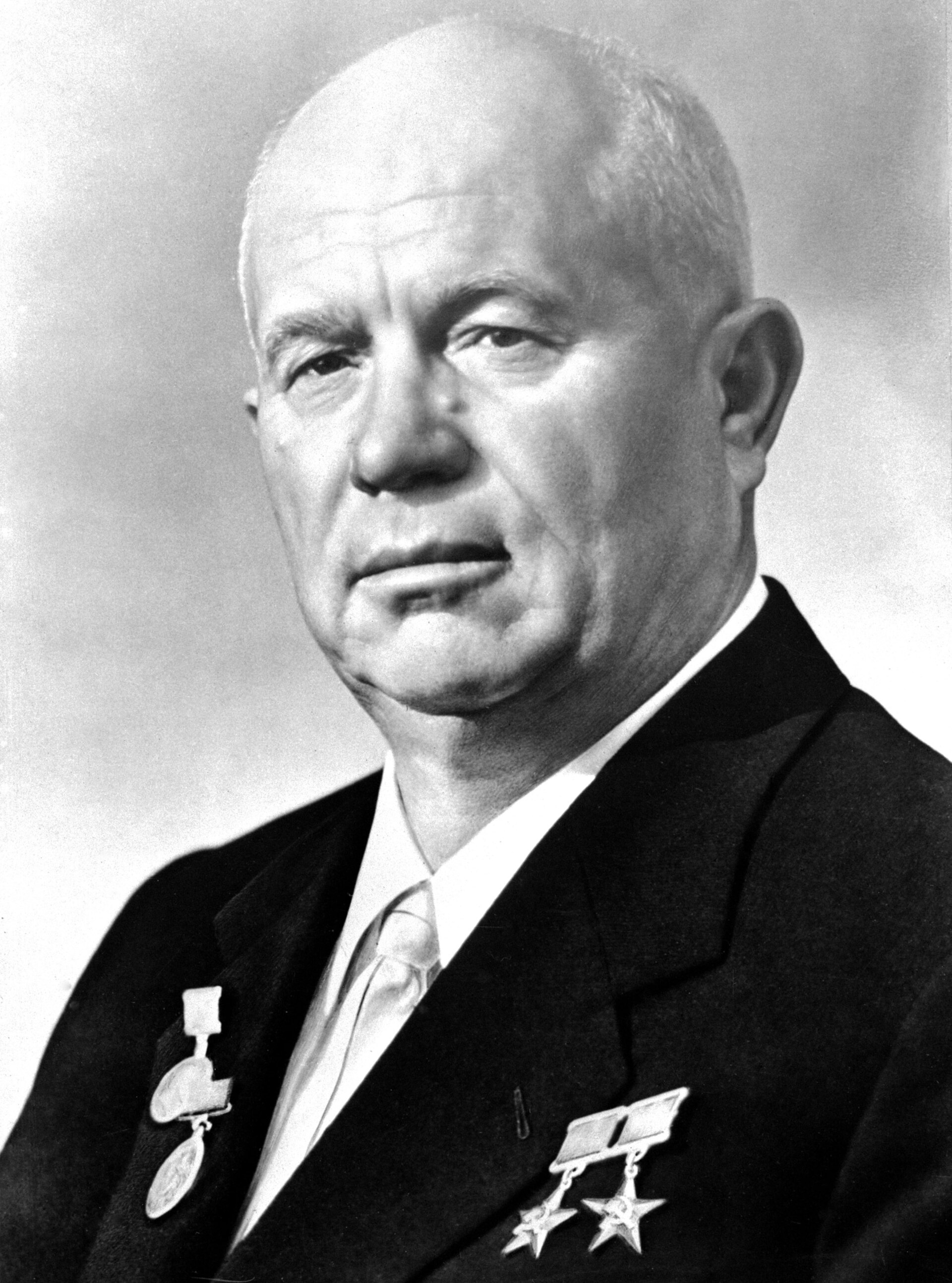
In June 1961, Nikita Khrushchev and John F. Kennedy sat across from each other in Vienna, at a summit meant to ease Cold War tensions. It did the opposite. Khrushchev, a former metalworker from the Russian village of Kalinovka who had clawed his way to the top of the Soviet hierarchy after Stalin's death in 1953, found the young American president unimpressive. Shortly after their meeting, construction began on the Berlin Wall, a stark symbol of the divide between their two worlds.
Khrushchev had risen from poverty. Born in 1894, he worked as a herdsboy and later a metal fitter's apprentice in the industrial town of Yuzovka. He joined the Communist Party in 1918, fought with the Red Army, and was present at the Battle of Stalingrad during World War II as a political commissar — a fact he took great pride in. After Stalin's death, he outmaneuvered his rivals, including Lavrentiy Beria, and by 1958 held both the top party post and the premiership.
His 1956 Secret Speech, delivered at the 20th Party Congress, denounced Stalin's purges and launched a campaign of de-Stalinization, releasing thousands of political prisoners. This made him, briefly, a figure of hope for reform — reinforced by the triumph of Sputnik in 1957. But his domestic policies, especially in agriculture, often failed, and his standing at home grew shakier as the 1960s began.
It was against this backdrop that Khrushchev, in 1962, made his most fateful decision: placing medium-range missiles in Cuba, just ninety miles from Florida. When American reconnaissance discovered the installations, the world came to the brink of nuclear war. Unlike the frosty Vienna meeting, this crisis was resolved not through summitry but through an urgent exchange of letters between Kennedy and Khrushchev — messages carried between Washington and Moscow as both leaders tried to find a way out without losing face or triggering catastrophe.
The correspondence, terse and consequential, allowed each side room to maneuver. Khrushchev ultimately agreed to withdraw the missiles in exchange for American assurances, and the immediate danger passed. But the crisis cost him dearly: it strained relations with China, whose leader Mao Zedong criticized him sharply, and it exposed the limits of his brinkmanship to his own colleagues in the Kremlin.
More from People

Frida Kahlo: Painting Through the Pain
An iron handrail pierced a teenage girl's body on a Mexico City street — and out of that wreckage came one of the most searingly honest artists of the twentieth century.

The Ox-Cart and the Snow: Şerife Bacı's Last Road
Somewhere on a frozen road outside Kastamonu, a young mother pressed her body against a quilt to keep her infant warm through the night. By morning, she had become a legend.

Pompey the Great: The Friendship That Broke Rome
He was called 'the teenage butcher' by his enemies and 'the Great' by his mentor — and the empire he helped build would ultimately be the death of him.

The Third Pole: How Hunt, Hillary and Tenzing Conquered Everest
For decades the world's highest mountain had turned back every climber who dared it — sometimes swallowing them whole. In the spring of 1953, one expedition finally reached the point where the sky simply stopped going up.

Two Rivals Under One Roof: Picasso and Matisse
Long before they were named together as the twin poles of modern art, they were simply two names on the walls of the same small Paris gallery — one already known for wild colour, the other not yet known at all.

Fire and Ice: The Borg–McEnroe Rivalry
One man never raised his voice. The other rarely lowered his. Between them they produced two of the greatest matches tennis has ever seen.