Lennon and McCartney: The Partnership and Its Fractures
Two teenagers scribbling songs in a notebook labelled 'another Lennon–McCartney original' would go on to reshape popular music — and, eventually, each other's lives.
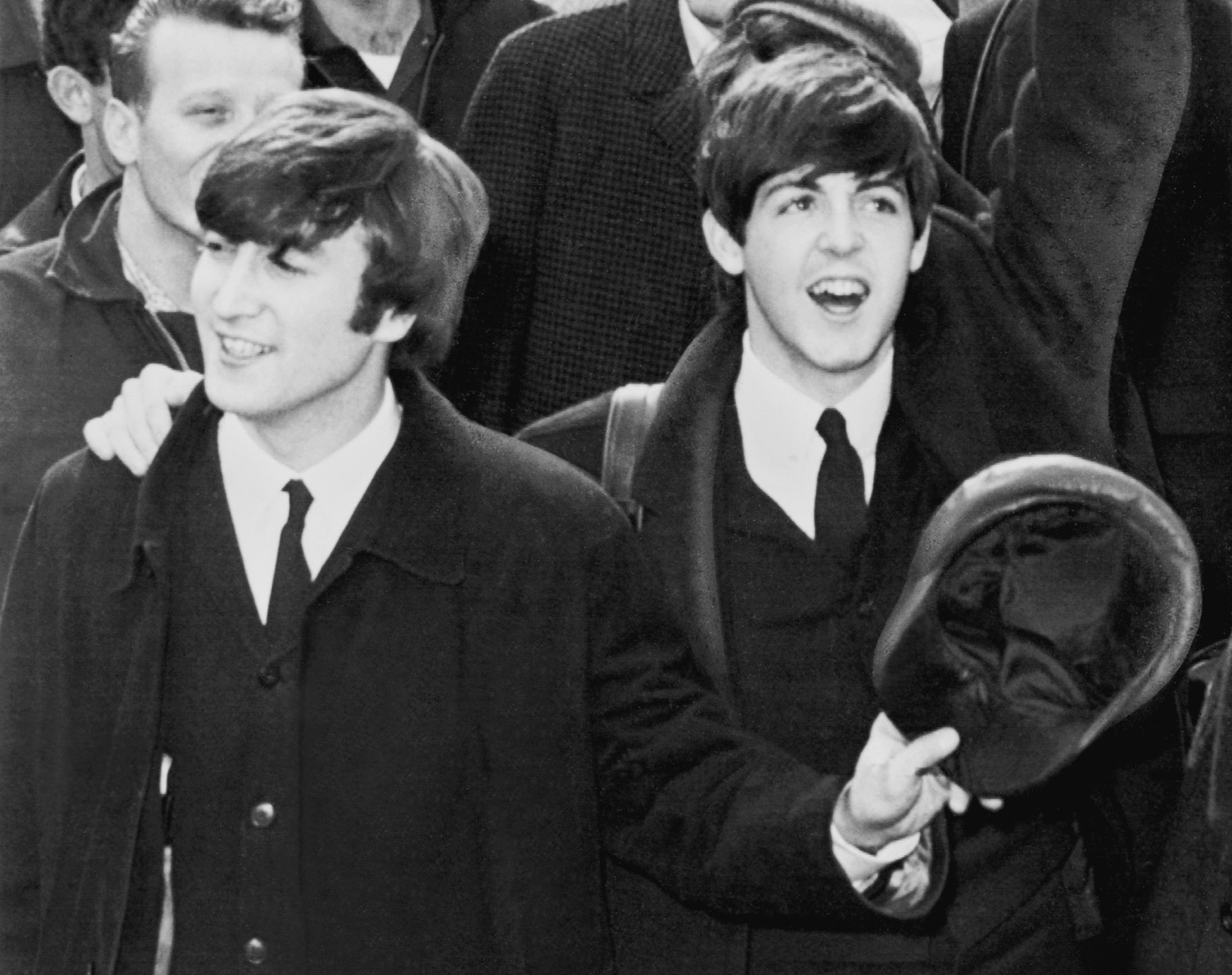
On 6 July 1957, at a church fête in Liverpool, a 16-year-old John Lennon was performing skiffle music with his group, the Quarrymen, when a 15-year-old named Paul McCartney was brought along by a mutual friend, Ivan Vaughan. McCartney impressed Lennon with his guitar skill and his rendition of Eddie Cochran's 'Twenty Flight Rock'. Soon after, Lennon invited him to join the band. Neither could have known that this small moment would become the seed of one of the most successful songwriting partnerships in history.
The two shared idols — the Everly Brothers, Little Richard, Chuck Berry, Elvis Presley, Buddy Holly, Smokey Robinson and the Miracles — and learned to imitate their sound. They began writing together at McCartney's home on Forthlin Road, at Lennon's aunt Mimi's house on Menlove Avenue, or at the Liverpool Institute. According to researcher Mark Lewisohn, their first joint composition was 'Too Bad About Sorrows', written in January 1958, followed soon by 'Just Fun'.
They kept their song scraps in a notebook, each page headed 'another Lennon–McCartney original' — a phrase inspired by theatrical writing duos like Rodgers and Hammerstein. Friends such as George Harrison, Nigel Walley, and Barbara Baker were sometimes invited to hear the new songs, though the pair didn't perform them publicly with the Quarrymen. By summer 1959, they were mostly writing separately, presenting finished songs to each other for approval — early versions of tracks like 'Love Me Do' and 'I'll Follow the Sun' emerged during this period.
Then came a dry spell. When Stuart Sutcliffe joined the group in 1960, his close friendship with Lennon reportedly made McCartney envious, disrupting their creative rhythm. Remarkably, the pair wrote no new songs at all in 1960 or 1961 — even while playing long stage hours during their Hamburg residency, where, as Lewisohn noted, audiences expected songs they already knew. The two kept their own songwriting a secret; when they occasionally played an original, they didn't announce it as such. One rare exception was a performance of 'One After 909' at the Top Ten Club, requested by Astrid Kirchherr.
The partnership reignited in 1962, around the time the Beatles met manager Brian Epstein. Old originals like 'Like Dreamers Do', 'Love of the Loved', and 'Hello Little Girl' were played at their unsuccessful Decca audition on 1 January 1962. A tape of that session reached EMI publishers Ardmore & Beechwood, who pushed EMI to sign the band in order to secure publishing rights to Lennon–McCartney songs. That March, Lennon wrote 'Ask Me Why' and McCartney wrote 'Pinwheel Twist' — their first new songs since 1959. In May, McCartney wrote 'P.S. I Love You'.
More from People

Frida Kahlo: Painting Through the Pain
An iron handrail pierced a teenage girl's body on a Mexico City street — and out of that wreckage came one of the most searingly honest artists of the twentieth century.

The Ox-Cart and the Snow: Şerife Bacı's Last Road
Somewhere on a frozen road outside Kastamonu, a young mother pressed her body against a quilt to keep her infant warm through the night. By morning, she had become a legend.

Pompey the Great: The Friendship That Broke Rome
He was called 'the teenage butcher' by his enemies and 'the Great' by his mentor — and the empire he helped build would ultimately be the death of him.

The Third Pole: How Hunt, Hillary and Tenzing Conquered Everest
For decades the world's highest mountain had turned back every climber who dared it — sometimes swallowing them whole. In the spring of 1953, one expedition finally reached the point where the sky simply stopped going up.

Two Rivals Under One Roof: Picasso and Matisse
Long before they were named together as the twin poles of modern art, they were simply two names on the walls of the same small Paris gallery — one already known for wild colour, the other not yet known at all.

Fire and Ice: The Borg–McEnroe Rivalry
One man never raised his voice. The other rarely lowered his. Between them they produced two of the greatest matches tennis has ever seen.