Leonardo da Vinci: The Man Who Questioned Everything
An illegitimate son of a notary who never went to university would become the mind that rewrote what a human being could be curious about.
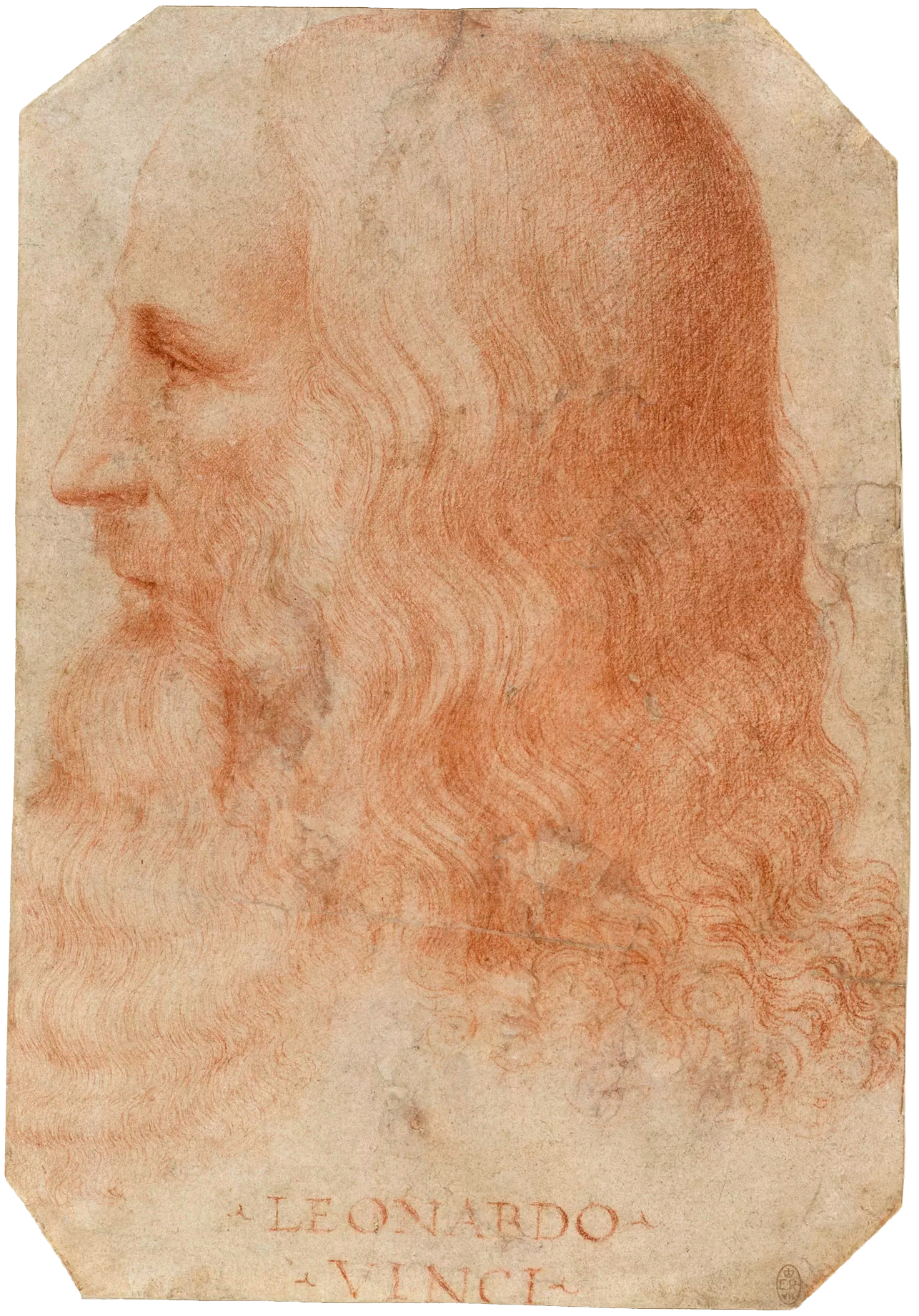
On 15 April 1452, in or near the Tuscan hill town of Vinci, a child was born who would carry no proper surname of his own — Leonardo di ser Piero da Vinci, 'Leonardo, son of ser Piero from Vinci.' His father, a successful Florentine notary, and his mother, a woman of humble background named Caterina, were unmarried, and each married someone else within the year. It is not even certain where exactly Leonardo was born, though local tradition points to the hamlet of Anchiano.
Because he was born out of wedlock, Leonardo could not attend university, and his formal education was limited to basic vernacular reading, writing, and mathematics. He spent his early years partly in his mother's care and partly in the household of his paternal grandfather, Antonio da Vinci, tax records placing him there by at least 1457. His father, meanwhile, built a notarial career and eventually married three more times after his first wife's death in 1464, giving Leonardo sixteen half-siblings, most born decades later — the last when Leonardo was 46.
Little else is verifiable about his childhood, clouded as it is by the often-embellished 1550 biography written by Giorgio Vasari. One striking fragment survives in Leonardo's own hand: in his later notebooks, now known as the Codex Atlanticus, he recorded what he believed was his earliest memory — a kite descending to his cradle and opening his infant mouth with its tail feathers. Whether this was a true memory or an imagined one, scholars still debate.
Around age fourteen, Leonardo's talent for drawing led his father to place him in the Florence workshop of Andrea del Verrocchio, one of the city's leading painters and sculptors. There he trained for roughly seven years, learning not only drawing, painting, sculpture, and modeling, but also chemistry, metallurgy, metalworking, plaster casting, leatherworking, mechanics, and carpentry. Verrocchio insisted his students understand human anatomy, planting a seed that would define Leonardo's later obsessions. Fellow trainees or associates of the workshop included Ghirlandaio, Perugino, Botticelli, and Lorenzo di Credi — a remarkable concentration of future masters under one roof.
By 1472, at twenty, Leonardo had become a master in Florence's Guild of Saint Luke, the guild uniting painters and physicians, though he remained in his father's workshop a while longer. From this foundation grew a career that would carry him into the service of Ludovico Sforza in Milan, back to Florence, briefly to Rome, and finally to France at the invitation of King Francis I, where he died in 1519.
More from People

Frida Kahlo: Painting Through the Pain
An iron handrail pierced a teenage girl's body on a Mexico City street — and out of that wreckage came one of the most searingly honest artists of the twentieth century.

The Ox-Cart and the Snow: Şerife Bacı's Last Road
Somewhere on a frozen road outside Kastamonu, a young mother pressed her body against a quilt to keep her infant warm through the night. By morning, she had become a legend.

Pompey the Great: The Friendship That Broke Rome
He was called 'the teenage butcher' by his enemies and 'the Great' by his mentor — and the empire he helped build would ultimately be the death of him.

The Third Pole: How Hunt, Hillary and Tenzing Conquered Everest
For decades the world's highest mountain had turned back every climber who dared it — sometimes swallowing them whole. In the spring of 1953, one expedition finally reached the point where the sky simply stopped going up.

Two Rivals Under One Roof: Picasso and Matisse
Long before they were named together as the twin poles of modern art, they were simply two names on the walls of the same small Paris gallery — one already known for wild colour, the other not yet known at all.

Fire and Ice: The Borg–McEnroe Rivalry
One man never raised his voice. The other rarely lowered his. Between them they produced two of the greatest matches tennis has ever seen.