Marie Curie: The Woman Who Bent Light Around Elements
A widowed mother of two, working in a leaky shed in Paris, discovered two new elements — and rewrote the rules of what a woman could achieve in science.
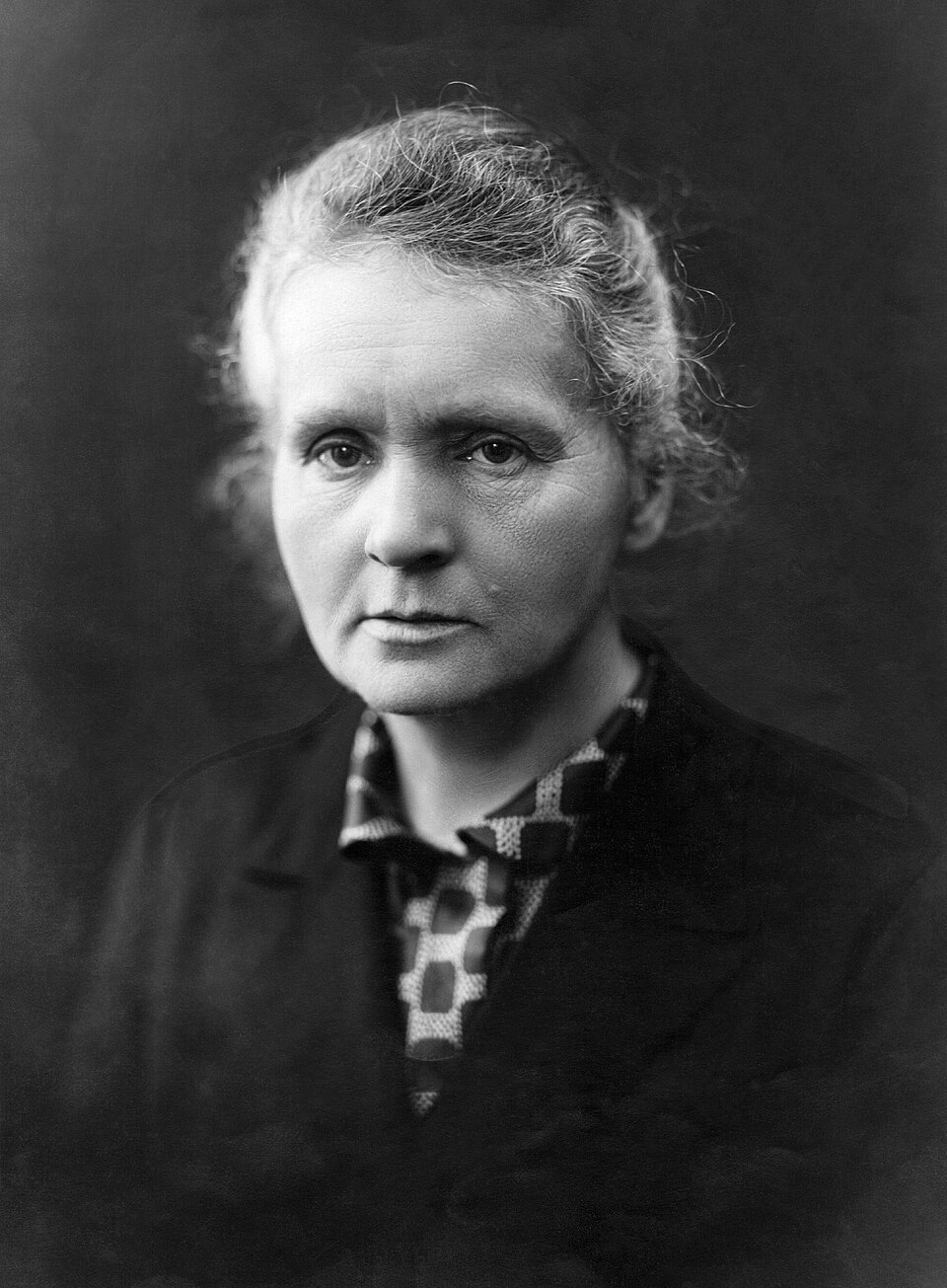
In 1867 Warsaw, then under Russian imperial rule, a fifth child was born to two schoolteachers, Władysław and Bronisława Skłodowski. They named her Maria Salomea Skłodowska. Her father taught mathematics and physics — subjects she would later make her life's work — but Russian authorities had stripped laboratory instruction from Polish schools, so he brought the equipment home and taught his children himself. The family had already lost its fortune through patriotic involvement in Polish uprisings, and tragedy compounded hardship: Maria's sister Zofia died of typhus, and her mother died of tuberculosis when Maria was only ten.
Because Russian-controlled Poland barred women from regular higher education, Maria and her sister Bronisława turned to the clandestine Flying University, a secret Polish institution that admitted women. Maria worked as a governess and tutor for years, striking a bargain with Bronisława: she would help fund her sister's medical studies in Paris in exchange for support two years later. In 1891, at twenty-four, Maria finally joined her sister in Paris, living first with her and then alone in a modest attic room while she studied at the Sorbonne. Within a year and a half she topped her class with a physics degree, followed in 1894 by a second degree in mathematics.
That same year, a Polish scientist introduced her to Pierre Curie, head of a laboratory at the School of Industrial Physics and Chemistry. Their shared scientific passion became a marriage in July 1895, and from then on Maria Skłodowska became Marie Curie. After earning her teaching diploma in 1896, she began investigating the mysterious rays emitted by uranium salts, a phenomenon Henri Becquerel had already reported. The birth of her first daughter, Irène, in 1897 briefly interrupted her work, but by early 1898 she was pushing forward again — and discovered that thorium emitted similar rays. Pierre abandoned his own research to join her.
In July 1898, the Curies announced a new radioactive element, which they named polonium in honor of Marie's native Poland. Two months later, with help from French chemist Eugène-Anatole Demarçay's spectroscopy, they announced a second element: radium. It was Marie who coined the very term 'radioactivity' to describe what they were studying. In 1903, she and Pierre shared the Nobel Prize in Physics with Becquerel for their joint work on radioactivity — making Marie the first woman ever to win a Nobel Prize.
Tragedy struck again in April 1906, when Pierre was killed in a Paris street accident, struck by a horse-drawn cart. Widowed with two young daughters, Marie took over his teaching post at the Sorbonne, and by 1908 she had become the university's first woman professor. She continued the couple's research alone, and in 1911 she was awarded the Nobel Prize in Chemistry for the discovery and isolation of radium and polonium — becoming the first person in history to win two Nobel Prizes, and remaining to this day the only person to win Nobel Prizes in two different scientific fields.
More from People

Frida Kahlo: Painting Through the Pain
An iron handrail pierced a teenage girl's body on a Mexico City street — and out of that wreckage came one of the most searingly honest artists of the twentieth century.

The Ox-Cart and the Snow: Şerife Bacı's Last Road
Somewhere on a frozen road outside Kastamonu, a young mother pressed her body against a quilt to keep her infant warm through the night. By morning, she had become a legend.

Pompey the Great: The Friendship That Broke Rome
He was called 'the teenage butcher' by his enemies and 'the Great' by his mentor — and the empire he helped build would ultimately be the death of him.

The Third Pole: How Hunt, Hillary and Tenzing Conquered Everest
For decades the world's highest mountain had turned back every climber who dared it — sometimes swallowing them whole. In the spring of 1953, one expedition finally reached the point where the sky simply stopped going up.

Two Rivals Under One Roof: Picasso and Matisse
Long before they were named together as the twin poles of modern art, they were simply two names on the walls of the same small Paris gallery — one already known for wild colour, the other not yet known at all.

Fire and Ice: The Borg–McEnroe Rivalry
One man never raised his voice. The other rarely lowered his. Between them they produced two of the greatest matches tennis has ever seen.