Moses of Her People: Harriet Tubman's Long Walk to Freedom
She escaped slavery alone, walking nearly a hundred miles by night — then turned around and walked back, again and again, until she had led seventy people to freedom.
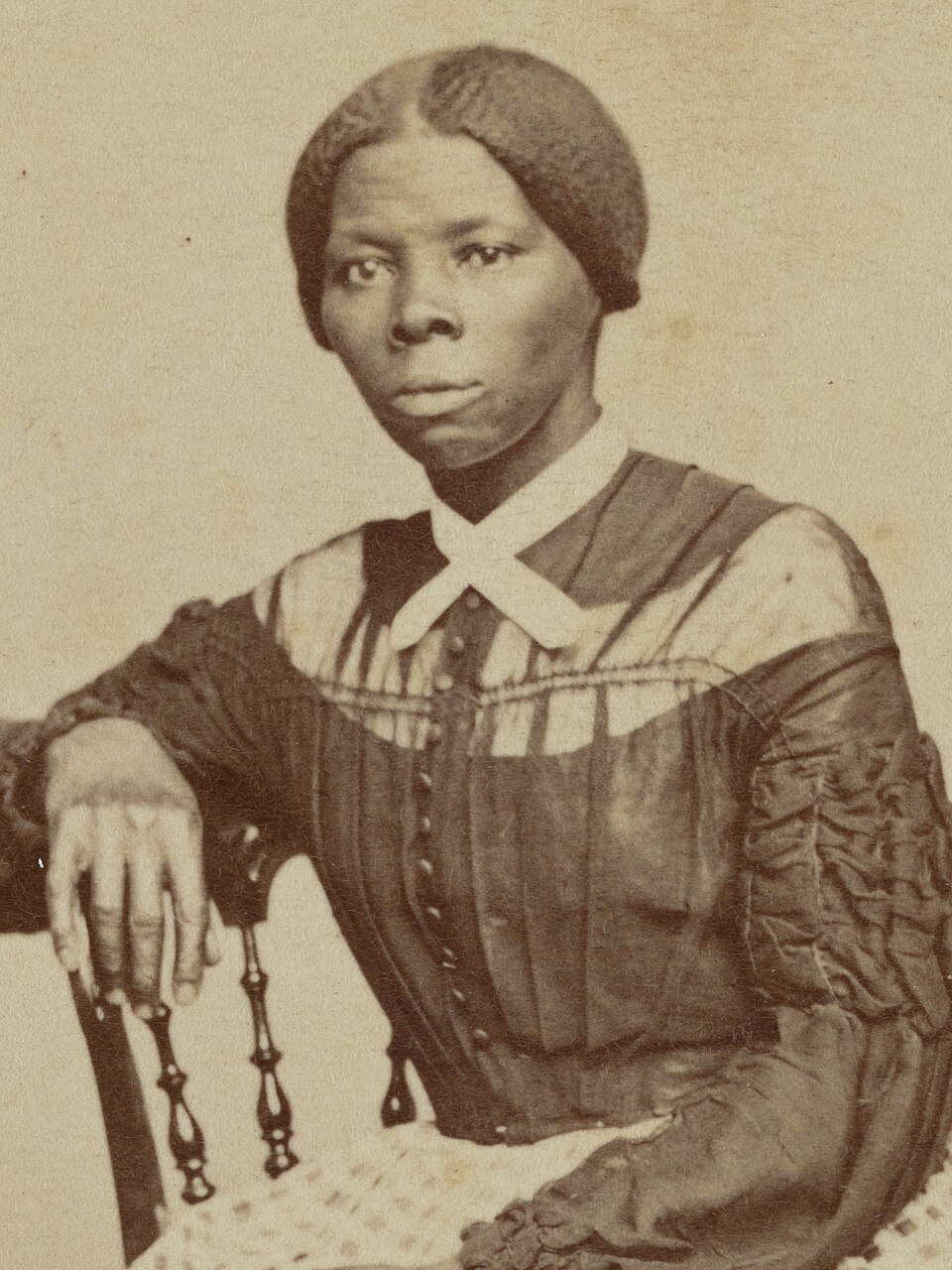
Born Araminta 'Minty' Ross around March 1822 in Dorchester County, Maryland, Harriet Tubman entered the world enslaved, the daughter of Harriet 'Rit' Green and Ben Ross. Her exact birth date was never recorded; historian Kate Larson later fixed the year at 1822 using a midwife's payment record. Tubman's maternal grandmother, Modesty, had arrived in America on a slave ship from Africa, and though family lore linked young Harriet to the Ashanti people, no evidence confirms it. Her mother Rit was enslaved by Mary Pattison Brodess, while her father Ben was enslaved by Anthony Thompson, who later became Mary Brodess's second husband. Married around 1808, Rit and Ben had nine children together — three of Tubman's sisters were sold away by their enslaver, Edward Brodess, severing the family forever.
Childhood brought relentless cruelty. Hired out at five or six as a nursemaid, Tubman was whipped whenever the baby in her care cried; she recalled being lashed five times before a single breakfast, scars she carried her whole life. She ran away once for five days and learned to fight back, wearing extra clothing as padding against beatings. Later, working in the marshes checking muskrat traps for a planter named James Cook, she fell so ill with measles that she was sent home to recover.
The most defining injury of her life came when an overseer, aiming a heavy metal weight at another enslaved person, struck Tubman instead. The wound left her with lifelong dizziness, pain, and spells of hypersomnia. From then on she experienced vivid dreams and visions, which — shaped by her devout Methodist upbringing — she interpreted as premonitions from God.
In 1849, ill again and thus less valuable to sell, Tubman became a target for her enslaver Edward Brodess. She prayed for his heart to change, and when instead he died a week later, she felt only regret over her earlier prayers. With his widow beginning to sell off the estate's people, Tubman resolved: 'I had reasoned this out in my mind; there was one of two things I had a right to, liberty or death.' On September 17, 1849, she fled with her brothers Ben and Henry, walking roughly 145 kilometers by night over 26 days. Her brothers turned back, but Tubman pressed on alone to Philadelphia.
She did not stay free alone for long. Tubman returned to Maryland again and again — some thirteen missions in total — guiding around seventy enslaved people, including her own family, north along the secret network of safe houses known as the Underground Railroad. Known as 'Moses,' she moved by night in extreme secrecy and later said she 'never lost a passenger.' After the Fugitive Slave Act of 1850 made the North less safe, she extended her routes into Canada and helped the newly freed find work. In 1858 she met John Brown and helped him plan his 1859 raid on Harpers Ferry.
More from People

Frida Kahlo: Painting Through the Pain
An iron handrail pierced a teenage girl's body on a Mexico City street — and out of that wreckage came one of the most searingly honest artists of the twentieth century.

The Ox-Cart and the Snow: Şerife Bacı's Last Road
Somewhere on a frozen road outside Kastamonu, a young mother pressed her body against a quilt to keep her infant warm through the night. By morning, she had become a legend.

Pompey the Great: The Friendship That Broke Rome
He was called 'the teenage butcher' by his enemies and 'the Great' by his mentor — and the empire he helped build would ultimately be the death of him.

The Third Pole: How Hunt, Hillary and Tenzing Conquered Everest
For decades the world's highest mountain had turned back every climber who dared it — sometimes swallowing them whole. In the spring of 1953, one expedition finally reached the point where the sky simply stopped going up.

Two Rivals Under One Roof: Picasso and Matisse
Long before they were named together as the twin poles of modern art, they were simply two names on the walls of the same small Paris gallery — one already known for wild colour, the other not yet known at all.

Fire and Ice: The Borg–McEnroe Rivalry
One man never raised his voice. The other rarely lowered his. Between them they produced two of the greatest matches tennis has ever seen.