Napoleon: From Corsican Boy to Emperor of France
He was born a year after his island became French, spoke Corsican before French, and would one day rule seventy million people. How did that happen?
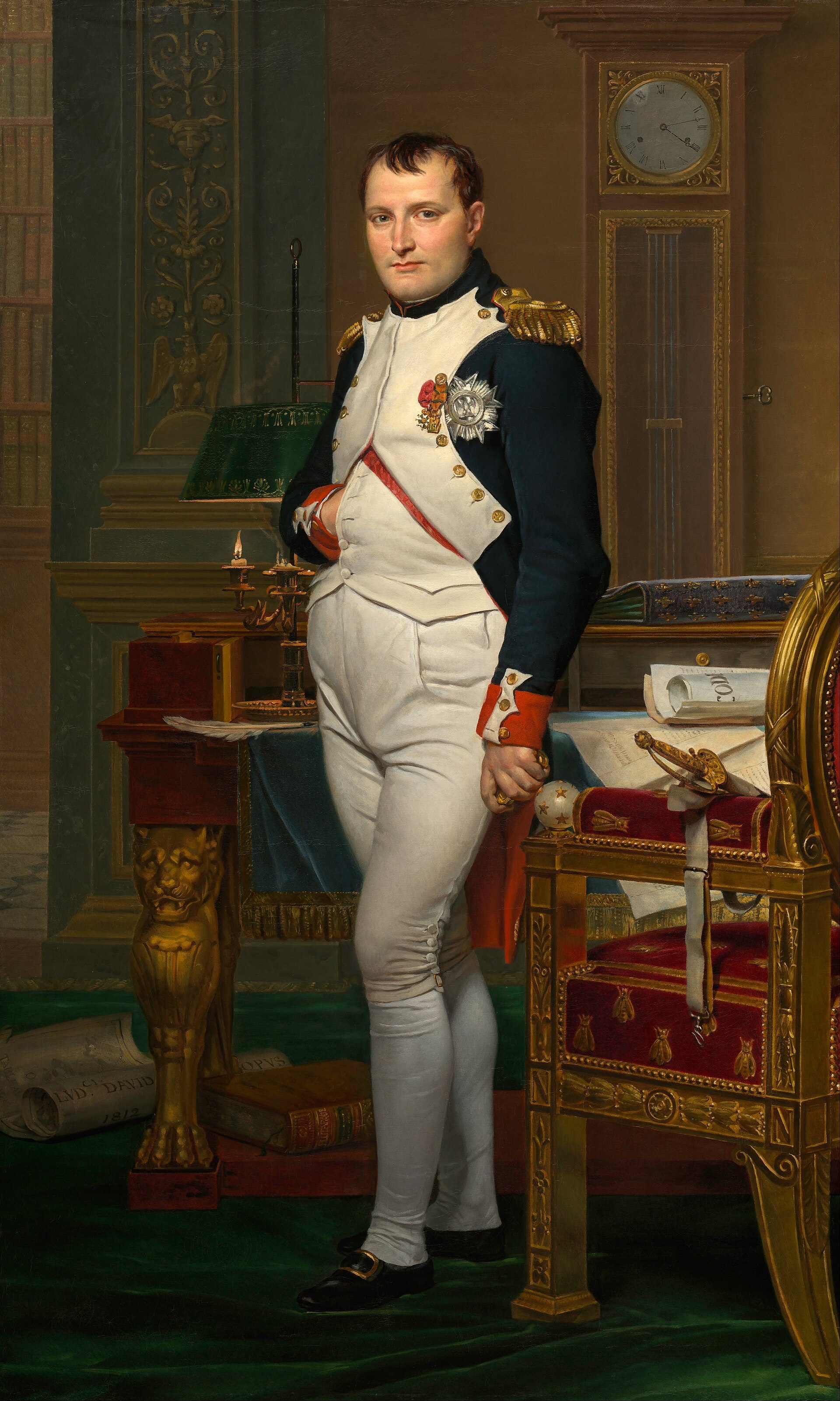
On 15 August 1769, in the Maison Bonaparte in Ajaccio, a boy named Napoleone di Buonaparte was born to Carlo Maria Buonaparte and Maria Letizia Ramolino. His family, of Italian origin descending from Tuscan nobility on his father's side and Lombard nobility on his mother's, had settled on Corsica generations earlier. The island itself had only just passed from the Republic of Genoa to France a year before his birth, and his father had supported Pasquale Paoli's fight for Corsican independence before befriending the French governor Marbeuf, who became young Napoleon's patron and secured him a royal bursary to a French military academy.
Commissioned as an officer in the French Royal Army in 1785, Napoleon embraced the French Revolution in 1789 and worked to spread its cause back home in Corsica, only to be exiled from the island in 1793. That same year, he won the siege of Toulon, launching his rise. Two years later, on 13 Vendémiaire, he saved the French government from collapse by firing on Parisian mobs, and at just 26 he was given command of the army preparing for the Italian campaign.
His 1796 campaign against Austria and its Italian allies produced decisive victories that made him a national hero across Europe. In 1798 he led an invasion of Egypt and Syria, defeating the Mamluk rulers and occupying Ottoman territory, though he could not hold it — the expedition nonetheless sparked the birth of modern Egyptology through the discoveries his soldiers made there.
Returning to France, Napoleon engineered the Coup of 18 Brumaire in November 1799, toppling the Directory and becoming First Consul. His victory at the Battle of Marengo in 1800 secured France's triumph in the War of the Second Coalition, and in 1803 he sold the Louisiana territory to the United States. In December 1804, the French Senate proclaimed him Emperor of the French.
War followed war. The breakdown of the Treaty of Amiens brought the Third Coalition, shattered by Napoleon's triumph at Austerlitz in 1805, which dissolved the Holy Roman Empire. He crushed Prussia at Jena-Auerstedt in 1806 and Russia at Friedland in 1807. Seeking to tighten his trade embargo against Britain, he invaded the Iberian Peninsula in 1808, installing his brother Joseph as King of Spain — provoking a brutal six-year guerrilla conflict, the Peninsular War, which France ultimately lost. Austria's challenge in 1809 ended with Napoleon's victory at Wagram, after which he divorced Josephine and married Archduchess Marie Louise of Austria in 1810. By 1811 he ruled over 70 million people, a scale of European unity unseen since Rome.
More from People

Frida Kahlo: Painting Through the Pain
An iron handrail pierced a teenage girl's body on a Mexico City street — and out of that wreckage came one of the most searingly honest artists of the twentieth century.

The Ox-Cart and the Snow: Şerife Bacı's Last Road
Somewhere on a frozen road outside Kastamonu, a young mother pressed her body against a quilt to keep her infant warm through the night. By morning, she had become a legend.

Pompey the Great: The Friendship That Broke Rome
He was called 'the teenage butcher' by his enemies and 'the Great' by his mentor — and the empire he helped build would ultimately be the death of him.

The Third Pole: How Hunt, Hillary and Tenzing Conquered Everest
For decades the world's highest mountain had turned back every climber who dared it — sometimes swallowing them whole. In the spring of 1953, one expedition finally reached the point where the sky simply stopped going up.

Two Rivals Under One Roof: Picasso and Matisse
Long before they were named together as the twin poles of modern art, they were simply two names on the walls of the same small Paris gallery — one already known for wild colour, the other not yet known at all.

Fire and Ice: The Borg–McEnroe Rivalry
One man never raised his voice. The other rarely lowered his. Between them they produced two of the greatest matches tennis has ever seen.