Seven Afternoons That Made a President
For three hours at a time, two men stood in open fields arguing over the future of slavery — and a nation leaned in to listen.
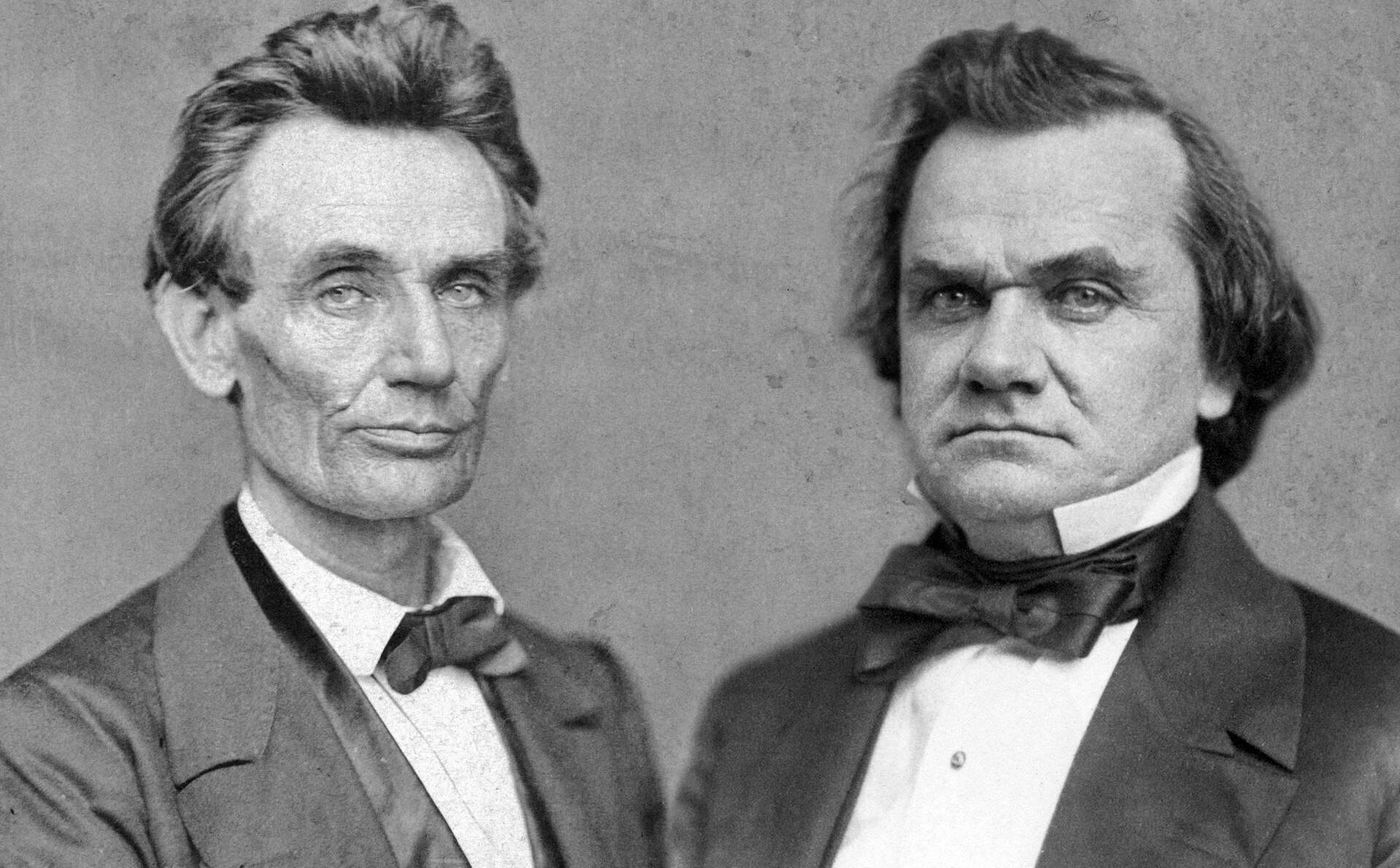
In the late summer of 1858, under the open skies of Illinois, two men climbed onto makeshift platforms and began to argue. One was Stephen Douglas, the sitting United States Senator, a Democrat who had built his career on a single idea: that the people of each new territory, not Washington, should decide for themselves whether to permit slavery. The other was Abraham Lincoln, a Republican who had served just one term in Congress a decade earlier, now trying to unseat him. What followed were seven debates, staged across seven of Illinois's nine congressional districts, that would echo far beyond the prairie.
The stakes were unusual by today's standards. Senators were not yet elected directly by voters — that would not happen until the Seventeenth Amendment in 1913. Instead, the Illinois General Assembly would cast the deciding vote. So Lincoln and Douglas were not campaigning for their own names on a ballot; they were campaigning for the legislators who would vote in their place. Still, both men understood they were speaking to something larger than Illinois.
Each debate followed a strict, almost theatrical rhythm: one candidate spoke for sixty minutes, the other answered for ninety, and the first candidate closed with a thirty-minute rejoinder. Roughly three hours in total, held outdoors between two and five in the afternoon, weather permitting. Douglas, as the incumbent, opened four of the seven. Lincoln, ever the challenger, used his turns to build a case — helped by the fact that in Chicago he had spoken a day after Douglas, denying his opponent any chance to answer back.
The subject never wandered far from slavery — specifically, whether it should extend into the new states carved from the Louisiana Purchase and the Mexican Cession. Douglas defended popular sovereignty, the doctrine written into the 1854 Kansas–Nebraska Act, which let white residents of new territories vote the question themselves. Lincoln pushed back against slavery's expansion, though he was careful to say he was not calling for its abolition where it already existed.
What made these seven afternoons remarkable was not just what was said, but how fast it traveled. Railroads, the electric telegraph, and a new shorthand technique called Pitman phonography converted spoken argument into printed word at astonishing speed. Chicago's largest newspapers sent stenographers to every debate; midway through, runners rushed their notes to waiting trains, where riders transcribed shorthand into full text before the papers even reached the printing press. The Associated Press, then only a decade old, wired the transcripts to readers as far east as the telegraph could reach. Some papers tilted headlines toward their favored candidate, but the speeches themselves were often printed in full, sometimes within hours.
More from People

Frida Kahlo: Painting Through the Pain
An iron handrail pierced a teenage girl's body on a Mexico City street — and out of that wreckage came one of the most searingly honest artists of the twentieth century.

The Ox-Cart and the Snow: Şerife Bacı's Last Road
Somewhere on a frozen road outside Kastamonu, a young mother pressed her body against a quilt to keep her infant warm through the night. By morning, she had become a legend.

Pompey the Great: The Friendship That Broke Rome
He was called 'the teenage butcher' by his enemies and 'the Great' by his mentor — and the empire he helped build would ultimately be the death of him.

The Third Pole: How Hunt, Hillary and Tenzing Conquered Everest
For decades the world's highest mountain had turned back every climber who dared it — sometimes swallowing them whole. In the spring of 1953, one expedition finally reached the point where the sky simply stopped going up.

Two Rivals Under One Roof: Picasso and Matisse
Long before they were named together as the twin poles of modern art, they were simply two names on the walls of the same small Paris gallery — one already known for wild colour, the other not yet known at all.

Fire and Ice: The Borg–McEnroe Rivalry
One man never raised his voice. The other rarely lowered his. Between them they produced two of the greatest matches tennis has ever seen.