Shocking Pink Versus Little Black: The War Between Schiaparelli and Chanel
Two women, two philosophies, one Paris: while Coco Chanel preached restraint, Elsa Schiaparelli dressed clients in lobsters and dreams — and the two never forgave each other for it.
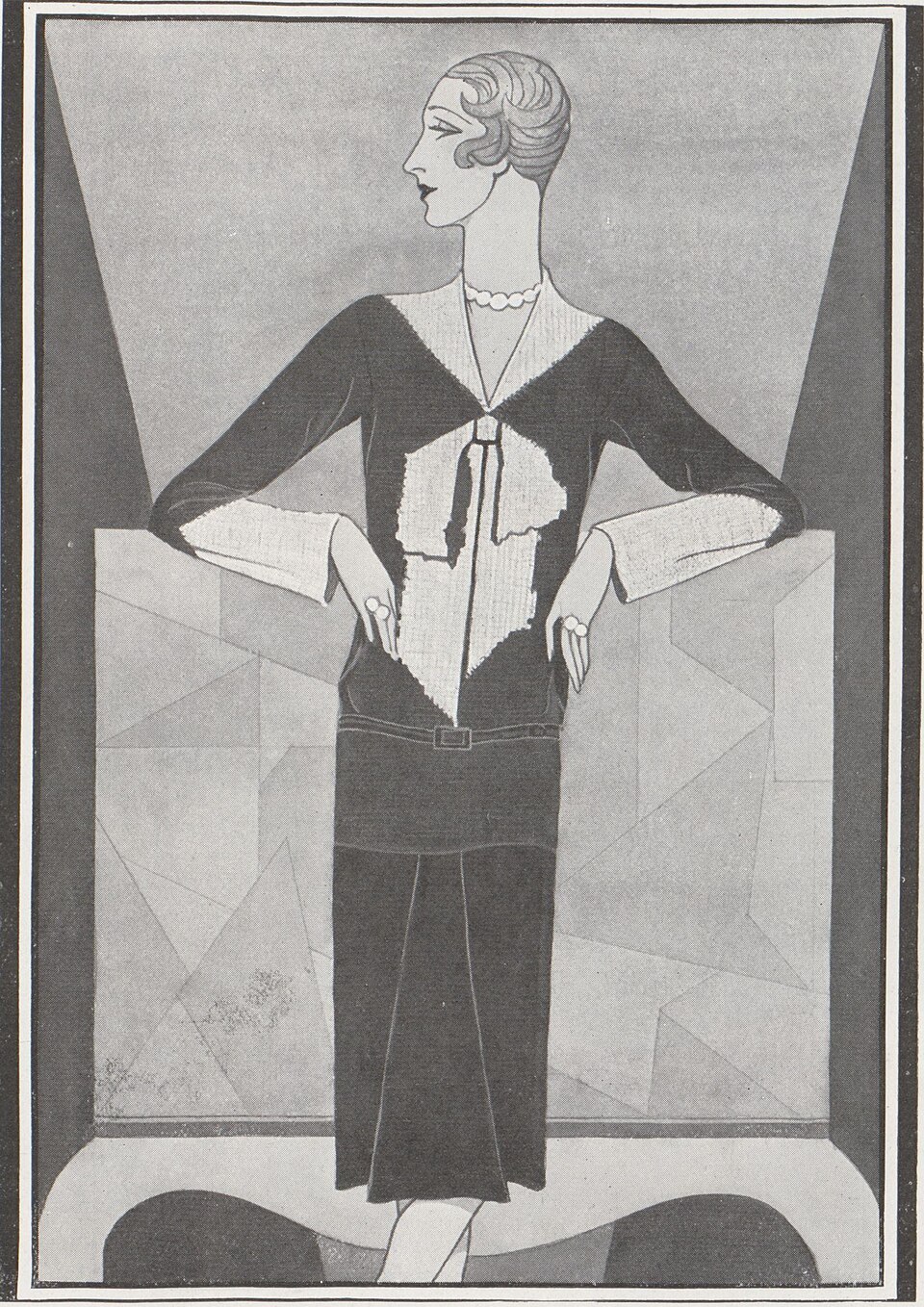
Elsa Schiaparelli was born into erudition, not thread. She arrived in 1890 at the Palazzo Corsini in Rome, daughter of a Neapolitan aristocrat mother and a Piedmontese scholar father, Celestino Schiaparelli, who studied the Islamic world and the Middle Ages, was an authority on Sanskrit, curated medieval manuscripts, and served as Dean of the Sapienza University of Rome — the very institution where his daughter would later study philosophy. Her uncle Giovanni Schiaparelli was the astronomer who discovered the so-called canali on Mars, and young Elsa often studied the night sky beside him. A cousin, Ernesto Schiaparelli, was the Egyptologist who discovered the tomb of Nefertari. Surrounded by manuscripts, myth, and stars, she was primed from childhood to see the world as something stranger and more theatrical than it appeared.
That strangeness found early expression in writing, not clothes. As a girl she penned a volume of poems called Arethusa, drawn from ancient Greek myth, so unsettling to her conservative parents that they packed her off to a convent boarding school in Switzerland. She answered with a hunger strike and won her way home — an early sign of the defiance that would later shape her design career.
Restlessness, not fashion, propelled her out of Rome. Dissatisfied with a comfortable but cloistered life, she took a job caring for orphaned children at an English country house, only to find it unbearable. Rather than admit defeat and return to her family, she resolved to make her way back through Paris — the city that would eventually become her creative battleground.
Her path there wound through scandal. In London, fleeing an arranged marriage to a Russian suitor favored by her parents, she fell for a charismatic con man performing as a psychic lecturer under the name Wilhelm de Kerlor. They married in 1914, and Schiaparelli spent years assisting his fraudulent 'Bureau of Psychology' schemes in Paris, Cannes, Nice, Monte Carlo, and eventually New York, before government suspicion of Bolshevik sympathies pushed the couple to relocate again. It was a chaotic, itinerant decade before fashion ever entered the picture.
When Schiaparelli finally turned to design, she began with knitwear and quickly built something entirely her own: a fashion language steeped in Surrealism. Her collections explored the human body, insects, and trompe-l'œil illusions, rendered in audacious color — most famously the electric hue she christened 'shocking pink'. She collaborated directly with Salvador Dalí and Jean Cocteau, blurring the line between couture and avant-garde art in a way no one in Paris had attempted before.
More from People

Frida Kahlo: Painting Through the Pain
An iron handrail pierced a teenage girl's body on a Mexico City street — and out of that wreckage came one of the most searingly honest artists of the twentieth century.

The Ox-Cart and the Snow: Şerife Bacı's Last Road
Somewhere on a frozen road outside Kastamonu, a young mother pressed her body against a quilt to keep her infant warm through the night. By morning, she had become a legend.

Pompey the Great: The Friendship That Broke Rome
He was called 'the teenage butcher' by his enemies and 'the Great' by his mentor — and the empire he helped build would ultimately be the death of him.

The Third Pole: How Hunt, Hillary and Tenzing Conquered Everest
For decades the world's highest mountain had turned back every climber who dared it — sometimes swallowing them whole. In the spring of 1953, one expedition finally reached the point where the sky simply stopped going up.

Two Rivals Under One Roof: Picasso and Matisse
Long before they were named together as the twin poles of modern art, they were simply two names on the walls of the same small Paris gallery — one already known for wild colour, the other not yet known at all.

Fire and Ice: The Borg–McEnroe Rivalry
One man never raised his voice. The other rarely lowered his. Between them they produced two of the greatest matches tennis has ever seen.