Suleiman the Magnificent: The Sultan Who Made Law His Empire
He inherited a throne at twenty-six and, within a decade, reshaped the map of Europe and the code of an empire's justice — but the crown would cost him his own sons.
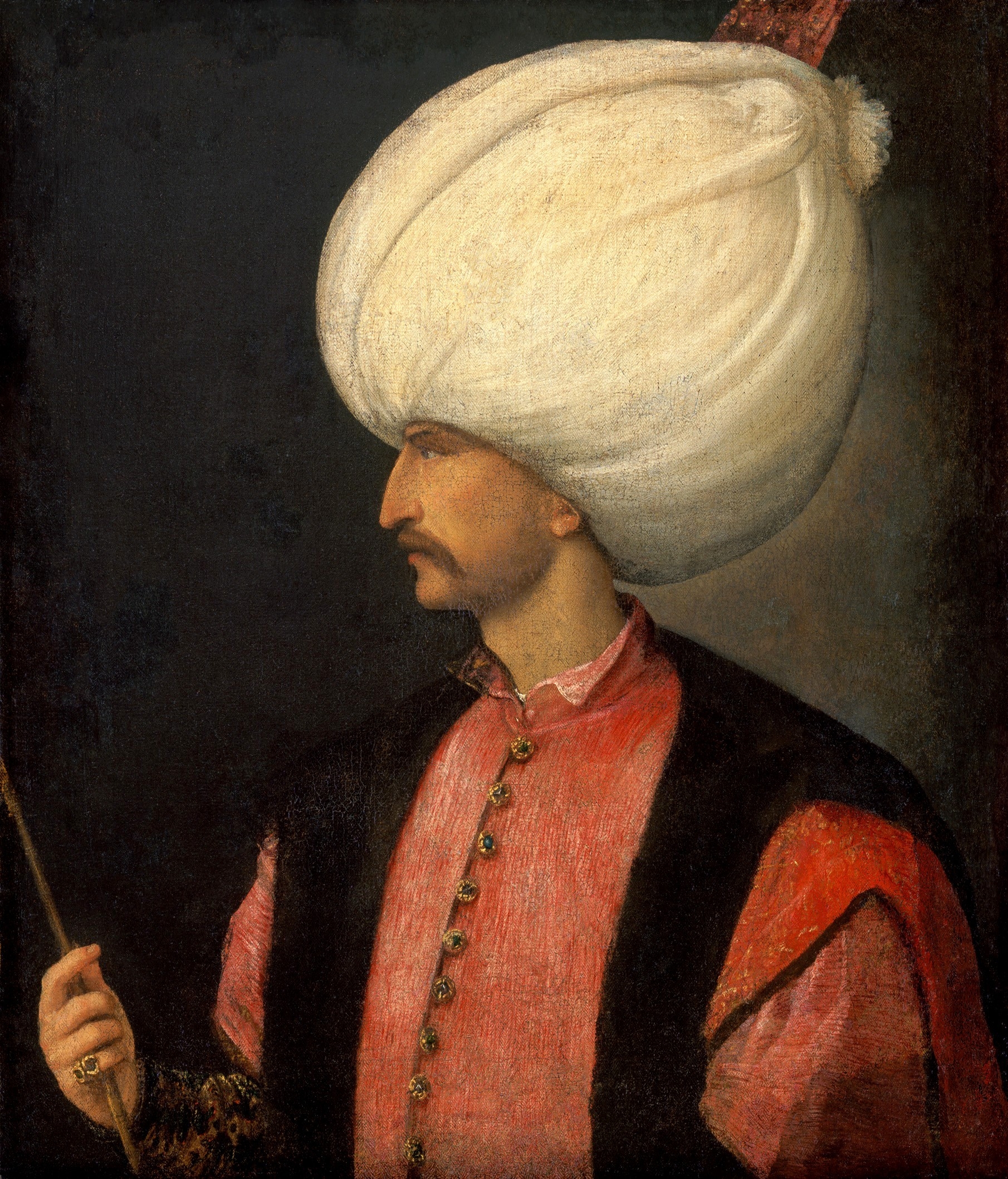
When the Venetian envoy Bartolomeo Contarini met the new Ottoman sultan in the weeks after his accession in 1520, he described a tall, slender young man of twenty-six with a thin, bony face, friendly manner, and a reputation for reading and good judgment. That sultan was Suleiman, born in Trabzon on 6 November 1494 to Şehzade Selim and Hafsa Sultan, and educated from age seven in the schools of Topkapı Palace in science, history, literature, theology, and military tactics. Few who watched him take the throne on 30 September 1520 could have guessed he would rule for forty-six years — the longest reign of any Ottoman sultan.
Suleiman moved quickly. A revolt by the Ottoman-appointed governor of Damascus tested his authority within a year, but it was crushed. He then turned to Belgrade, a fortress his great-grandfather Mehmed II had failed to take. On 28 August 1521, Suleiman encircled the city with some 250,000 soldiers and over 100 ships, battering it with cannon fire from an island in the Danube until it fell. Belgrade became the seat of a new Ottoman province and swelled into the second-largest Ottoman city in Europe.
Rhodes came next. The island was the stronghold of the Knights Hospitaller, and Suleiman built Marmaris Castle as a staging base for his navy before laying siege. After five grueling months, Rhodes surrendered in 1522–1523, at a cost the Ottomans counted at 50,000 to 60,000 dead from battle and disease. Suleiman allowed the defeated knights to leave the island unharmed.
In 1526, at the Battle of Mohács, Suleiman shattered the military power of the Kingdom of Hungary, absorbing much of its territory into his empire. Europe's Christian powers reeled, and Suleiman seemed unstoppable — until 1529, when his siege of Vienna failed, halting the westward advance of Ottoman arms for good. He turned instead toward the east, fighting the Safavid Empire of Iran for years and annexing Iraq, while in North Africa the Ottoman fleet came to dominate waters from the Mediterranean to the Red Sea and the Persian Gulf.
Yet Suleiman's most lasting legacy may not have been his conquests but his laws. Working alongside the empire's chief judicial official, Ebussuud Efendi, he personally reformed Ottoman law in matters of society, education, taxation, and criminal justice, weaving together sultanic law (Kanun) with Islamic Sharia — the achievement that earned him the title 'the Lawgiver.' He was also a poet and goldsmith, and under his patronage the empire entered what historians call its Golden Age of art, literature, and architecture.
More from People

Frida Kahlo: Painting Through the Pain
An iron handrail pierced a teenage girl's body on a Mexico City street — and out of that wreckage came one of the most searingly honest artists of the twentieth century.

The Ox-Cart and the Snow: Şerife Bacı's Last Road
Somewhere on a frozen road outside Kastamonu, a young mother pressed her body against a quilt to keep her infant warm through the night. By morning, she had become a legend.

Pompey the Great: The Friendship That Broke Rome
He was called 'the teenage butcher' by his enemies and 'the Great' by his mentor — and the empire he helped build would ultimately be the death of him.

The Third Pole: How Hunt, Hillary and Tenzing Conquered Everest
For decades the world's highest mountain had turned back every climber who dared it — sometimes swallowing them whole. In the spring of 1953, one expedition finally reached the point where the sky simply stopped going up.

Two Rivals Under One Roof: Picasso and Matisse
Long before they were named together as the twin poles of modern art, they were simply two names on the walls of the same small Paris gallery — one already known for wild colour, the other not yet known at all.

Fire and Ice: The Borg–McEnroe Rivalry
One man never raised his voice. The other rarely lowered his. Between them they produced two of the greatest matches tennis has ever seen.