The Bishop's Boys Who Taught the World to Fly
Two brothers with no college diplomas, a bicycle shop, and a broken toy helicopter changed the course of human history in twelve seconds.
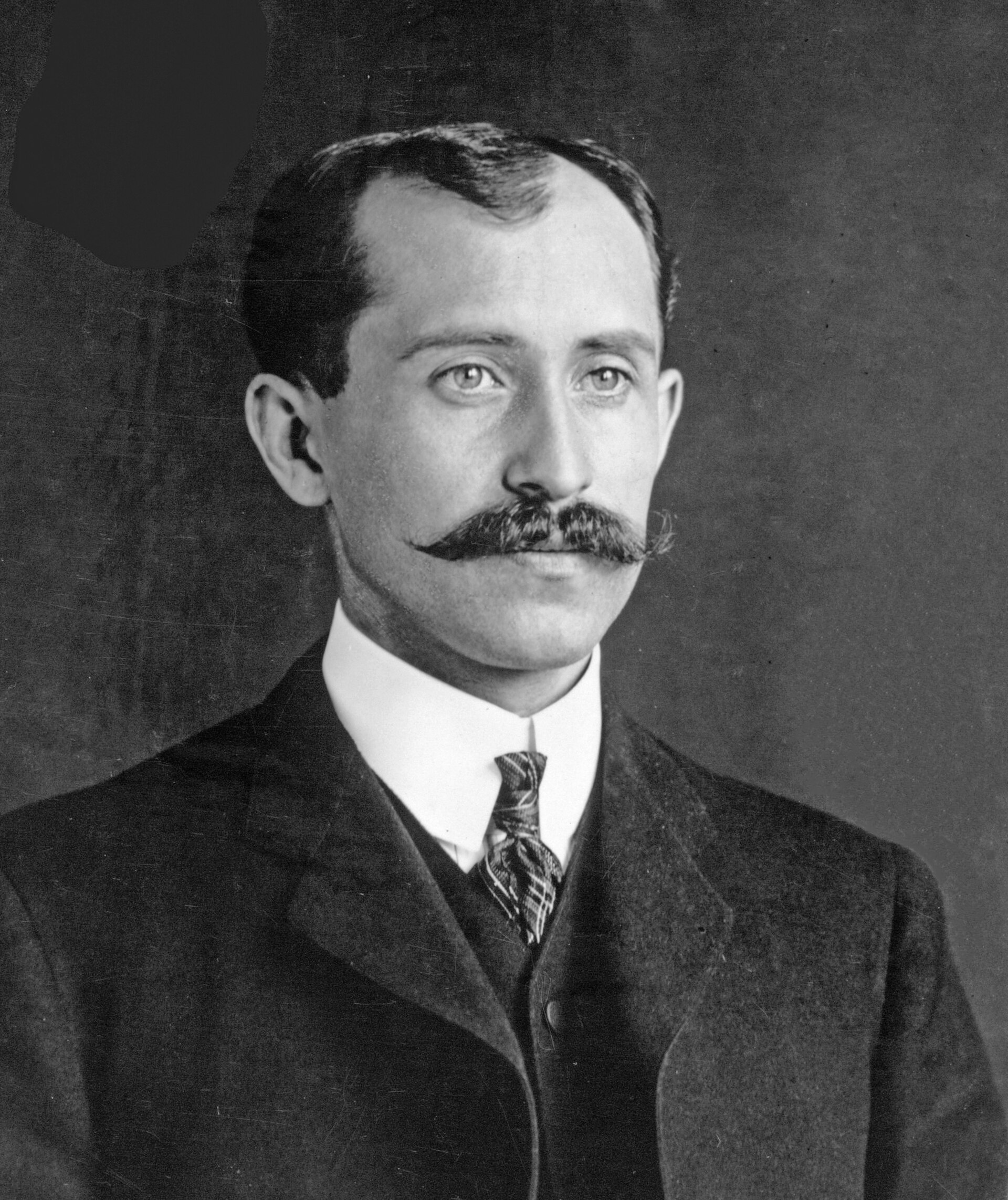
In the winter of 1878, a clergyman named Milton Wright came home to Cedar Rapids, Iowa, carrying a small toy for his two youngest sons. It was a model helicopter, about 1 ft (30 cm) long, made of paper, bamboo, and cork, powered by nothing more than a twisted rubber band — a design based on an invention by the French aeronautical pioneer Alphonse Pénaud. Wilbur and Orville played with it until it broke, then built their own. Decades later, they would point to that broken toy as the spark that set their lives toward the sky.
Wilbur was born near Millville, Indiana, in 1867, and Orville in Dayton, Ohio, in 1871 — two of seven children born to Milton Wright and Susan Catherine Koerner. Neither Wright child had a middle name; their father instead chose distinctive first names, naming his sons after clergymen he admired, Willbur Fisk and Orville Dewey. In Dayton, neighbors simply called them 'the bishop's boys.' Neither brother ever married.
Neither Wilbur nor Orville finished high school with a diploma in hand. A family move from Richmond, Indiana, to Dayton in 1884 cut short Wilbur's schooling just after four years; his diploma would not be awarded until April 16, 1994, posthumously, on what would have been his 127th birthday. In late 1885 or early 1886, Wilbur was struck in the face with a hockey stick during an ice-skating game, losing his front teeth. Once vigorous and athletic, he withdrew, spending years largely housebound, caring for his tubercular mother and reading deeply in his father's library.
Orville, meanwhile, dropped out of high school to start a printing business in 1889, building his own press with Wilbur's help. The brothers soon launched a weekly newspaper together. Their mechanical instincts, sharpened first in printing and later in a Dayton bicycle shop, gave them a practical education no university could offer. Working for years with presses, bicycles, and motors, they developed the hands-on skill that would prove essential to solving what they called 'the flying problem.'
Starting around 1890, the two bicycle mechanics began systematically studying everything that might explain how birds fly. Finding little of use in existing scientific literature, they turned to the careful notes of German engineer Otto Lilienthal, who had tested gliders from a hill near Berlin and demonstrated that a fixed wing in contact with the air was essential to controlled flight. In 1895, the Smithsonian Institution supplied the Wrights with Lilienthal's lift-and-drag tables along with a wind-tunnel study by Wenham and John Browning from 1871 — America's effort to keep pace in the emerging science of aviation.
More from People

Frida Kahlo: Painting Through the Pain
An iron handrail pierced a teenage girl's body on a Mexico City street — and out of that wreckage came one of the most searingly honest artists of the twentieth century.

The Ox-Cart and the Snow: Şerife Bacı's Last Road
Somewhere on a frozen road outside Kastamonu, a young mother pressed her body against a quilt to keep her infant warm through the night. By morning, she had become a legend.

Pompey the Great: The Friendship That Broke Rome
He was called 'the teenage butcher' by his enemies and 'the Great' by his mentor — and the empire he helped build would ultimately be the death of him.

The Third Pole: How Hunt, Hillary and Tenzing Conquered Everest
For decades the world's highest mountain had turned back every climber who dared it — sometimes swallowing them whole. In the spring of 1953, one expedition finally reached the point where the sky simply stopped going up.

Two Rivals Under One Roof: Picasso and Matisse
Long before they were named together as the twin poles of modern art, they were simply two names on the walls of the same small Paris gallery — one already known for wild colour, the other not yet known at all.

Fire and Ice: The Borg–McEnroe Rivalry
One man never raised his voice. The other rarely lowered his. Between them they produced two of the greatest matches tennis has ever seen.