The Boy Who Loved Machines That Never Lied
Long before he was the world's richest man, he was a small, bullied kid obsessed with a clattering teletype machine that always did exactly what it was told. That obsession would eventually put him on a collision course with another young man building computers on the other side of the country.
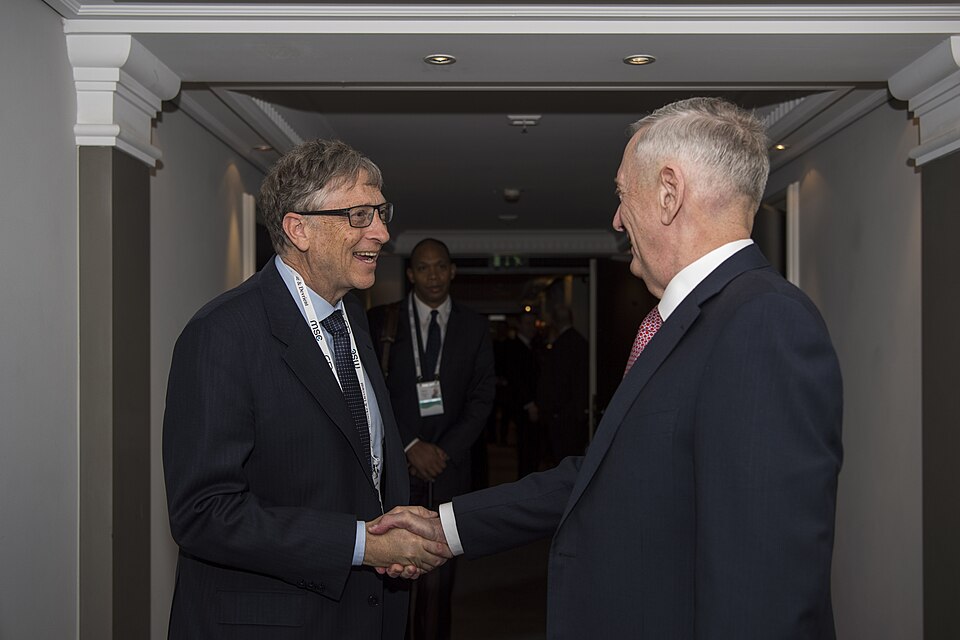
William Henry Gates III was born on October 28, 1955, in Seattle, Washington, the only son of a prominent lawyer and a mother who sat on the boards of First Interstate BancSystem and United Way of America. He was the fourth William in his family, nicknamed 'Trey' because his father carried the 'II'. Small for his age, he was bullied as a child, but his family prized competition fiercely — whether at cards, pickleball, or a race to the dock, there was always a reward for winning and a penalty for losing.
At thirteen, Gates enrolled at the private Lakeside School, where the Mothers' Club used rummage-sale proceeds to buy a Teletype Model 33 terminal and computer time on a General Electric system. Gates was captivated — he wrote his first program there, a version of tic-tac-toe — and was excused from math class to keep programming. He and a handful of friends, including Paul Allen and Kent Evans, chased more computer time wherever they could find it, even getting briefly banned from a company's system after they were caught exploiting bugs for free access.
By 1971, a Lakeside teacher hired Gates and Evans to help automate the school's class-scheduling system in exchange for computer time and royalties. The habits were forming: obsessive focus, a taste for exploiting systems to their limits, and an appetite for building software that other people would actually use.
The defining moment came in January 1975, when Gates read the issue of Popular Electronics unveiling the Altair 8800. He and Allen didn't even own one of the machines, but they contacted MITS, the company behind it, claiming to be developing a BASIC interpreter for it. Within weeks they had built an Altair emulator and a working interpreter, demonstrated it successfully in Albuquerque, and struck a deal. Gates left Harvard in November 1975 to join Allen at MITS full time, and together they built Micro-Soft — soon simply Microsoft — registering the name officially in New Mexico in November 1976.
Microsoft grew into the dominant force of the personal-computer software era Gates had helped ignite, alongside a wave of entrepreneurs remaking an entire industry in garages, dorm rooms, and small offices across the country. Gates served as CEO for 25 years, then as chairman, then as chief software architect, steering the company through explosive growth, a landmark antitrust battle in the late 1990s, and eventual leadership transitions — succeeded as CEO by Steve Ballmer in 2000 and, later, advising Satya Nadella.
More from People

Frida Kahlo: Painting Through the Pain
An iron handrail pierced a teenage girl's body on a Mexico City street — and out of that wreckage came one of the most searingly honest artists of the twentieth century.

The Ox-Cart and the Snow: Şerife Bacı's Last Road
Somewhere on a frozen road outside Kastamonu, a young mother pressed her body against a quilt to keep her infant warm through the night. By morning, she had become a legend.

Pompey the Great: The Friendship That Broke Rome
He was called 'the teenage butcher' by his enemies and 'the Great' by his mentor — and the empire he helped build would ultimately be the death of him.

The Third Pole: How Hunt, Hillary and Tenzing Conquered Everest
For decades the world's highest mountain had turned back every climber who dared it — sometimes swallowing them whole. In the spring of 1953, one expedition finally reached the point where the sky simply stopped going up.

Two Rivals Under One Roof: Picasso and Matisse
Long before they were named together as the twin poles of modern art, they were simply two names on the walls of the same small Paris gallery — one already known for wild colour, the other not yet known at all.

Fire and Ice: The Borg–McEnroe Rivalry
One man never raised his voice. The other rarely lowered his. Between them they produced two of the greatest matches tennis has ever seen.