The Consul Who Wrote Visas Until His Hand Gave Out
In a cramped consulate in Lithuania, a Japanese diplomat kept scribbling long after his government told him to stop — because outside his window, thousands of people were begging with their eyes.
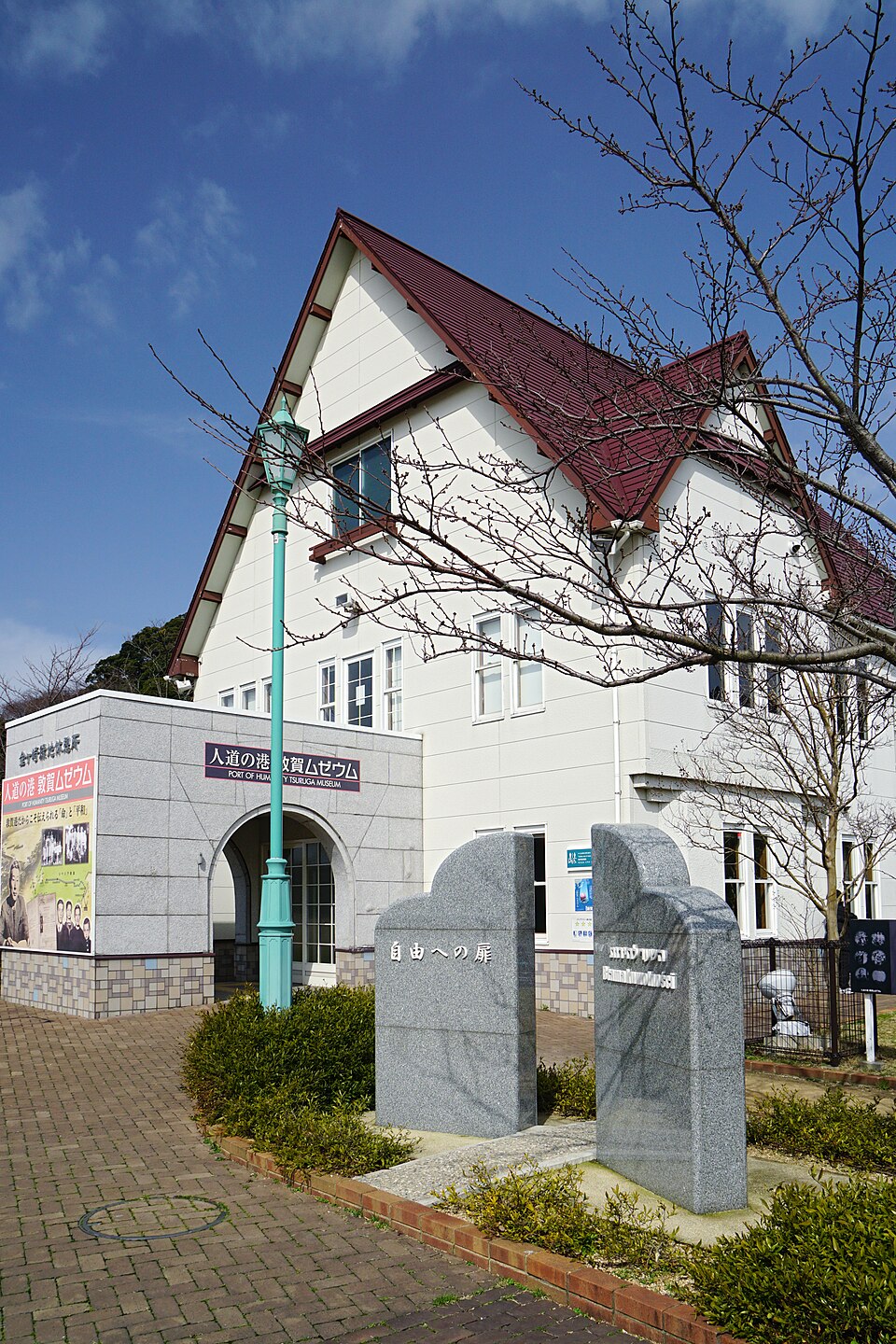
Chiune Sugihara was born on 1 January 1900 in Mino, Gifu prefecture, the second son among six children — five boys and one girl — of a middle-class tax official. His father hoped he would become a physician, but Chiune deliberately failed the entrance exam meant to steer him toward medicine, writing only his name on the papers. Instead he entered Waseda University in 1918 to study English, joining a Christian fraternity to sharpen his language skills. In 1919 he passed the Foreign Ministry's scholarship exam, and after two years as an army lieutenant in Korea, he devoted himself to mastering Russian, eventually becoming one of the Japanese government's most capable Russian speakers.
His early career took him to Harbin, Manchuria, where he negotiated railway agreements with the Soviet Union, married a Russian woman, and converted to Christianity. In 1934, while serving in the Manchukuo Foreign Office, he quit his post in protest of Japan's mistreatment of local Chinese — an early sign of a conscience unwilling to bend quietly. After divorcing, he remarried in Japan to Yukiko Kikuchi, with whom he had four sons — Hiroki, Chiaki, Haruki and Nobuki — and he later worked as a translator for the Japanese delegation in Helsinki before his most consequential posting.
In 1939 Sugihara became vice-consul at the Japanese consulate in Kaunas, Lithuania's temporary capital. Officially, his job was to monitor Soviet and German troop movements and report on any planned German attack on the USSR. He also cooperated with Polish intelligence as part of a joint Japanese-Polish effort. In Lithuania he adopted the easier-to-pronounce name 'Sempo.'
When the Soviet Union occupied Lithuania in 1940, panic spread among Polish and Lithuanian Jews facing persecution, and word came that foreign consulates in Kaunas would soon close. A Dutch national sought help reaching Curaçao, a Dutch colony, with hopes of eventually crossing to the United States. Through a Dutch vice-consul, a travel document was arranged that required no formal visa — only a governor's landing permission. This loophole became the thread Sugihara pulled to save lives.
Acting without clear authorization from Tokyo, Sugihara began issuing Japanese transit visas to Jewish refugees so they could travel through Japanese territory toward that distant Caribbean possibility. He kept issuing them even as his superiors hesitated and his own career hung in the balance, reportedly writing visas by hand until the consulate closed, refusing to stop even as the refugees pressed against him in desperation. He later recalled seeing old people and women so desperate they kissed his shoes, and said plainly that he felt no single voice in Tokyo could tell him what was right in that moment.
More from People

Frida Kahlo: Painting Through the Pain
An iron handrail pierced a teenage girl's body on a Mexico City street — and out of that wreckage came one of the most searingly honest artists of the twentieth century.

The Ox-Cart and the Snow: Şerife Bacı's Last Road
Somewhere on a frozen road outside Kastamonu, a young mother pressed her body against a quilt to keep her infant warm through the night. By morning, she had become a legend.

Pompey the Great: The Friendship That Broke Rome
He was called 'the teenage butcher' by his enemies and 'the Great' by his mentor — and the empire he helped build would ultimately be the death of him.

The Third Pole: How Hunt, Hillary and Tenzing Conquered Everest
For decades the world's highest mountain had turned back every climber who dared it — sometimes swallowing them whole. In the spring of 1953, one expedition finally reached the point where the sky simply stopped going up.

Two Rivals Under One Roof: Picasso and Matisse
Long before they were named together as the twin poles of modern art, they were simply two names on the walls of the same small Paris gallery — one already known for wild colour, the other not yet known at all.

Fire and Ice: The Borg–McEnroe Rivalry
One man never raised his voice. The other rarely lowered his. Between them they produced two of the greatest matches tennis has ever seen.