The Doctor Who Knew Too Soon
He found the invisible killer stalking maternity wards decades before anyone believed in germs — and it cost him everything.
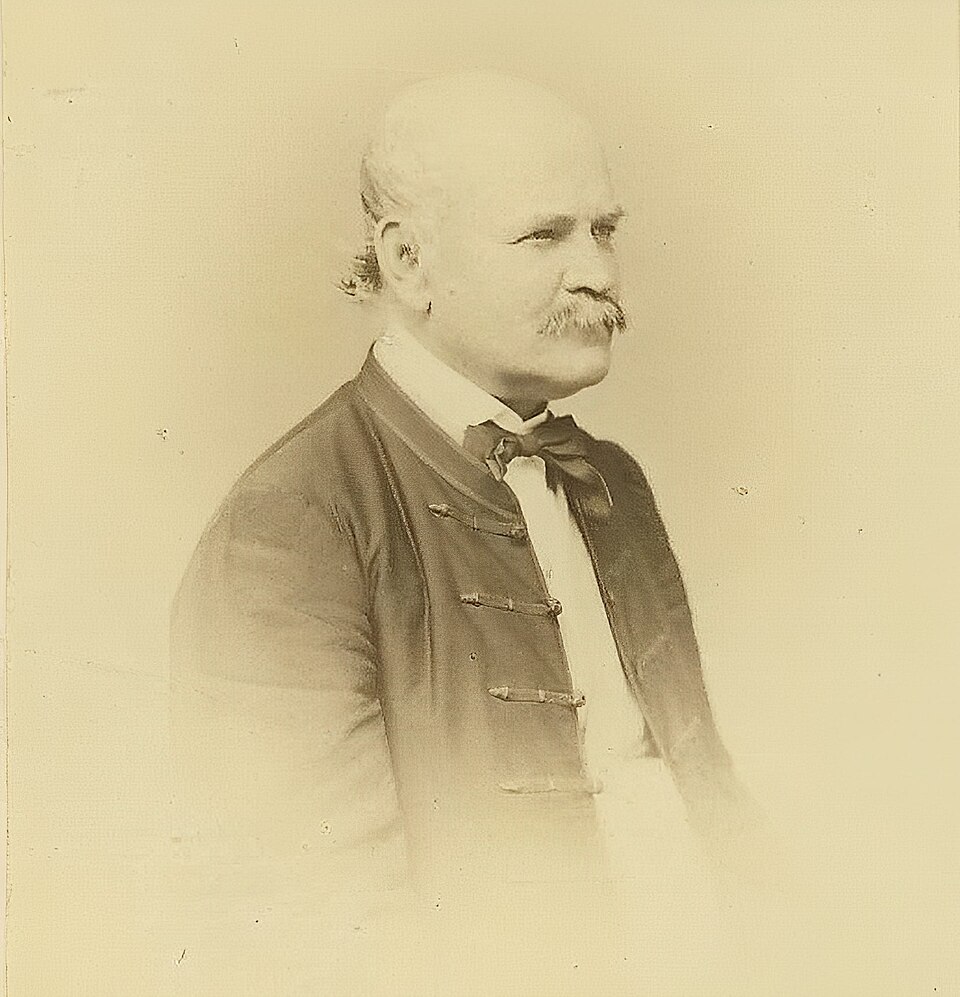
Women in Vienna were begging on their knees. Not to be admitted to the First Obstetrical Clinic of the Vienna General Hospital, but to be kept out of it. Some pretended they had given birth on the way to the hospital, delivering in the streets rather than risk the wards where doctors worked. They had good reason: the First Clinic's maternal mortality from puerperal fever averaged around 10%, while the Second Clinic, just down the hall, hovered under 4%.
Into this mystery stepped Ignaz Semmelweis, a young Hungarian physician of German descent, born in 1818 in Buda to a prosperous grocer family. After studying law and then medicine at the University of Vienna, and training under respected teachers like Carl von Rokitansky, he became assistant to Professor Johann Klein at the First Clinic in 1846. The discrepancy between the two wards troubled him immediately. He ruled out overcrowding — the Second Clinic was actually busier. He ruled out climate, since the clinics sat side by side. He even tried changing birthing positions and eliminating the priests' last rites, suspecting fear itself might be fatal. Nothing worked.
The breakthrough came through tragedy. In 1847, Semmelweis's close friend Jakob Kolletschka died after being accidentally cut with a scalpel during a student's autopsy. Kolletschka's own autopsy revealed pathology eerily similar to the women dying of childbed fever. Semmelweis made the leap: doctors and students, moving straight from dissecting corpses to examining laboring women, were carrying something deadly on their hands — 'cadaverous particles,' as he called them, since germ theory did not yet exist.
The midwives training in the Second Clinic never touched cadavers. That was the difference.
Semmelweis instituted a simple rule: hands washed in a chlorinated lime solution between the autopsy room and the patient's bedside. He'd chosen the chemical because it best eliminated the putrid smell of decay clinging to skin. The results were immediate and staggering. Mortality in the First Clinic plunged from around 18% to under 2%.
More from People

Frida Kahlo: Painting Through the Pain
An iron handrail pierced a teenage girl's body on a Mexico City street — and out of that wreckage came one of the most searingly honest artists of the twentieth century.

The Ox-Cart and the Snow: Şerife Bacı's Last Road
Somewhere on a frozen road outside Kastamonu, a young mother pressed her body against a quilt to keep her infant warm through the night. By morning, she had become a legend.

Pompey the Great: The Friendship That Broke Rome
He was called 'the teenage butcher' by his enemies and 'the Great' by his mentor — and the empire he helped build would ultimately be the death of him.

The Third Pole: How Hunt, Hillary and Tenzing Conquered Everest
For decades the world's highest mountain had turned back every climber who dared it — sometimes swallowing them whole. In the spring of 1953, one expedition finally reached the point where the sky simply stopped going up.

Two Rivals Under One Roof: Picasso and Matisse
Long before they were named together as the twin poles of modern art, they were simply two names on the walls of the same small Paris gallery — one already known for wild colour, the other not yet known at all.

Fire and Ice: The Borg–McEnroe Rivalry
One man never raised his voice. The other rarely lowered his. Between them they produced two of the greatest matches tennis has ever seen.