The Farm Boy Who Vaccinated the World
He was orphaned by his own birth, raised on a Montana farm among chickens — and grew up to save more lives than perhaps any scientist in history.
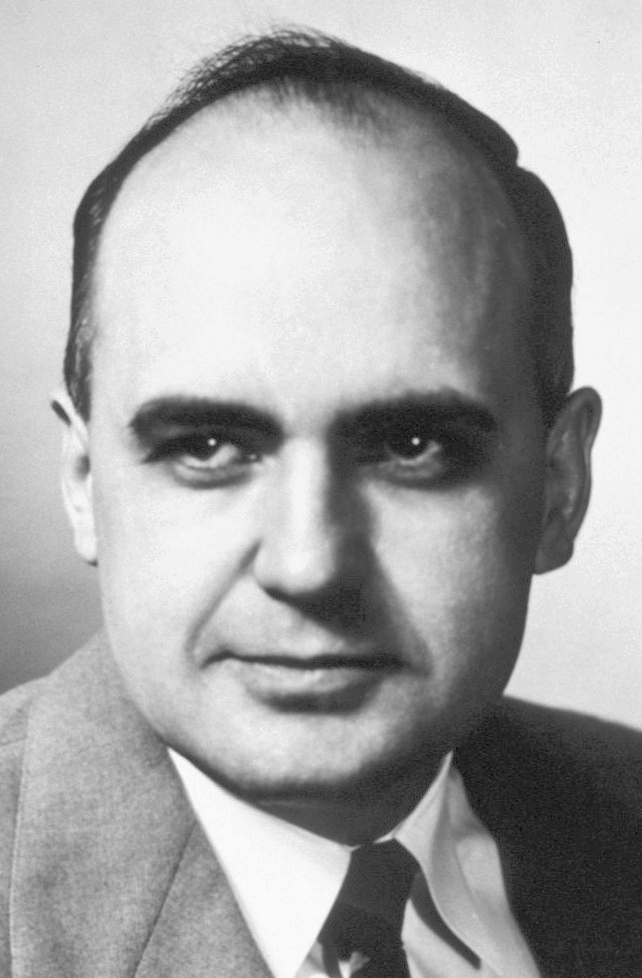
On the day Maurice Hilleman was born on a farm near Miles City, Montana, in August 1919, his twin sister died. Two days later his mother died too. He was the eighth child, and he was raised not by his parents but by his uncle Bob Hilleman, working the family farm as a boy. It was there, tending chickens, that he unknowingly absorbed the skill that would define his life's work: fertile chicken eggs had, since the 1930s, become the vessels in which scientists grew the viruses used to make vaccines.
Hilleman was a restless mind even as a child. In eighth grade he discovered Charles Darwin and was caught reading On the Origin of Species in church, an act that foreshadowed his later rejection of the religion he was raised in. Lack of money nearly kept him from college, but his eldest brother intervened, and with family help and scholarships he graduated first in his class from Montana State University in 1941. A fellowship took him to the University of Chicago, where in 1944 he earned his doctorate, proving in his thesis that chlamydia infections, long thought viral, were actually caused by a bacterium, Chlamydia trachomatis.
His career began at E.R. Squibb & Sons, where he developed a vaccine against Japanese B encephalitis, a disease menacing American troops in the Pacific during World War II. From 1948 to 1957, as chief of the Department of Respiratory Diseases at the Army Medical Center, he made a discovery that would shape public health for decades: the genetic changes viruses undergo when they mutate, known as antigenic shift and drift. He theorized, correctly, that influenza's shifting nature would demand a new vaccine nearly every year.
In 1957 Hilleman moved to Merck & Co., where he would spend the rest of his career developing most of the roughly forty vaccines credited to him. That same year, reading a newspaper account of a flu outbreak in Hong Kong, he sensed catastrophe. After nine punishing fourteen-hour days, he and a colleague confirmed it was a novel strain capable of killing millions. Forty million doses were rushed into production. Even so, 69,000 Americans died — but the toll would have been far higher without his warning. The U.S. military awarded him the Distinguished Service Medal. A decade later, during the 1968 Hong Kong flu pandemic, his team again moved fast, producing nine million vaccine doses in just four months.
Hilleman was also among the first to sound alarms about simian viruses contaminating vaccines, most notably SV40, a contaminant found in some polio vaccines produced between 1955 and 1963 for both Salk's inactivated formulation and Sabin's newer oral live vaccine. The contamination occurred at very low levels in both, but because the Sabin vaccine was swallowed rather than injected, it caused no known harm.
More from People

Frida Kahlo: Painting Through the Pain
An iron handrail pierced a teenage girl's body on a Mexico City street — and out of that wreckage came one of the most searingly honest artists of the twentieth century.

The Ox-Cart and the Snow: Şerife Bacı's Last Road
Somewhere on a frozen road outside Kastamonu, a young mother pressed her body against a quilt to keep her infant warm through the night. By morning, she had become a legend.

Pompey the Great: The Friendship That Broke Rome
He was called 'the teenage butcher' by his enemies and 'the Great' by his mentor — and the empire he helped build would ultimately be the death of him.

The Third Pole: How Hunt, Hillary and Tenzing Conquered Everest
For decades the world's highest mountain had turned back every climber who dared it — sometimes swallowing them whole. In the spring of 1953, one expedition finally reached the point where the sky simply stopped going up.

Two Rivals Under One Roof: Picasso and Matisse
Long before they were named together as the twin poles of modern art, they were simply two names on the walls of the same small Paris gallery — one already known for wild colour, the other not yet known at all.

Fire and Ice: The Borg–McEnroe Rivalry
One man never raised his voice. The other rarely lowered his. Between them they produced two of the greatest matches tennis has ever seen.