The Girl Who Refused to Move First
Nine months before Rosa Parks became a name every schoolchild knows, a fifteen-year-old was dragged off a Montgomery bus in handcuffs — and then erased from the story.
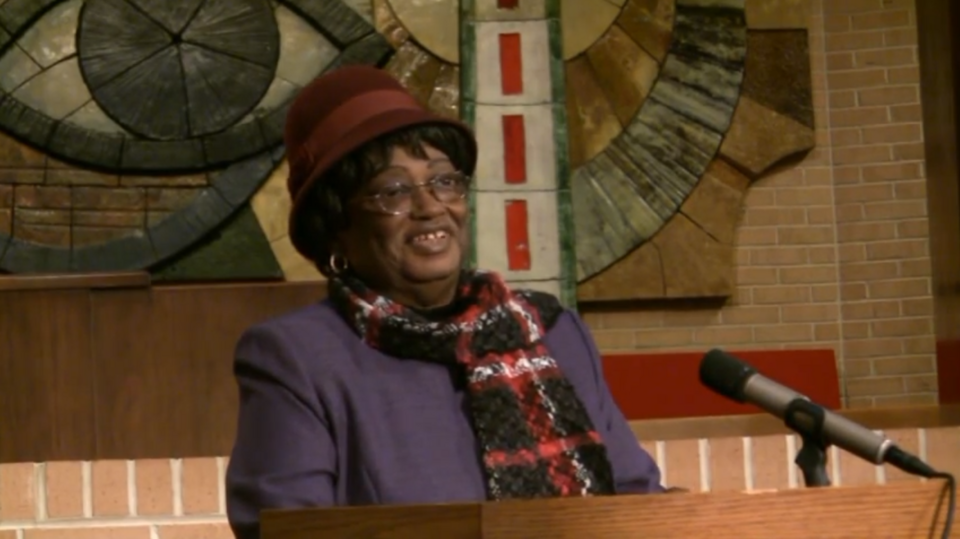
On March 2, 1955, Claudette Colvin boarded a Highland Gardens bus after school in Montgomery, Alabama, and took a seat near an emergency exit, in a middle row reserved by custom, not just law, for whoever the city decided deserved it. When a white woman was left standing, the driver, Robert W. Cleere, ordered Colvin and three other Black women to give up their row. The others moved. Colvin did not.
Beside her sat Ruth Hamilton, a pregnant Black woman who had just boarded and also refused to rise, saying she'd paid her fare and didn't feel like standing. The driver threatened to call the police. When officers arrived, they managed to shift a Black man seated behind the women to free a spot for Hamilton — but Colvin still would not budge. Two policemen, Thomas J. Ward and Paul Headley, dragged her backward off the bus, one kicking her as they forced her into handcuffs.
Colvin was fifteen, a student at the segregated Booker T. Washington High School, and a member of the NAACP Youth Council, where she had been studying Jim Crow laws and Black history. 'I wasn't afraid,' she said later. 'I was a teenager!' Her defiance was not an accident of temper — it came from a mind already fixed on justice, a girl who once dreamed of becoming President of the United States.
Her family did not own a car; like most Black residents of Montgomery, she rode the city buses daily under a seating ordinance that could bend to any white passenger's convenience. That ordinary Wednesday, the ordinance met a teenager who had simply decided she would not fold to it again.
Nine months later, Rosa Parks — secretary of the local NAACP chapter and Colvin's own mentor — was arrested for the same refusal, and her case ignited the Montgomery bus boycott that reshaped American history. Colvin's mother urged her daughter to stay quiet, telling her, 'Let Rosa be the one. White people aren't going to bother Rosa, her skin is lighter than yours and they like her.' Civil rights leaders, wary of public perception, judged Colvin's dark skin, her youth, and eventually her pregnancy as unsuitable for the movement's carefully curated image. Parks herself acknowledged the calculation: had the white press learned Colvin was pregnant and unmarried, she said, they would have called her a bad girl and doomed the case.
More from People

Frida Kahlo: Painting Through the Pain
An iron handrail pierced a teenage girl's body on a Mexico City street — and out of that wreckage came one of the most searingly honest artists of the twentieth century.

The Ox-Cart and the Snow: Şerife Bacı's Last Road
Somewhere on a frozen road outside Kastamonu, a young mother pressed her body against a quilt to keep her infant warm through the night. By morning, she had become a legend.

Pompey the Great: The Friendship That Broke Rome
He was called 'the teenage butcher' by his enemies and 'the Great' by his mentor — and the empire he helped build would ultimately be the death of him.

The Third Pole: How Hunt, Hillary and Tenzing Conquered Everest
For decades the world's highest mountain had turned back every climber who dared it — sometimes swallowing them whole. In the spring of 1953, one expedition finally reached the point where the sky simply stopped going up.

Two Rivals Under One Roof: Picasso and Matisse
Long before they were named together as the twin poles of modern art, they were simply two names on the walls of the same small Paris gallery — one already known for wild colour, the other not yet known at all.

Fire and Ice: The Borg–McEnroe Rivalry
One man never raised his voice. The other rarely lowered his. Between them they produced two of the greatest matches tennis has ever seen.