The Human Computer Who Sent America to the Moon
Before John Glenn would trust a machine to orbit the Earth, he asked for one woman to check its math by hand. That woman was Katherine Johnson.
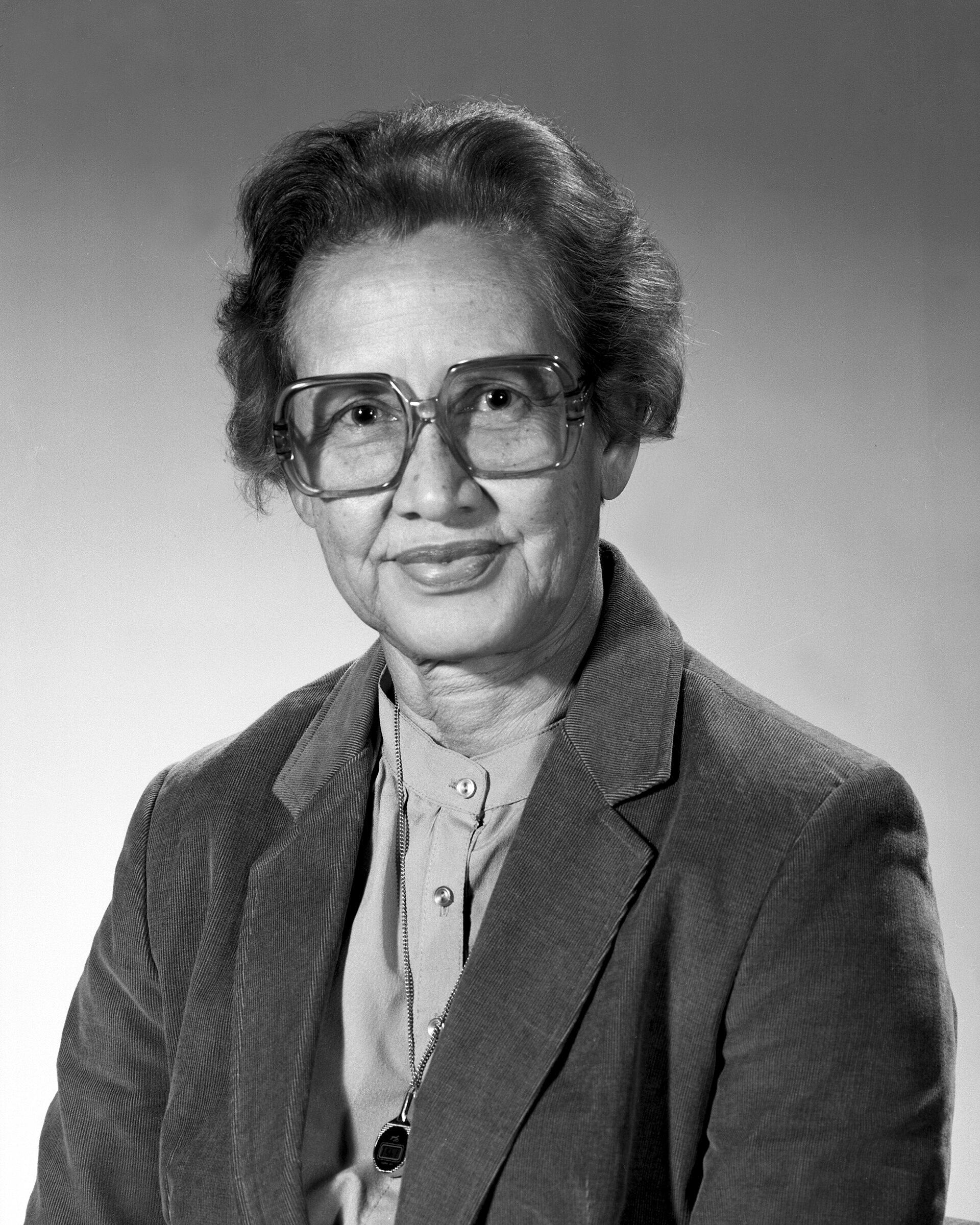
In White Sulphur Springs, West Virginia, a girl born on August 26, 1918, to Joylette Roberta Coleman, a teacher, and Joshua McKinley Coleman, a lumberman, farmer, and handyman who also worked at the Greenbrier Hotel, began counting everything around her — steps, dishes, stars — long before anyone taught her to. Because Greenbrier County offered no schooling for Black students past eighth grade, her family split their lives in two, spending winters in Institute so Katherine could attend high school on the campus of West Virginia State College. She enrolled there at just ten years old.
She graduated high school at fourteen and entered West Virginia State College itself, a historically Black institution, where she devoured every mathematics course on offer. Professors like Angie Turner King and W. W. Schieffelin Claytor, the third African American to earn a doctorate in mathematics, took her under their wing; Claytor even invented new courses just to keep pace with her. At eighteen, in 1937, she graduated summa cum laude with degrees in mathematics and French.
After a teaching stint in Marion, Virginia, and marriage to James Goble, Johnson became one of three Black students — and the only woman — selected to integrate the graduate school at West Virginia University following Missouri ex rel. Gaines v. Canada, the 1938 Supreme Court ruling that required states offering public higher education to white students to provide equivalent access to Black students. She left after one term to focus on her young family, teaching again once her daughters were older.
In 1952, a relative's tip about openings at the National Advisory Committee for Aeronautics changed everything, and Johnson accepted a job offer from the agency in June 1953. She joined the West Area Computing section at Langley Memorial Aeronautical Laboratory in Hampton, Virginia, one of the Black women mathematicians NACA hired despite Virginia's segregation laws, which forced them into separate tables, bathrooms, and lunchrooms from their white colleagues.
Assigned briefly to help the all-male Flight Research Division with a project, Johnson's command of analytic geometry impressed the engineers so thoroughly that, as she later put it, 'they forgot to return me to the pool.' She stayed, pushing her way into editorial meetings where no woman had gone before, insisting simply that she had done the work and belonged there.
More from People

Frida Kahlo: Painting Through the Pain
An iron handrail pierced a teenage girl's body on a Mexico City street — and out of that wreckage came one of the most searingly honest artists of the twentieth century.

The Ox-Cart and the Snow: Şerife Bacı's Last Road
Somewhere on a frozen road outside Kastamonu, a young mother pressed her body against a quilt to keep her infant warm through the night. By morning, she had become a legend.

Pompey the Great: The Friendship That Broke Rome
He was called 'the teenage butcher' by his enemies and 'the Great' by his mentor — and the empire he helped build would ultimately be the death of him.

The Third Pole: How Hunt, Hillary and Tenzing Conquered Everest
For decades the world's highest mountain had turned back every climber who dared it — sometimes swallowing them whole. In the spring of 1953, one expedition finally reached the point where the sky simply stopped going up.

Two Rivals Under One Roof: Picasso and Matisse
Long before they were named together as the twin poles of modern art, they were simply two names on the walls of the same small Paris gallery — one already known for wild colour, the other not yet known at all.

Fire and Ice: The Borg–McEnroe Rivalry
One man never raised his voice. The other rarely lowered his. Between them they produced two of the greatest matches tennis has ever seen.