The Improbable Friendship That Reshaped German Letters
A young playwright, briefly jailed for defying a duke's orders, meets Germany's most famous living writer — and together they invent an era.
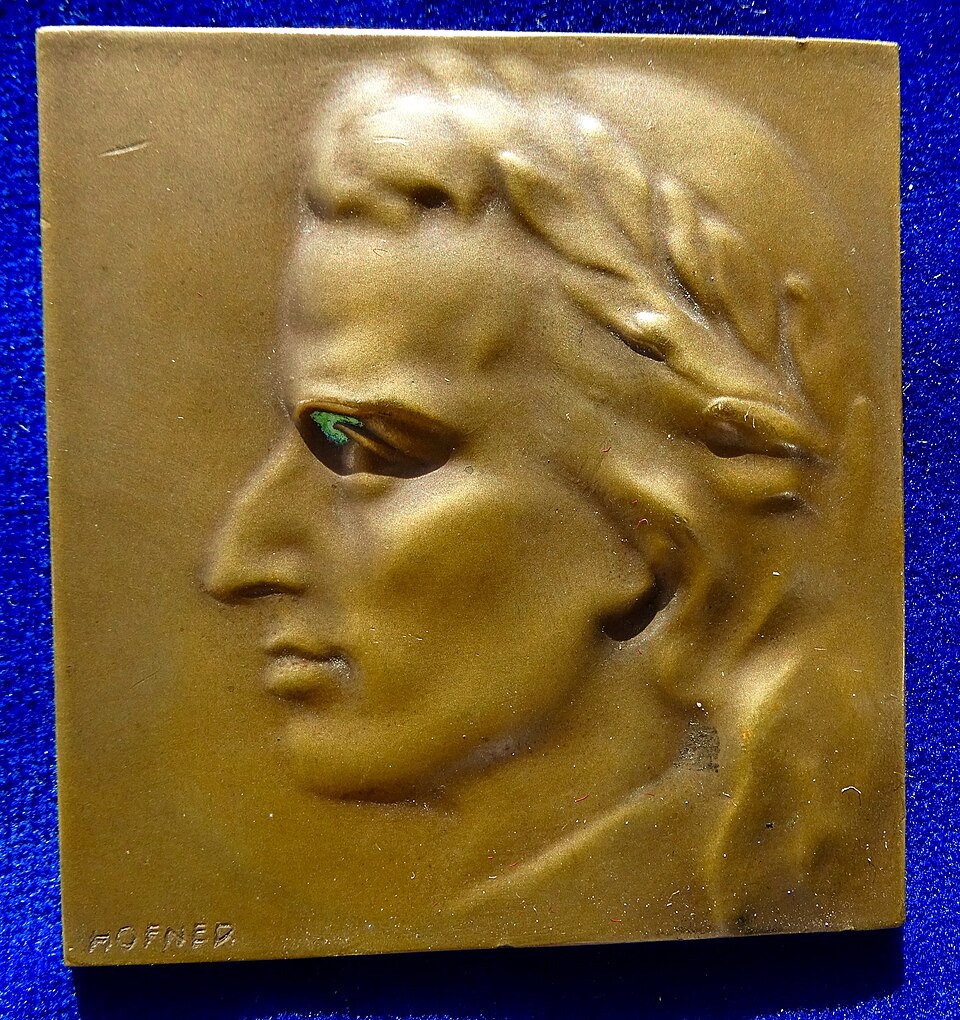
Friedrich Schiller was born on 10 November 1759 in Marbach, in the Duchy of Württemberg, the only son among six children of a military doctor in a devoutly Protestant household — one boy among five sisters. Named after Frederick the Great, he was called Fritz by nearly everyone, and much of his boyhood was spent studying the Bible under a village priest — an early immersion in moral drama that would later surface in his plays. His family, wanting him to become a clergyman, watched instead as fate steered him elsewhere: in 1773 the Duke of Württemberg noticed the boy and enrolled him in the elite Karlsschule military academy in Stuttgart, where law gave way to medicine, and Schiller graduated as a doctor in 1780.
It was at the Karlsschule, reading Rousseau and Goethe with his classmates, that Schiller wrote his first play, The Robbers. Its story of two feuding aristocratic brothers — the rebellious Karl Moor and the scheming Franz — premiered on 13 January 1782 in Mannheim and detonated onto the German stage. Schiller became an overnight sensation, later made an honorary member of the French Republic because of it. But he had left his regimental post without permission to attend the premiere, and Duke Karl Eugen had him arrested, imprisoned for fourteen days, and forbidden from publishing further work.
Schiller fled Stuttgart in 1782, drifting through Frankfurt, Mannheim, Leipzig and Dresden before settling in Weimar. Along the way he became entangled with Charlotte von Kalb, a clever, unstable army officer's wife, and financial trouble followed him until friends and family helped him find footing. In 1787 he arrived in Weimar for good, and two years later was appointed professor of History and Philosophy at the University of Jena, delivering an inaugural lecture on the purpose of studying universal history and producing historical works from his new post.
It was during these years that Schiller's path crossed permanently with Johann Wolfgang von Goethe, already Germany's most celebrated writer. The relationship that formed between 1788 and 1805 was productive, sometimes complicated, but ultimately transformative. The two men argued and corresponded endlessly about aesthetics, and Schiller — restless, precise, driven — pushed Goethe to finish works the older writer had left as unfinished sketches for years.
Out of these exchanges came what is now remembered as Weimar Classicism, a period in which German drama, poetry and thought fused classical ideals with the passions of the age. Together the two writers founded the Weimar Theater, giving their shared vision an institutional home and a stage on which their ideas could be tested before audiences.
More from People

Frida Kahlo: Painting Through the Pain
An iron handrail pierced a teenage girl's body on a Mexico City street — and out of that wreckage came one of the most searingly honest artists of the twentieth century.

The Ox-Cart and the Snow: Şerife Bacı's Last Road
Somewhere on a frozen road outside Kastamonu, a young mother pressed her body against a quilt to keep her infant warm through the night. By morning, she had become a legend.

Pompey the Great: The Friendship That Broke Rome
He was called 'the teenage butcher' by his enemies and 'the Great' by his mentor — and the empire he helped build would ultimately be the death of him.

The Third Pole: How Hunt, Hillary and Tenzing Conquered Everest
For decades the world's highest mountain had turned back every climber who dared it — sometimes swallowing them whole. In the spring of 1953, one expedition finally reached the point where the sky simply stopped going up.

Two Rivals Under One Roof: Picasso and Matisse
Long before they were named together as the twin poles of modern art, they were simply two names on the walls of the same small Paris gallery — one already known for wild colour, the other not yet known at all.

Fire and Ice: The Borg–McEnroe Rivalry
One man never raised his voice. The other rarely lowered his. Between them they produced two of the greatest matches tennis has ever seen.