The Lawyer Who Disarmed an Empire
Thrown off a train for refusing to give up his seat, a young Indian lawyer in South Africa would go on to bend an empire without ever raising a fist.
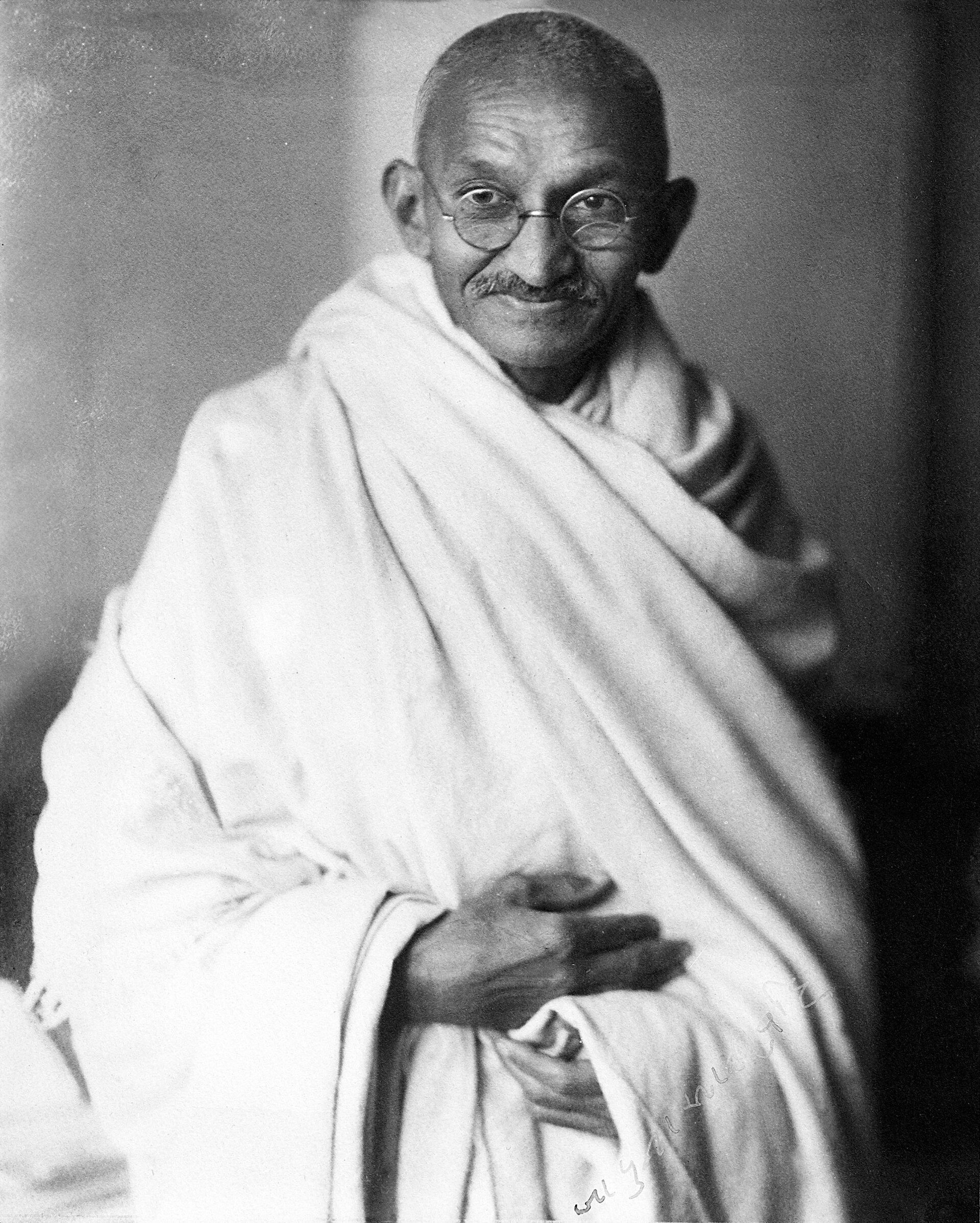
On a cold night in Pietermaritzburg, a well-dressed barrister was ordered out of a first-class train carriage because of his race, despite holding a valid ticket. He refused to move to third class and was thrown off, left shivering on the platform. That humiliation, suffered by Mohandas Karamchand Gandhi, would become one of the seeds of a movement that eventually helped topple British rule over India.
Gandhi was born on 2 October 1869 in Porbandar, a coastal town in Gujarat, the son of Karamchand Gandhi, a chief minister to local rulers, and Putlibai, from a Pranami Vaishnava family. Raised amid Jain influences of nonviolence and tolerance, he was an average student who nonetheless earned admission to law studies in London at eighteen, having promised his mother he would abstain from meat, alcohol, and sex while abroad. In London he joined the Vegetarian Society, discovered the Bhagavad Gita through Theosophist friends, and began reading widely across religious traditions.
After qualifying as a barrister, Gandhi returned to India but struggled to establish a legal practice. A dispute with a British officer cost him a modest clerking job in Rajkot, and in 1893 he accepted a one-year contract to work for an Indian firm in Natal, South Africa. He would remain there for 21 years. It was in South Africa that Gandhi first organised nonviolent resistance, campaigning for the civil rights of the Indian community and developing the philosophy that would define his life.
In 1915, at 45, Gandhi returned to India and began organising peasants, farmers, and urban labourers against discriminatory laws and oppressive land taxes. By 1921 he had assumed leadership of the Indian National Congress, launching nationwide campaigns against poverty, for women's rights, for religious and ethnic harmony, against untouchability, and above all for swaraj — self-rule. He adopted the simple hand-spun dhoti as a mark of solidarity with India's rural poor, lived in a self-sufficient community, ate sparingly, and used long fasts as tools of both introspection and political protest.
Gandhi's most famous act of defiance came in 1930, when he led thousands on the 400-kilometre Dandi Salt March to protest the British salt tax. In 1942 he called on the British to simply quit India. Both in South Africa and in India, he was imprisoned repeatedly across decades, yet his methods of nonviolent resistance, known as Satyagraha, steadily eroded the legitimacy of colonial rule.
More from People

Frida Kahlo: Painting Through the Pain
An iron handrail pierced a teenage girl's body on a Mexico City street — and out of that wreckage came one of the most searingly honest artists of the twentieth century.

The Ox-Cart and the Snow: Şerife Bacı's Last Road
Somewhere on a frozen road outside Kastamonu, a young mother pressed her body against a quilt to keep her infant warm through the night. By morning, she had become a legend.

Pompey the Great: The Friendship That Broke Rome
He was called 'the teenage butcher' by his enemies and 'the Great' by his mentor — and the empire he helped build would ultimately be the death of him.

The Third Pole: How Hunt, Hillary and Tenzing Conquered Everest
For decades the world's highest mountain had turned back every climber who dared it — sometimes swallowing them whole. In the spring of 1953, one expedition finally reached the point where the sky simply stopped going up.

Two Rivals Under One Roof: Picasso and Matisse
Long before they were named together as the twin poles of modern art, they were simply two names on the walls of the same small Paris gallery — one already known for wild colour, the other not yet known at all.

Fire and Ice: The Borg–McEnroe Rivalry
One man never raised his voice. The other rarely lowered his. Between them they produced two of the greatest matches tennis has ever seen.