The Machine That Learned to Bluff
In February 1996, a reigning world chess champion sat down opposite a wall of computer racks — and lost a single game that shook the chess world. What followed over the next fifteen months would rewrite the rules of what a machine could be.
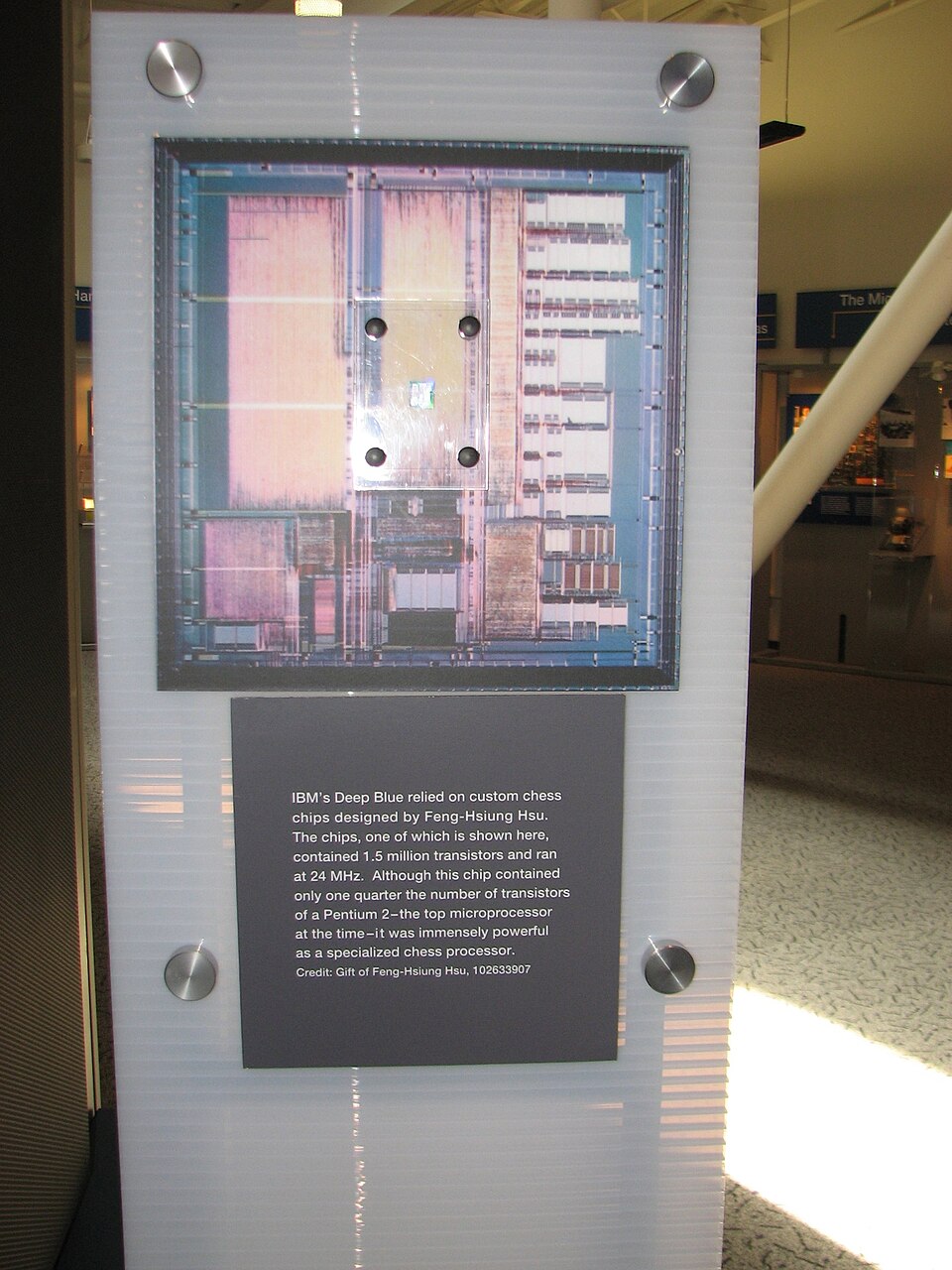
On a February afternoon in 1996, Garry Kasparov, the reigning world chess champion, sat down opposite a customized IBM RS/6000 SP supercomputer and lost. It was the first time in history a computer had beaten a sitting world champion under standard tournament time controls. The machine was called Deep Blue, and its victory in that single game sent a jolt through the chess world — though Kasparov quickly regrouped, winning three games and drawing two to close out the match 4-2.
Deep Blue's roots stretched back over a decade. In 1985, a Carnegie Mellon doctoral student named Feng-hsiung Hsu began building a chess-playing machine called ChipTest, which won the North American Computer Chess Championship in 1987. Hsu and his collaborators then built a successor, Deep Thought, and in 1989 Hsu and Murray Campbell joined IBM Research to keep chasing a singular goal: a machine that could beat a world champion. Deep Thought lost badly to Kasparov that same year, prompting IBM to rename its evolving project — the winning submission in an internal contest was 'Deep Blue,' a nod to the company's nickname, 'Big Blue.'
The team grew over the years: programmer Arthur Joseph Hoane, longtime IBM researcher Jerry Brody, and eventually Grandmaster Joel Benjamin, hired to help build the machine's opening book after a scaled-down Deep Blue played against him. In 1995 a prototype competed in the World Computer Chess Championship, drawing one game and losing another before the machine was ready to face Kasparov for real.
After the 1996 match, IBM doubled Deep Blue's processing speed and brought it back for a rematch in May 1997. This version could search six to eight moves deep, occasionally twenty or more, and each additional half-move of foresight was estimated to add 50 to 70 Elo points of strength. In the decisive sixth game, Kasparov failed to secure his position early and Deep Blue capitalized, winning the six-game rematch 3½-2½ — the first time a computer had beaten a reigning world champion in a full match under standard conditions.
But the match carried a strange asterisk. During the 44th move of the first game, a bug caused Deep Blue to loop internally; unable to resolve it, the program simply played a randomly selected legal move. Kasparov, unaware this was even possible, read the move as a sign of unfathomable depth — 'superior intelligence,' he called it — and his play noticeably faltered in the games that followed, though he later denied the moment had rattled him.
More from People

Frida Kahlo: Painting Through the Pain
An iron handrail pierced a teenage girl's body on a Mexico City street — and out of that wreckage came one of the most searingly honest artists of the twentieth century.

The Ox-Cart and the Snow: Şerife Bacı's Last Road
Somewhere on a frozen road outside Kastamonu, a young mother pressed her body against a quilt to keep her infant warm through the night. By morning, she had become a legend.

Pompey the Great: The Friendship That Broke Rome
He was called 'the teenage butcher' by his enemies and 'the Great' by his mentor — and the empire he helped build would ultimately be the death of him.

The Third Pole: How Hunt, Hillary and Tenzing Conquered Everest
For decades the world's highest mountain had turned back every climber who dared it — sometimes swallowing them whole. In the spring of 1953, one expedition finally reached the point where the sky simply stopped going up.

Two Rivals Under One Roof: Picasso and Matisse
Long before they were named together as the twin poles of modern art, they were simply two names on the walls of the same small Paris gallery — one already known for wild colour, the other not yet known at all.

Fire and Ice: The Borg–McEnroe Rivalry
One man never raised his voice. The other rarely lowered his. Between them they produced two of the greatest matches tennis has ever seen.