The Man Who Chose Auschwitz
In 1940, a Polish cavalry officer deliberately let himself be captured by the Gestapo. His destination: the death camp Auschwitz — and he went in on purpose.
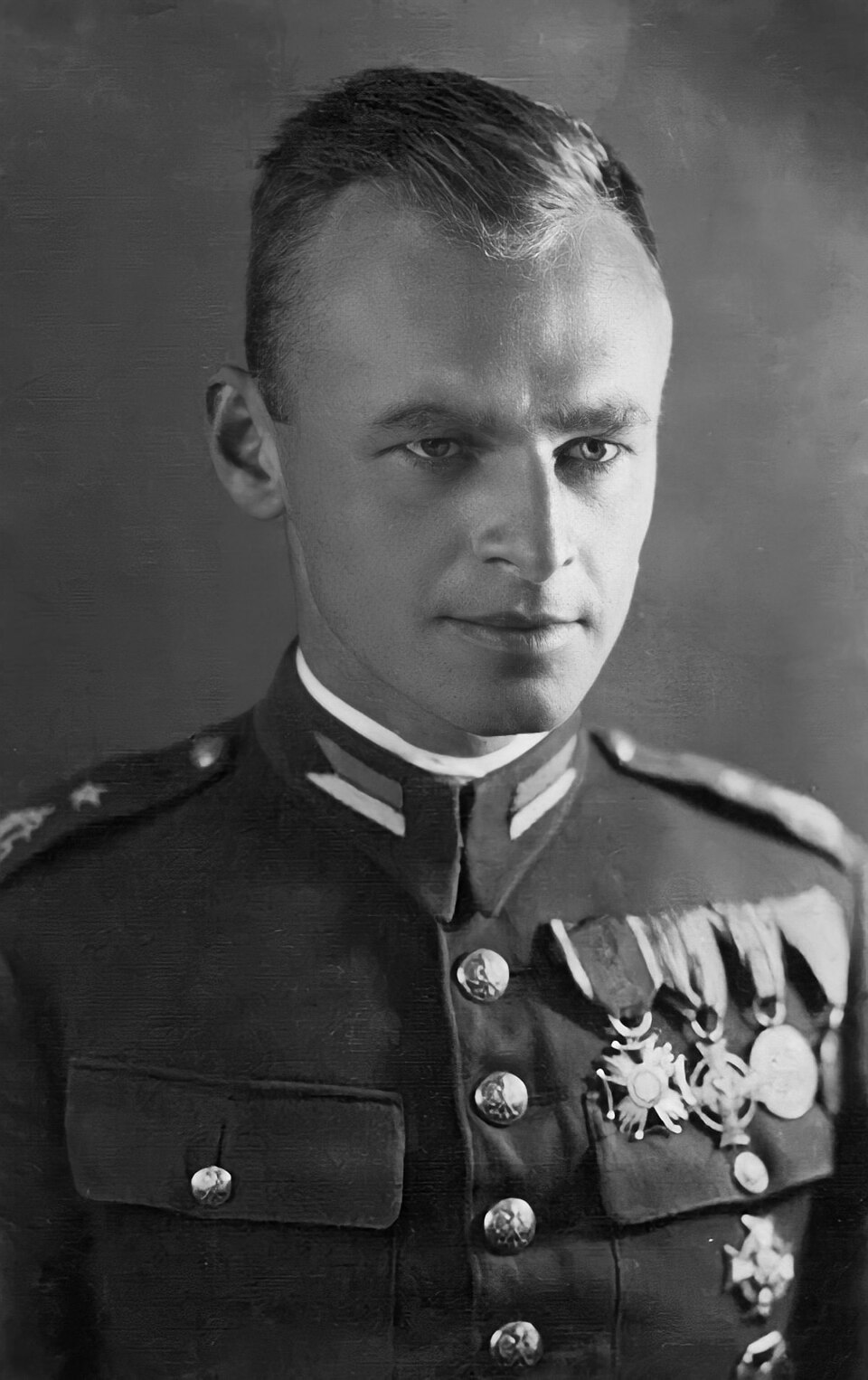
Witold Pilecki was born on 13 May 1901 in Olonets, Karelia, into a Polish noble family exiled to Russia after their ancestors joined the January 1863–64 Uprising. He grew up between Vilnius and Oryol, joining the underground Polish Scouting movement as a boy, an early sign of the resistance instincts that would define his life.
As a young man he fought in the Polish–Soviet War of 1919–1920, riding with cavalry units through the Vilna offensive, the Kiev offensive, the defence of Grodno, and the decisive Battle of Warsaw. By the conclusion of that war in March 1921 he had been promoted to corporal. In the interwar years he studied briefly at Stefan Batory University, became an officer, married Maria Ostrowska in 1931, and settled into managing his family's ancestral estate at Sukurcze, raising two children.
When Nazi Germany, Slovakia, and the Soviet Union invaded Poland in 1939, Pilecki fought in the defence of his country. Its collapse did not end his war — it began a new one. He co-founded the Secret Polish Army, an underground resistance movement, and set his sights on the one place intelligence about Nazi atrocities was most desperately needed: the newly built Auschwitz concentration camp.
In 1940, Pilecki deliberately allowed himself to be captured by German forces so that he would be sent to Auschwitz as a prisoner. Inside the camp, under an assumed identity, he built a clandestine resistance network that eventually numbered in the hundreds. He gathered evidence of the killings, torture, and systematic cruelty unfolding behind the camp's walls and smuggled detailed reports out to the Home Army leadership, which passed them on to the Western Allies.
After roughly two and a half years inside Auschwitz, Pilecki escaped in April 1943. He did not retreat from the fight: in August 1944 he joined the Warsaw Uprising against German occupation, fighting until its suppression that October, after which he was held in a German prisoner-of-war camp.
More from People

Frida Kahlo: Painting Through the Pain
An iron handrail pierced a teenage girl's body on a Mexico City street — and out of that wreckage came one of the most searingly honest artists of the twentieth century.

The Ox-Cart and the Snow: Şerife Bacı's Last Road
Somewhere on a frozen road outside Kastamonu, a young mother pressed her body against a quilt to keep her infant warm through the night. By morning, she had become a legend.

Pompey the Great: The Friendship That Broke Rome
He was called 'the teenage butcher' by his enemies and 'the Great' by his mentor — and the empire he helped build would ultimately be the death of him.

The Third Pole: How Hunt, Hillary and Tenzing Conquered Everest
For decades the world's highest mountain had turned back every climber who dared it — sometimes swallowing them whole. In the spring of 1953, one expedition finally reached the point where the sky simply stopped going up.

Two Rivals Under One Roof: Picasso and Matisse
Long before they were named together as the twin poles of modern art, they were simply two names on the walls of the same small Paris gallery — one already known for wild colour, the other not yet known at all.

Fire and Ice: The Borg–McEnroe Rivalry
One man never raised his voice. The other rarely lowered his. Between them they produced two of the greatest matches tennis has ever seen.