The Man Who Filled a Dining-Room Table With Names
He planned a skiing holiday in Switzerland. Instead, a phone call sent him to Prague — and into a race against time that would save 669 children he never spoke of for fifty years.
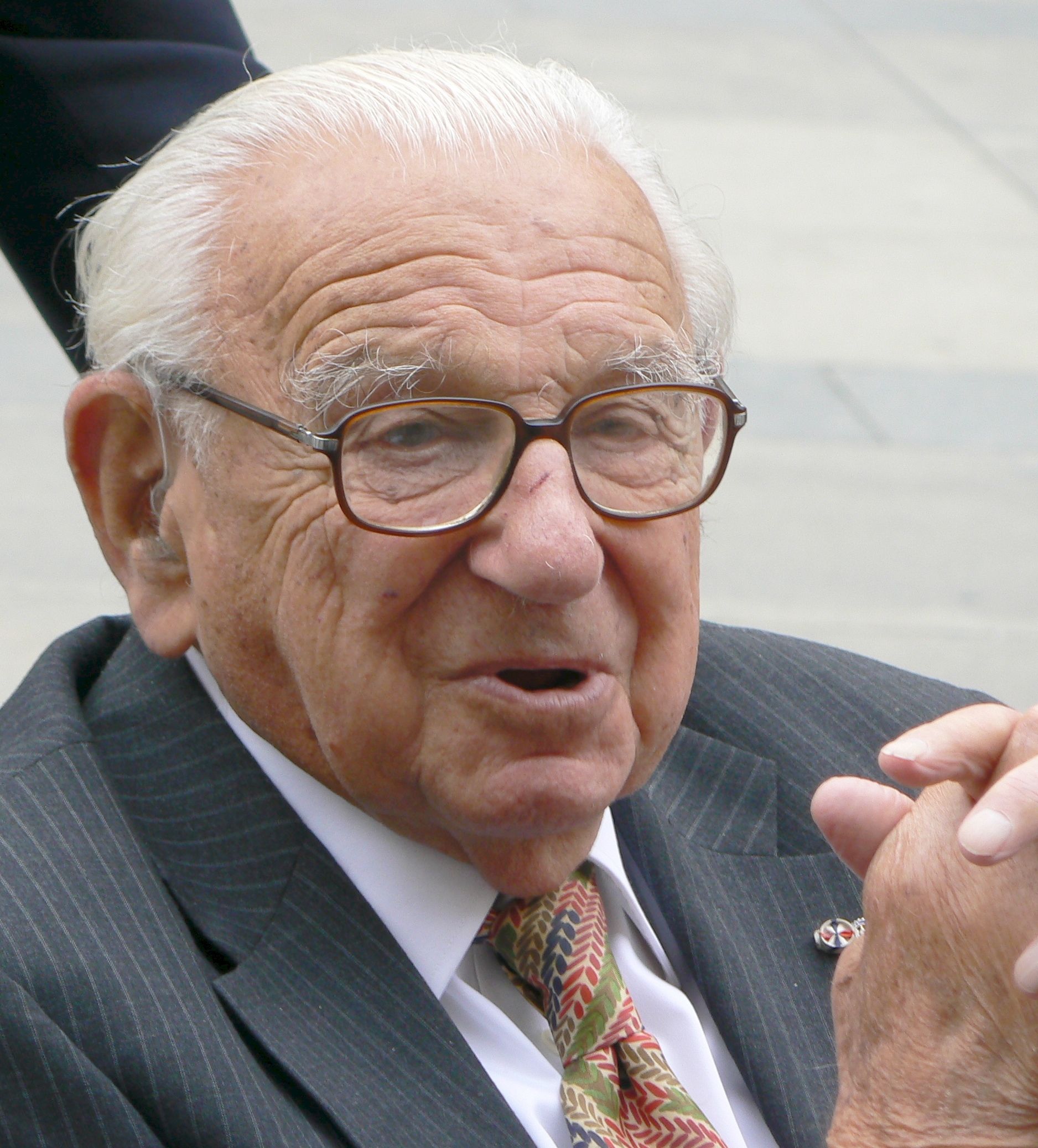
In December 1938, Nicholas Winton was a London stockbroker with a skiing trip booked in Switzerland. A call from his friend Martin Blake, working in Prague with the British Committee for Refugees from Czechoslovakia, changed his plans entirely. Blake asked him to come and help with Jewish welfare work in a country being swallowed, piece by piece, by Nazi Germany. Winton went.
He was born Nicholas Wertheim on 19 May 1909 in Hampstead, London, to German-Jewish parents who had emigrated to Britain and changed their name to Winton in an effort to integrate; the family also converted to Christianity. He left Stowe School without formal qualifications, worked in banks in Hamburg, Berlin and Paris, and eventually became a broker on the London Stock Exchange. Through socialist friends like Aneurin Bevan and Jennie Lee, he had grown alert to the danger the Nazis posed well before most of Britain took notice.
In Prague, alongside volunteers such as Trevor Chadwick, Beatrice Wellington, Doreen Warriner and the American couple Waitstill and Martha Sharp, Winton helped compile lists of children in danger from families desperate to get them out. Much of the work happened around a dining-room table in a hotel on Wenceslas Square. Winton spent three weeks there before returning to Britain in January 1939 — two months before the German occupation was complete — leaving others like Chadwick and Warriner to continue the effort on the ground.```` end interrupted, continue.
Back in London, Winton's real fight began: navigating British bureaucracy. Following Kristallnacht in November 1938, the House of Commons had agreed to admit refugees under 17 into Britain, provided each had a place to stay and a £50 guarantee deposited for their eventual return. Winton worked to satisfy these requirements one child at a time, while his mother helped place them in homes and hostels. Through the summer of 1939, he published photographs of the children in Picture Post, appealing directly to the public to take them in.
Getting the children out required crossing the Netherlands, which had officially closed its borders to Jewish refugees after Kristallnacht. Winton's British guarantees allowed his trains through; the first group crossed safely escorted by Quaker volunteer Tessa Rowntree, and the route — via ferries fittingly named Prague and Vienna — held after that. In total, Winton found homes in Britain for 669 children. He also wrote to foreign governments, including President Franklin D. Roosevelt, asking them to accept more; he later estimated two thousand additional children might have been saved had more countries responded. Only Sweden did, beyond Britain.
More from People

Frida Kahlo: Painting Through the Pain
An iron handrail pierced a teenage girl's body on a Mexico City street — and out of that wreckage came one of the most searingly honest artists of the twentieth century.

The Ox-Cart and the Snow: Şerife Bacı's Last Road
Somewhere on a frozen road outside Kastamonu, a young mother pressed her body against a quilt to keep her infant warm through the night. By morning, she had become a legend.

Pompey the Great: The Friendship That Broke Rome
He was called 'the teenage butcher' by his enemies and 'the Great' by his mentor — and the empire he helped build would ultimately be the death of him.

The Third Pole: How Hunt, Hillary and Tenzing Conquered Everest
For decades the world's highest mountain had turned back every climber who dared it — sometimes swallowing them whole. In the spring of 1953, one expedition finally reached the point where the sky simply stopped going up.

Two Rivals Under One Roof: Picasso and Matisse
Long before they were named together as the twin poles of modern art, they were simply two names on the walls of the same small Paris gallery — one already known for wild colour, the other not yet known at all.

Fire and Ice: The Borg–McEnroe Rivalry
One man never raised his voice. The other rarely lowered his. Between them they produced two of the greatest matches tennis has ever seen.