The Man Who Never Surrendered
Born in a palace and buried a soldier of words, he lost an empire and won a war of nerve — but along the way came Gallipoli, one of the great failures of his career.
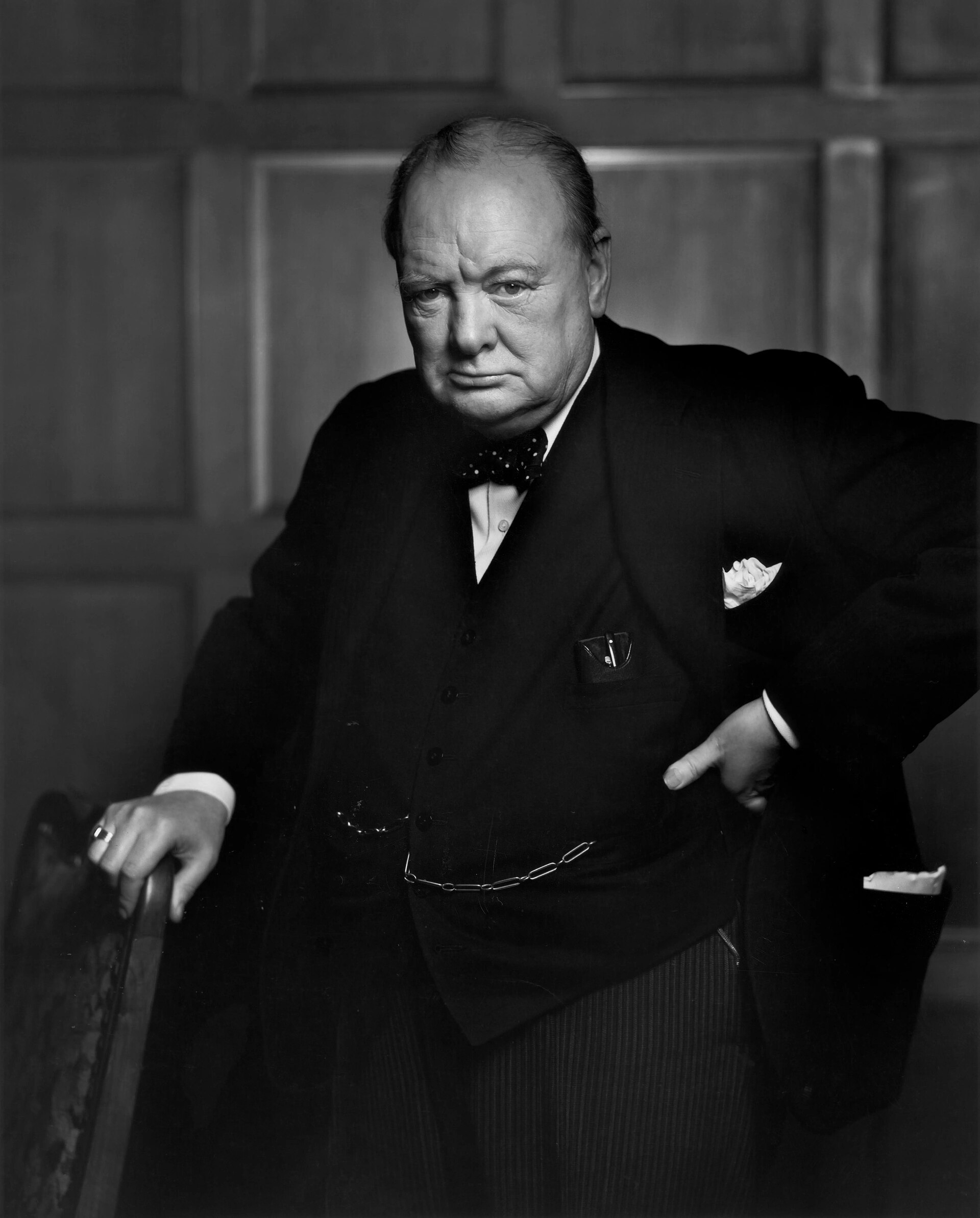
He arrived into the world on 30 November 1874 at Blenheim Palace, an aristocrat by blood through the Dukes of Marlborough, and half-American through his mother, Jennie, daughter of a New York businessman. His father, Lord Randolph Churchill, was a Conservative MP; the boy who would one day govern an empire was, by his own account, an unremarkable and poorly behaved pupil at St George's School in Ascot. He found his footing later, at Brunswick School, then Harrow, and finally at the Royal Military College, Sandhurst, which took him on the third attempt — accepted as a cavalry cadet in September 1893.
Commissioned into the 4th Queen's Own Hussars in 1895, Churchill wasted no time chasing action. He watched the Cuban War of Independence as an observer, then served in British India, the Mahdist War in Sudan, and the Second Boer War, where he was captured and made his name with a daring escape that turned him into a national hero back home. He wrote about all of it, building a parallel career as a war correspondent and author even as his political ambitions sharpened.
Elected a Conservative MP in 1900, he crossed the floor to the Liberals in 1904, serving under H. H. Asquith as President of the Board of Trade and then Home Secretary, where he pushed for prison reform and workers' social security. As First Lord of the Admiralty before and during the First World War, he oversaw the naval assault on the Dardanelles in 1915 — the prelude to the disastrous Gallipoli campaign. The failure, and the blame that followed, forced his demotion and eventual resignation. He answered by joining the Royal Scots Fusiliers on the Western Front for six months, a soldier again rather than a minister.
By 1917 he was back in government under David Lloyd George, moving through the Ministry of Munitions, the War Office, the Air Ministry, and the Colonial Office, where he oversaw the Anglo-Irish Treaty and shaped British policy in the Middle East. As Chancellor of the Exchequer from 1924 to 1929 he returned Britain to the gold standard in 1925, a decision that depressed the economy. Then came the 1930s — his so-called wilderness years, out of office, out of favour, but not out of voice: he was among the loudest calling for rearmament against the threat of Nazi Germany.
More from People

Frida Kahlo: Painting Through the Pain
An iron handrail pierced a teenage girl's body on a Mexico City street — and out of that wreckage came one of the most searingly honest artists of the twentieth century.

The Ox-Cart and the Snow: Şerife Bacı's Last Road
Somewhere on a frozen road outside Kastamonu, a young mother pressed her body against a quilt to keep her infant warm through the night. By morning, she had become a legend.

Pompey the Great: The Friendship That Broke Rome
He was called 'the teenage butcher' by his enemies and 'the Great' by his mentor — and the empire he helped build would ultimately be the death of him.

The Third Pole: How Hunt, Hillary and Tenzing Conquered Everest
For decades the world's highest mountain had turned back every climber who dared it — sometimes swallowing them whole. In the spring of 1953, one expedition finally reached the point where the sky simply stopped going up.

Two Rivals Under One Roof: Picasso and Matisse
Long before they were named together as the twin poles of modern art, they were simply two names on the walls of the same small Paris gallery — one already known for wild colour, the other not yet known at all.

Fire and Ice: The Borg–McEnroe Rivalry
One man never raised his voice. The other rarely lowered his. Between them they produced two of the greatest matches tennis has ever seen.