The Man Who Said No to Armageddon
An alarm screamed that American missiles were streaking toward the Soviet Union. One officer had minutes to decide whether to end the world — or trust his gut.
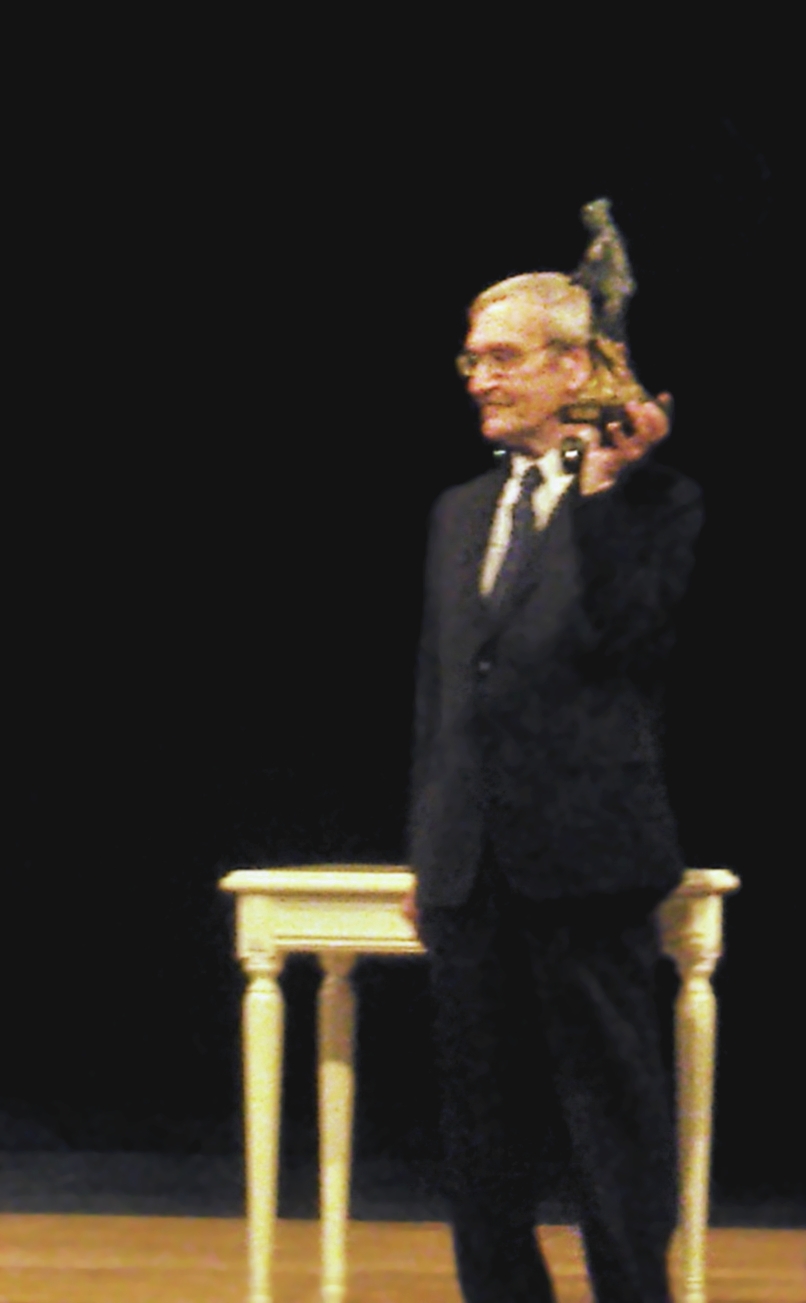
Just after midnight on 26 September 1983, deep inside the Serpukhov-15 bunker outside Moscow, the screens of the Oko early-warning system lit up with a report that could not be ignored: an American intercontinental ballistic missile had been launched toward the USSR. Standing duty that night was Lieutenant Colonel Stanislav Petrov, born 7 September 1939 near Vladivostok, the son of a wartime fighter pilot and a nurse. He had trained at the Kiev Military Aviation Engineering Academy and joined the Soviet Air Defence Forces in 1972, eventually assigned to the very system now blaring its warning.
Soviet protocol was unambiguous. A confirmed launch demanded a Launch on Warning response — an automatic retaliatory strike meant to guarantee that the enemy would suffer as much as the Soviet Union. Petrov's sole job was to relay what the system told him up the chain of command, where the actual decision to retaliate would be made. But something about the report troubled him. He reasoned that a real American attack would almost certainly come as an overwhelming, simultaneous barrage — not a lone missile.
Then the system escalated: four more missiles appeared, seemingly bound for Soviet territory. Every layer of the detection process — some thirty steps of verification — had cleared the alert astonishingly fast, faster than felt right to a man who had reason to distrust a system he knew was new and unproven. Ground-based radar, which should have corroborated the satellite data once the missiles crossed the horizon, showed nothing. Petrov chose to wait. He did not report the launch as a confirmed attack.
The minutes that passed with no missiles appearing proved him right. There had been no launch. The Oko system had malfunctioned, tricked by a rare alignment of sunlight reflecting off high-altitude clouds above North Dakota with the satellites' Molniya orbits — an error later corrected by cross-referencing with a geostationary satellite. Had Petrov reported the alarm as genuine, his superiors — working with only minutes to decide — might well have ordered a retaliatory strike, setting off a nuclear war between the Soviet Union and the United States and its NATO allies.
Petrov later said his civilian-style training may have made the difference: his colleagues, trained purely as soldiers and following instructions to the letter, would likely have reported the launch as real had they been on shift instead of him. Yet even in a 2013 interview, he admitted he had never been fully certain the alarm was false — he had made a judgment call under uncertainty, not a confident calculation.
More from People

Frida Kahlo: Painting Through the Pain
An iron handrail pierced a teenage girl's body on a Mexico City street — and out of that wreckage came one of the most searingly honest artists of the twentieth century.

The Ox-Cart and the Snow: Şerife Bacı's Last Road
Somewhere on a frozen road outside Kastamonu, a young mother pressed her body against a quilt to keep her infant warm through the night. By morning, she had become a legend.

Pompey the Great: The Friendship That Broke Rome
He was called 'the teenage butcher' by his enemies and 'the Great' by his mentor — and the empire he helped build would ultimately be the death of him.

The Third Pole: How Hunt, Hillary and Tenzing Conquered Everest
For decades the world's highest mountain had turned back every climber who dared it — sometimes swallowing them whole. In the spring of 1953, one expedition finally reached the point where the sky simply stopped going up.

Two Rivals Under One Roof: Picasso and Matisse
Long before they were named together as the twin poles of modern art, they were simply two names on the walls of the same small Paris gallery — one already known for wild colour, the other not yet known at all.

Fire and Ice: The Borg–McEnroe Rivalry
One man never raised his voice. The other rarely lowered his. Between them they produced two of the greatest matches tennis has ever seen.