The Medic Who Refused to Carry a Gun
He walked onto the bloodiest cliff of the Pacific War carrying no weapon at all — and carried dozens of men off it instead.
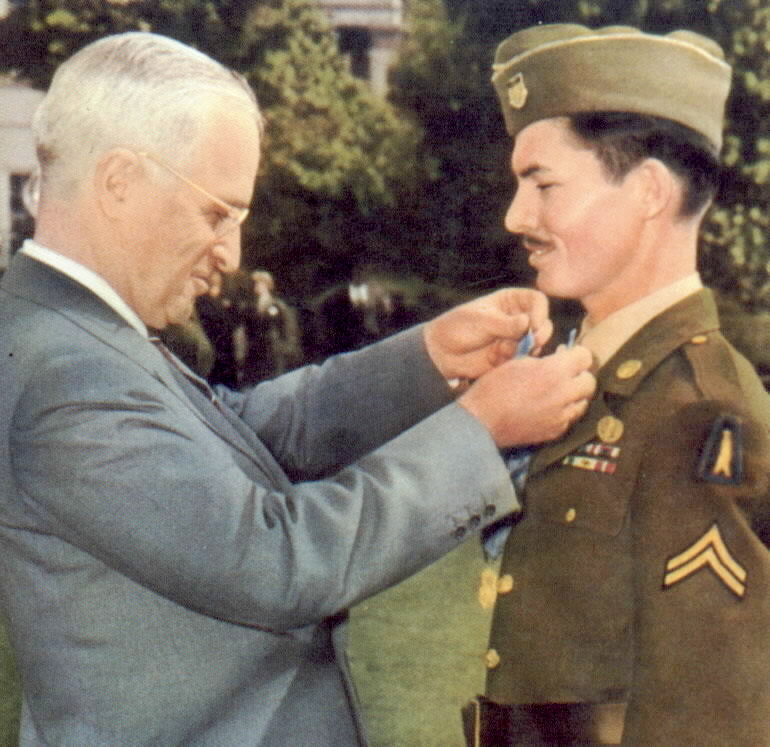
On a scorched Okinawan escarpment in 1945, American soldiers called it Hacksaw Ridge — a 400-foot wall of rock raked by machine-gun and mortar fire. Among the men who climbed it was Desmond T. Doss, a private first class who had refused, on religious grounds, to carry a rifle into battle. He was there to save lives, not take them.
Doss was born on February 7, 1919, in Lynchburg, Virginia, to William Doss, a carpenter, and Bertha Doss, a homemaker and shoe factory worker. Raised a devout Seventh-day Adventist, he grew up keeping the Sabbath, practicing nonviolence, and eating no meat, alongside his sister Audrey and brother Harold in the Fairview Heights neighborhood. He left school after the eighth grade to work at the Lynchburg Lumber Company during the Great Depression, later becoming a joiner at a Newport News shipyard.
When the war came, Doss could have claimed a draft deferment because of his shipyard job. He turned it down out of patriotic conviction and was inducted into the Army on April 1, 1942, training with the reactivated 77th Infantry Division at Fort Jackson, South Carolina. Because he would not bear arms, he became a medic with 2nd Platoon, Company B, 1st Battalion, 307th Infantry — a conscientious objector serving in the heart of combat.
In 1944, fighting alongside his platoon on Guam and in the Philippines, Doss repeatedly ran into gunfire to reach wounded men, earning two Bronze Star Medals with 'V' devices for valor. It was a preview of what awaited him on Okinawa the following spring.
At the Maeda Escarpment, as the 1st Battalion assaulted the ridge, artillery and machine-gun fire tore into the advancing troops, inflicting roughly 75 casualties and forcing a retreat. Doss refused to seek cover. Alone, he carried wounded men one by one to the cliff's edge and lowered each on a rope-supported litter to safety below — saving an estimated 75 to 100 men. Days later he crawled 200 yards forward of the lines under rifle and mortar fire to rescue another wounded soldier.
More from People

Frida Kahlo: Painting Through the Pain
An iron handrail pierced a teenage girl's body on a Mexico City street — and out of that wreckage came one of the most searingly honest artists of the twentieth century.

The Ox-Cart and the Snow: Şerife Bacı's Last Road
Somewhere on a frozen road outside Kastamonu, a young mother pressed her body against a quilt to keep her infant warm through the night. By morning, she had become a legend.

Pompey the Great: The Friendship That Broke Rome
He was called 'the teenage butcher' by his enemies and 'the Great' by his mentor — and the empire he helped build would ultimately be the death of him.

The Third Pole: How Hunt, Hillary and Tenzing Conquered Everest
For decades the world's highest mountain had turned back every climber who dared it — sometimes swallowing them whole. In the spring of 1953, one expedition finally reached the point where the sky simply stopped going up.

Two Rivals Under One Roof: Picasso and Matisse
Long before they were named together as the twin poles of modern art, they were simply two names on the walls of the same small Paris gallery — one already known for wild colour, the other not yet known at all.

Fire and Ice: The Borg–McEnroe Rivalry
One man never raised his voice. The other rarely lowered his. Between them they produced two of the greatest matches tennis has ever seen.