The Most Beautiful Woman Who Invented the Future
Hollywood knew her as the face that launched a thousand marquees. Few knew she spent her nights sketching a torpedo-guidance system on her dining room table.
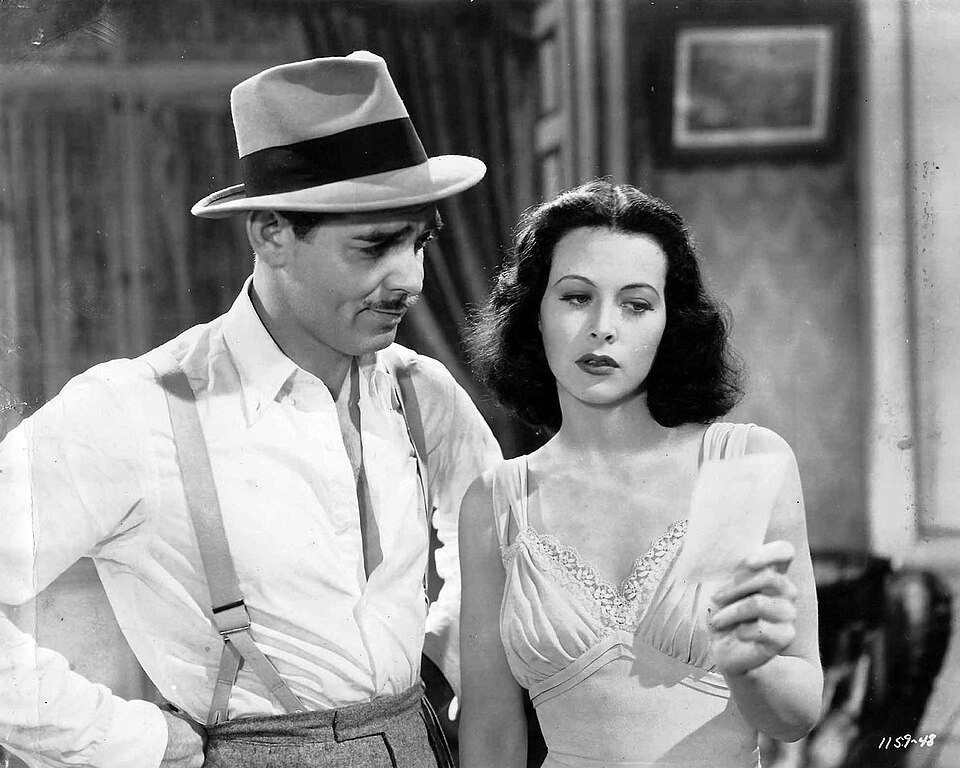
In 1933, a Viennese starlet named Hedwig Kiesler shocked the world by appearing nude and, in simulated ecstasy, on screen. The film was called Ecstasy, and it made her infamous across Europe and banned in America. She was eighteen, gifted, and already restless with the limits placed on her by directors, critics, and soon, by her own husband.
That husband was Friedrich Mandl, an Austrian arms manufacturer reputed to be the third-richest man in the country, with unsettling ties to Mussolini and later Hitler. Married at his side from 1933, Lamarr was, by her own later account, controlled and confined, barred from acting, paraded at dinners where powerful men openly discussed weapons technology. It was a gilded cage, but one with an unexpected education embedded in it.
She escaped, fleeing to Paris and then London, where she met MGM chief Louis B. Mayer. He offered her a Hollywood contract, and Hedwig Kiesler became Hedy Lamarr. Her performance in Algiers in 1938 made her a star, and success followed with the Western Boom Town (1940) and the drama White Cargo (1942), before her most celebrated role, Delilah opposite Victor Mature in Samson and Delilah in 1949.
But Lamarr's mind never stopped working on more than scripts. As a child in Vienna, her father had walked her through the city explaining how machines worked, planting a curiosity that outlasted her marriages and movie contracts. Bored by the sameness of studio life and eager to help the Allied war effort once World War II began, she turned that curiosity toward invention.
Her collaborator was an unlikely one: composer and avant-garde pianist George Antheil. Together they devised a radio guidance system for torpedoes that could hop between frequencies unpredictably, making it nearly impossible for Axis powers to jam the signal. They called it a 'Secret Communication System' and secured a US patent for what we now know as frequency-hopping spread spectrum technology.
More from People

Frida Kahlo: Painting Through the Pain
An iron handrail pierced a teenage girl's body on a Mexico City street — and out of that wreckage came one of the most searingly honest artists of the twentieth century.

The Ox-Cart and the Snow: Şerife Bacı's Last Road
Somewhere on a frozen road outside Kastamonu, a young mother pressed her body against a quilt to keep her infant warm through the night. By morning, she had become a legend.

Pompey the Great: The Friendship That Broke Rome
He was called 'the teenage butcher' by his enemies and 'the Great' by his mentor — and the empire he helped build would ultimately be the death of him.

The Third Pole: How Hunt, Hillary and Tenzing Conquered Everest
For decades the world's highest mountain had turned back every climber who dared it — sometimes swallowing them whole. In the spring of 1953, one expedition finally reached the point where the sky simply stopped going up.

Two Rivals Under One Roof: Picasso and Matisse
Long before they were named together as the twin poles of modern art, they were simply two names on the walls of the same small Paris gallery — one already known for wild colour, the other not yet known at all.

Fire and Ice: The Borg–McEnroe Rivalry
One man never raised his voice. The other rarely lowered his. Between them they produced two of the greatest matches tennis has ever seen.